guides / safety
Camping Safety 101: Everything New Campers Need to Know
A clear, no-drama safety guide for new campers — site selection, weather, food storage, fire safety, and what to check before every trip.
Most camping safety advice falls into two categories: genuinely useful habits that prevent the problems that actually happen, and dramatic warnings about the problems that almost never do. This guide sticks to the first category — the preparation that removes the most risk for the least effort, in the order it matters.
If you're still working out the basics of a first trip, start with our beginner's guide to camping and ultimate camping checklist; this guide focuses specifically on staying safe once the plan is in place.
Before you go: the prep that prevents most problems
Almost every camping safety issue traces back to one of three things: not checking the weather, not telling anyone the plan, or arriving at an unfamiliar site after dark. Handle these three and you've removed most of the real risk before you even leave home.
- Check the forecast for the actual location, not just your home city — mountain and coastal weather can shift fast and differ sharply from town.
- Tell someone your plan: where you're camping, when you expect to be back, and what to do if they don't hear from you.
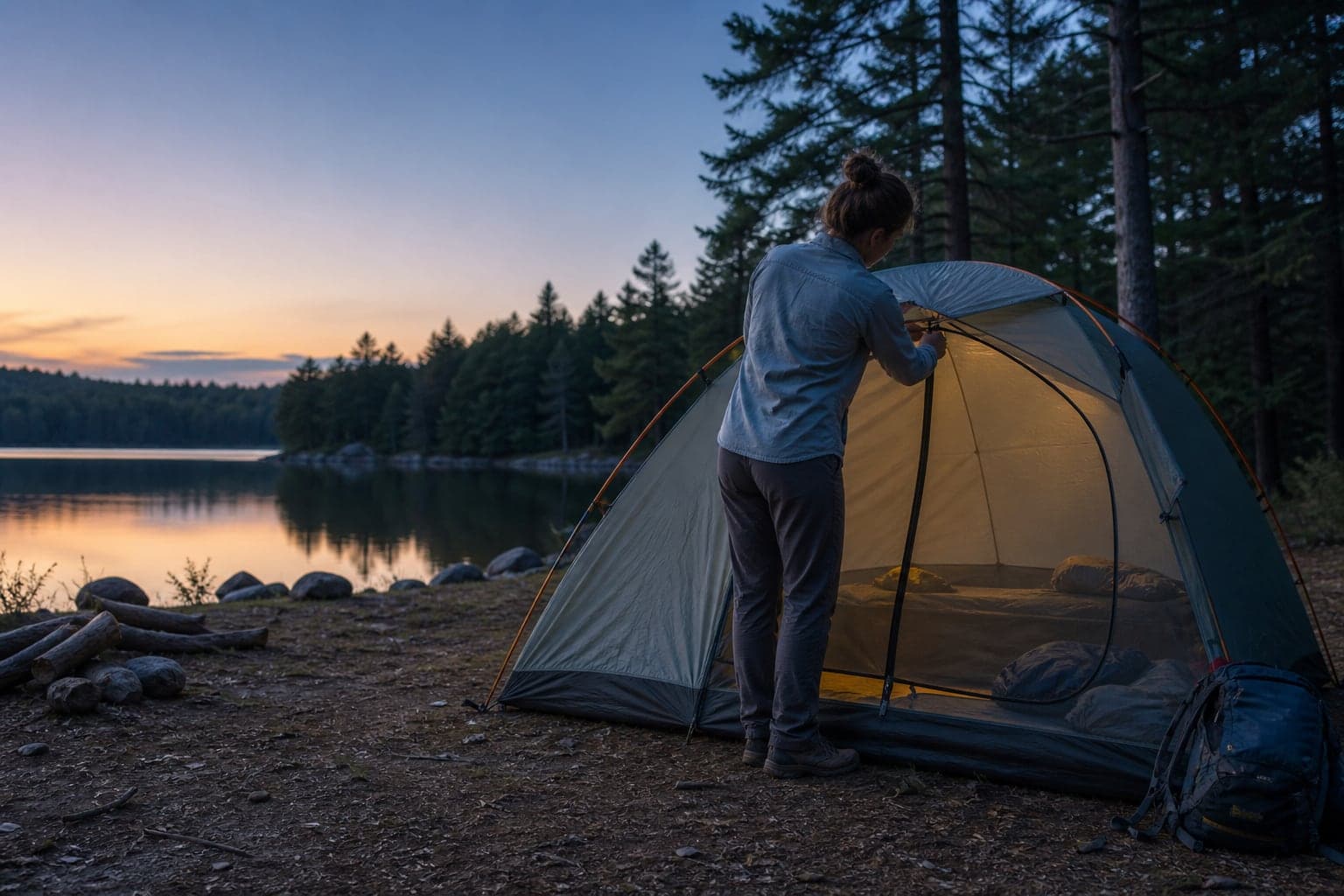
- Aim to arrive with daylight to spare. Setting up camp, learning the layout of the site, and finding the bathroom are all easier — and safer — before dark.
Choosing and checking a safe site
Once you're at the campground, take a few minutes before you set up to look at the site itself, not just the view:
- Avoid pitching a tent under dead branches or leaning trees — a windy night is the wrong time to find out a branch was ready to fall.
- Check that you're not in a low spot that would collect rainwater if it storms overnight.
- Note where the nearest water is, and keep young kids and pets a comfortable distance from it, especially at unfamiliar sites without clear markings.
- Locate the nearest bathroom and the site host or ranger station, if there is one, so you're not searching for it at 2 a.m.
Ordinary rain and severe weather are different planning problems. If lightning is possible, read the camping in a thunderstorm guide before deciding whether sheltering at the site is realistic.
Weather: the risk beginners underestimate
Gear failures and wildlife encounters get most of the attention, but weather — rain, wind, and temperature swings — causes more genuinely uncomfortable and unsafe camping situations than almost anything else. A forecast that looks mild during the day can still mean a cold, damp night if you're not prepared for the drop in temperature after sunset.
Pack for the overnight low, not the daytime high, and bring rain protection even if the forecast looks clear — weather at a campsite, especially near mountains or water, can change faster than a general forecast predicts.
Heat deserves the same respect as cold, and in desert parks it is the dominant risk rather than a secondary one. Camping in Zion National Park works through what that means in practice — choosing a site for shade, and timing hikes around a midday you simply sit out.
If rain is already in the forecast, our full guide to camping in the rain covers site selection, setting up dry, and the groundsheet mistake that soaks more tent floors than actual leaks do.
Food storage and keeping wildlife away
Storing food properly is less about a specific animal and more about not teaching any wildlife that your site is a food source:
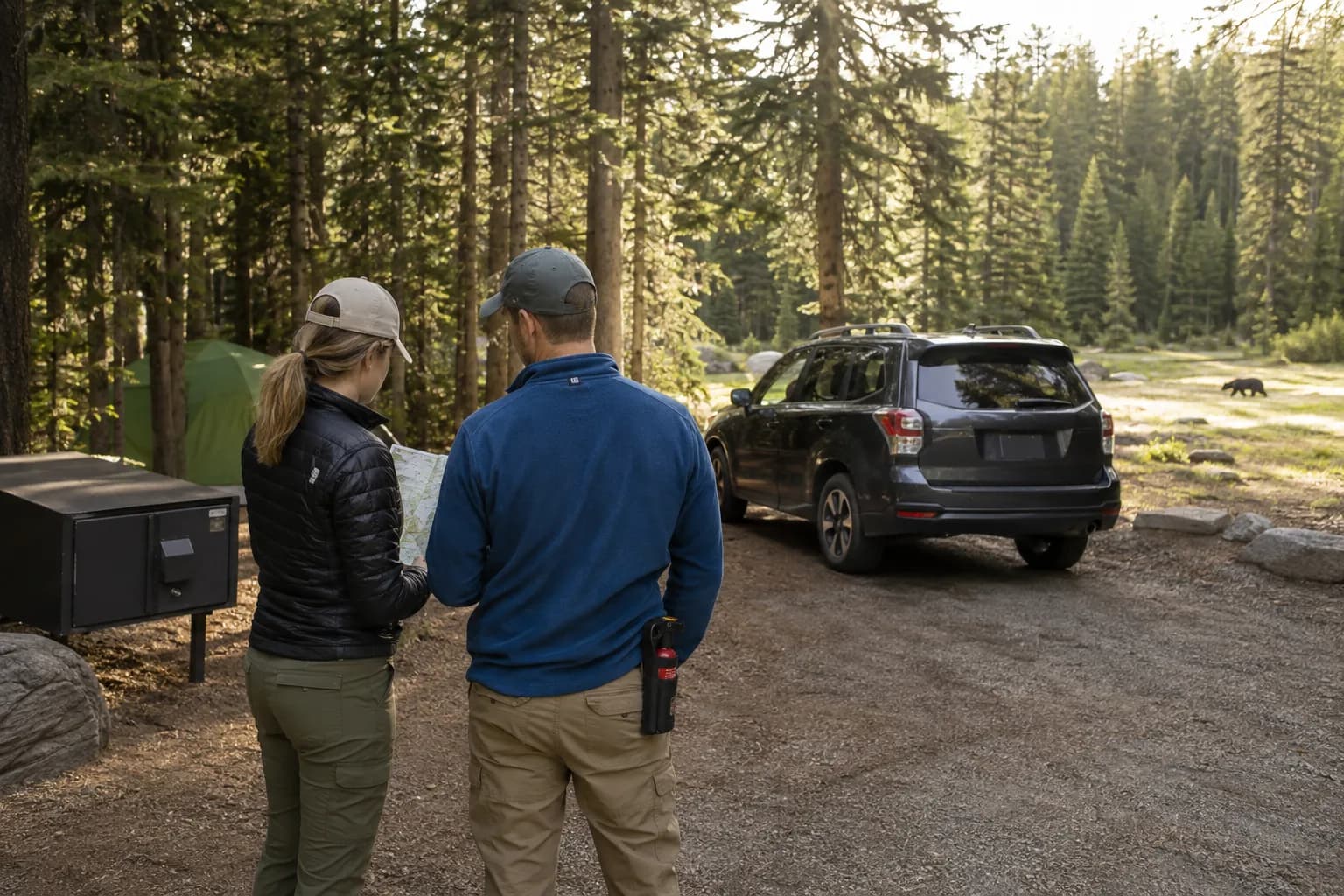
- Keep all food, trash, and anything scented (toothpaste, sunscreen, soap) sealed and stored away from your sleeping area — in a vehicle, a hard cooler, or the storage method the campground specifies.
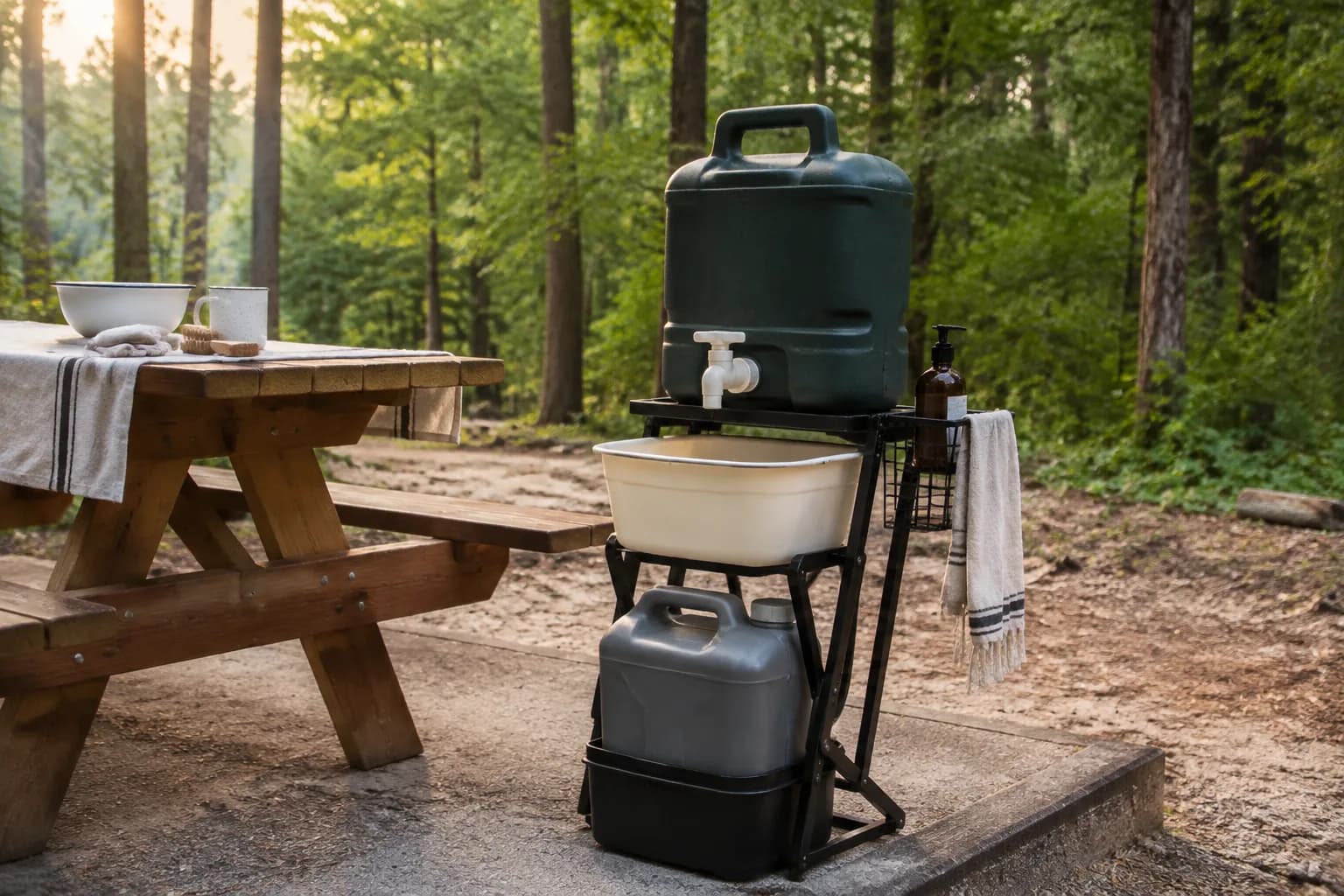
- Clean up food prep areas right after eating rather than leaving it for later.
- Never store food inside your tent.
Campfire safety basics
A campfire is one of the best parts of camping and one of the easier things to get wrong. At minimum:
- Only build a fire where it's permitted, and check current fire restrictions before you go — these change with drought and season.
- Keep the fire in an existing fire ring or pit, well clear of tents, dry brush, and overhanging branches.
- Keep water or dirt within reach the entire time the fire is burning.
- Never leave a fire unattended, and make sure it's fully out — cold to the touch — before you leave the site or go to sleep.
We cover the full process in more detail, including how to build and put out a fire correctly, in our upcoming campfire safety guide. In the meantime, our campfire games and campfire jokes collections are good options for keeping everyone gathered safely around a fire that's being watched.
For a packable inventory with selection criteria, see the complete camping first aid kit guide. If the trip depends on untreated water, the camp water-purification guide separates filtration, boiling and chemical treatment instead of treating them as interchangeable.
A basic first aid kit
You don't need a wilderness medicine course for a standard campground trip, but a basic kit covers most small incidents: adhesive bandages in a few sizes, gauze, antiseptic wipes, tweezers, any personal medications, and pain relievers. Check it before each trip — kits get raided for random bandages between uses more often than people expect.
For anything beyond minor scrapes and discomfort, treat it the way you would at home: seek proper medical care rather than relying on a blog post, including this one.
When to check local rules instead of a blog post
General safety habits — checking weather, storing food properly, watching a fire — apply almost everywhere. But some things genuinely depend on where you're camping: local wildlife, water safety, terrain hazards, and current fire restrictions. For those, the campground's official website or the ranger/host on site is a better source than any general guide, because they know the conditions for that specific place, this week.
FAQ
Is camping dangerous for beginners?+
Not inherently. Most camping safety issues come from a small number of preventable causes: not checking the weather, arriving after dark, or being unprepared for a temperature drop overnight. Covering those basics removes most of the real risk.
What is the most important camping safety habit?+
Checking the actual forecast for your camping location and packing for the overnight low, not just the daytime weather, prevents more uncomfortable and unsafe situations than any single piece of gear.
How do you stay safe camping alone?+
The core habits are the same as camping with others, with one addition: tell someone your specific plan and expected return time before you leave, so someone knows where to start looking if you don’t check in.
Do I need to worry about wildlife while camping?+
It depends heavily on where you’re camping. Store food properly everywhere as a default habit, and check the specific campground or park’s official guidance for any wildlife precautions that apply to that location.
Sources reviewed
Fact-checked Aug 11, 2026
These references support factual or safety-sensitive claims in this article. Access dates show when our editors last verified the source.
- National Park Service — Camping Safely During Your Stay
Official source · Accessed Aug 11, 2026
- National Park Service — Campfire Safety
Official source · Accessed Aug 11, 2026