campfire / games
15 Best Campfire Games for Families and Groups
Choose 15 campfire games by group size, age, energy and materials, with complete rules, fire-safe adaptations, printable prompts and a 60-minute plan.
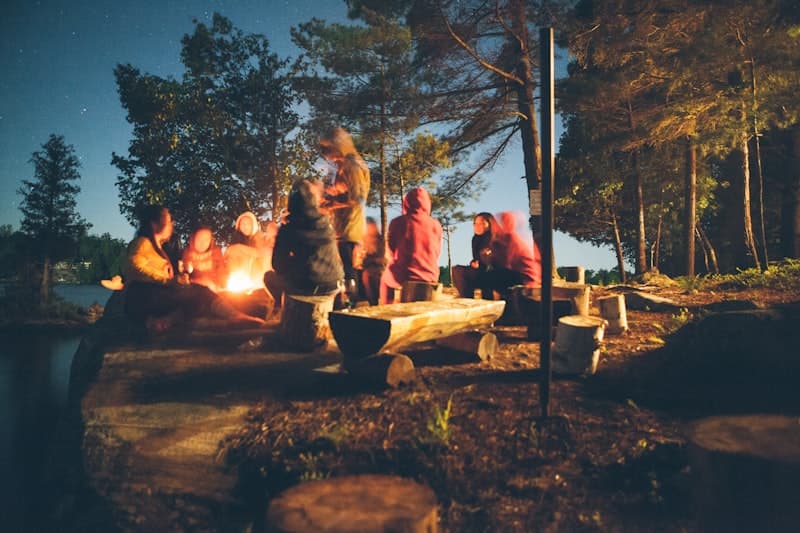
The best campfire game is not the cleverest game on a long list. It is the one your actual group can understand before somebody wanders off to inspect the snack bag.
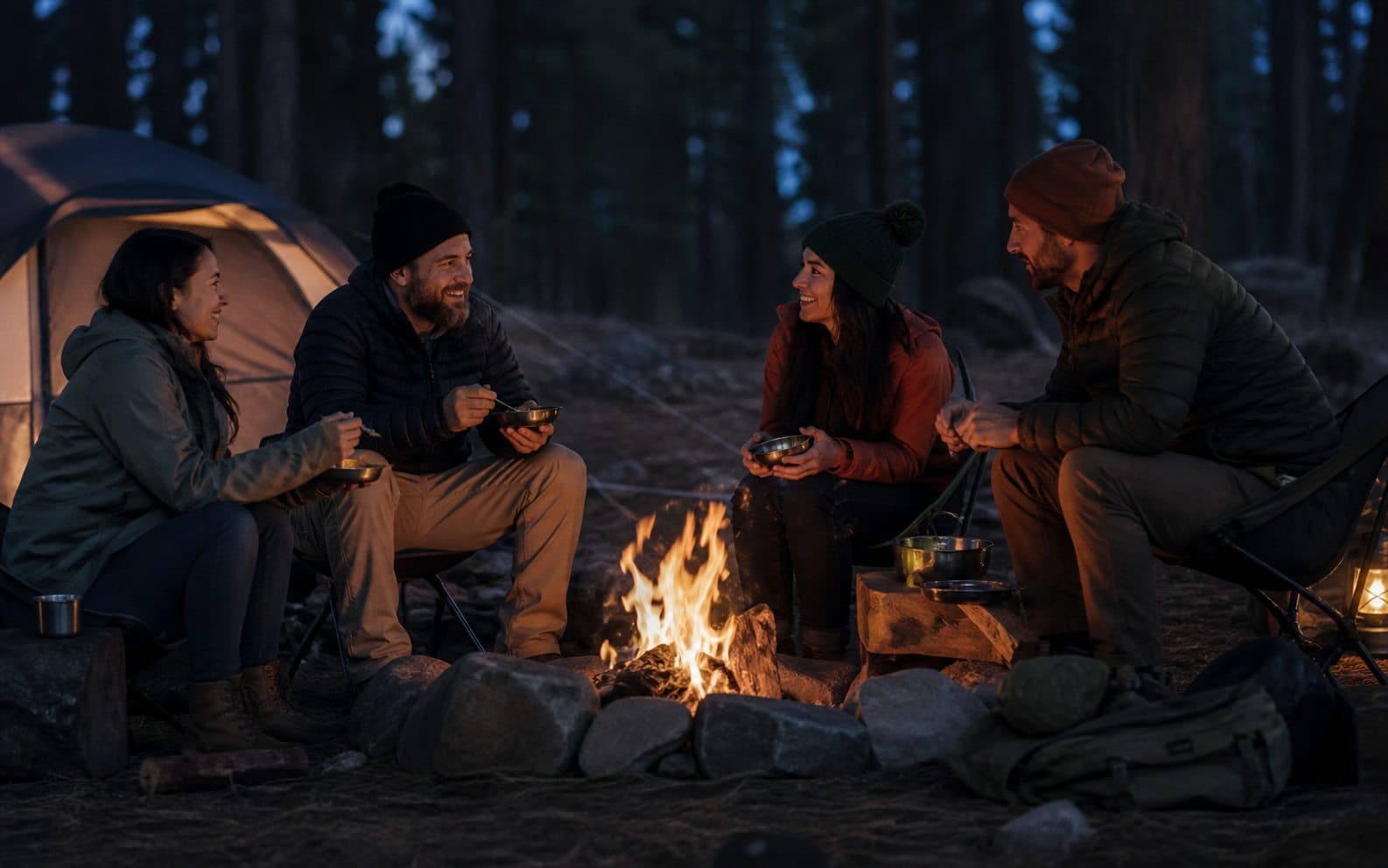
Choose by energy, group size and whether anyone wants to keep score. Every game below has a start, a turn and a finish. All 15 also work beside an LED lantern when fires are banned—which is useful, because “campfire game” describes the circle, not a requirement to light one.
Pick tonight's game
| If your group needs… | Start with | Group | Energy | Materials | Round length |
|---|---|---|---|---|---|
| No explanation | Twenty Questions | 3–10 | Low | None | 5–10 min |
| A funny shared story | Fortunately, Unfortunately | 3–12 | Medium | None | 10 min |
| A calm game for younger kids | Sound Detective | 2–8 | Low | None | 5 min |
| Conversation for adults or teens | Would You Rather | 3–12 | Low | Prompt list optional | 15 min |
| A bigger mixed-age group | Team Charades | 6–20 | Medium | Prompt slips | 20 min |
| Something prepared and printable | Campfire Bingo | 2–12 | Low | Cards and markers | 15–30 min |
| A final quiet round | Three-Clue I Spy | 2–8 | Low | None | 10 min |
Our default sequence is Sound Detective → Twenty Questions → Team Charades → One-Word Story. It begins quietly, gives late arrivals an easy entry, peaks with movement away from the fire and settles before bedtime.
Set the fire boundary before the game
If there is a fire, an adult remains responsible for it throughout the game. Use the designated ring, follow current restrictions, keep water ready, and extinguish the fire completely when finished. Children do not tend or remain alone with it.
For the game circle:
- Keep chairs, blankets and prompt cards outside the fire area and clear of sparks.
- Put acting, running and blindfolded games somewhere else. Our charades version uses a marked stage well away from the ring.
- Keep roasting sticks, hot drinks and fuel out of play.
- Use an LED light for cards and faces; do not aim it at eyes, roads, wildlife or neighbouring sites.
- Stop the game when the fire needs attention. The score can survive the interruption.
Thunder ends the outdoor session. The National Weather Service says a tent and open picnic shelter are not safe lightning shelters; move to a substantial building or enclosed hard-topped vehicle and wait at least 30 minutes after the last thunder before returning.
Six no-prop games from your chair
1. Twenty Questions
Best for: 3–10 players, ages 6+ · Time: 5–10 minutes · Bring: nothing
Start: One player silently chooses a person, place, animal or object and names the category.
Play: The group asks one yes-or-no question per turn. Count questions aloud. A guess also counts as a question.
Finish: The round ends when someone guesses correctly or question 20 is answered. The correct guesser chooses the next answer; after an unsuccessful round, the original chooser reveals it and selects the next player.
Younger-player fix: Limit answers to visible campsite objects, without using any object inside the fire boundary.
2. Fortunately, Unfortunately
Best for: 3–12 players, ages 6+ · Time: 10 minutes · Bring: nothing
Start: The first player says, “Fortunately, we reached camp before dark.”
Play: The next player adds one sentence beginning “Unfortunately…” The group alternates the two openings around the circle. Each sentence must continue the same story.
Finish: Stop after two full laps or when the story reaches home. A volunteer retells the plot in three sentences, which is often the more ambitious game.
3. One-Word Story
Best for: 3–10 players, ages 7+ · Time: 5–10 minutes · Bring: nothing
Start: Choose a title such as “The Missing Tent Stake.”
Play: Moving clockwise, each person contributes exactly one word. Anyone may add punctuation by saying “period.” No one can reject a word already played.
Finish: End at the first complete sentence after three laps. Read the result aloud once.
Easier version: Allow one short phrase per player instead of one word.
4. Would You Rather—with a reason
Best for: 3–12 players, ages 7+ · Time: 10–20 minutes · Bring: prompts optional
Start: Ask a choice with two harmless options: “Would you rather hear every owl or identify every track?”
Play: Everyone points left for option A and right for option B at the same time. Invite two people from opposite sides to give one reason. Debate the choice, not the person.
Finish: Play eight prompts or stop when each person has asked one.
5. Category Countdown
Best for: 4–12 players, ages 7+ · Time: 10 minutes · Bring: timer optional
Start: Pick a broad category—foods, animals, films, places or things packed for camp.
Play: Go around the circle naming a new answer. Allow five slow finger counts, one pass per player and no challenges that require a phone search.
Finish: Reach 25 unique answers as a group. If the circle stalls, reveal a new category and try to beat the previous total.
This cooperative finish works better around a fire than eliminating the quieter players and making them watch everyone else have fun.
6. Two Truths and a Tale
Best for: 4–10 players, ages 8+ · Time: 15 minutes · Bring: nothing
Start: Each person prepares two true statements and one invented, harmless statement.
Play: Share all three in any order. Everyone votes once; then reveal the tale and answer one follow-up question about a true statement.
Finish: End after everyone who wants a turn has played. Keep score only if the group enjoys it: one point for each correct vote and one for the speaker if fewer than half guess.
Privacy option: Make all three statements about an invented character instead of the player.
Four quiet games for kids and mixed ages
7. Sound Detective
Best for: 2–10 players, ages 4+ · Time: 5 minutes · Bring: nothing
Start: Everyone stays seated and closes their eyes only if they are comfortable doing so.
Play: Listen silently for 30 seconds. Each player names one sound without leaving the circle to find it.
Finish: The group tries to identify five different sounds. Animals earn observation, not pursuit.
8. Three-Clue I Spy
Best for: 2–8 players, ages 4+ · Time: 10 minutes · Bring: nothing
Start: Choose something visible from the seated circle.
Play: Give one clue about shape, one about location and one about colour or texture. Each person gets one guess after every clue.
Finish: The correct guesser chooses the next object. Stop after six objects.
After dark, choose only objects clearly visible without sweeping a flashlight through other campsites.
9. LED Shadow Guessing
Best for: 3–8 players, ages 4+ · Time: 10 minutes · Bring: LED flashlight and pale card or sheet
Start: Set the light and target in a seated area away from the fire, tent fabric and walking path.
Play: One player makes a hand shadow; everyone receives one guess. Rotate after the shape is named or after three misses.
Finish: Stop when each player has made one shadow.
Use an LED light, not flames, candles or a hot fuel lantern.
10. Camping Alphabet
Best for: 2–10 players, ages 5+ · Time: 10 minutes · Bring: nothing
Start: Pick “things at camp,” “animals” or “places.”
Play: Build one shared alphabet in order. Players may help each other and skip a letter after one full turn.
Finish: Reach Z or complete 20 letters. No one is eliminated because X declined to cooperate.
Five games for teams or prepared materials
11. Team Charades
Best for: 6–20 players, ages 7+ · Time: 15–25 minutes · Bring: prompt slips, bowl and timer
Start: Before lighting a fire, mark a flat acting area well away from the ring, guylines, traffic and cooking equipment. Split into two mixed teams.
Play: One actor draws a prompt and has 45 seconds to mime it without speaking, spelling or approaching the fire. Their team may guess continuously.
Finish: Play six prompts per team. One point per correct answer; a tie ends with one shared lightning round rather than increasingly creative arithmetic.
Use the camping charades word bank when nobody wants to prepare slips.
12. Ten-Question Team Trivia
Best for: 6–20 players, ages 8+ · Time: 15 minutes · Bring: ten questions and answer sheet
Start: Form teams of two to four, mixing ages when possible.
Play: Read each question once, allow 30 seconds of quiet team discussion, then collect or reveal answers together. Accept equivalent wording when the fact is correct.
Finish: Highest score after ten questions wins. Resolve a tie with a closest-number question prepared in advance.
Our camping trivia provides a ready-made round with answers.
13. Name That Tune
Best for: 4–14 players, ages 8+ · Time: 10–15 minutes · Bring: song list optional
Start: Split into two teams and agree on songs both generations are likely to know.
Play: A player hums up to ten seconds without lyrics or gestures. Their team gets one guess; the other team may steal after a miss.
Finish: Play five songs per team. One point per title; artist names are a bonus only if decided before the game.
Keep the volume within campground quiet hours. The neighbouring loop did not buy a ticket.
14. Campfire Bingo
Best for: 2–12 players, ages 5+ · Time: 15–30 minutes · Bring: printed cards and reusable markers
Start: Give each person or pair a different card. Agree whether the goal is one line or a full card.
Play: Mark only events naturally observed from the campsite. Do not stage hazards, approach wildlife or enter another site for a square.
Finish: The first player to complete the agreed pattern calls “Bingo” and reads the marked squares for verification.
Use our printable camping bingo cards.
15. Three-Card Story
Best for: 3–10 players, ages 6+ · Time: 15 minutes · Bring: prompt cards or paper slips
Start: Put character, place and problem prompts in three separate piles. Draw one from each.
Play: The first player opens the story in two sentences. Each following player adds up to two sentences and must use one detail from the previous turn.
Finish: After two laps, the final player must solve the problem in no more than three sentences.
For more variations, use campfire storytelling games.
Printable prompt bank
Cut these into slips or save the table offline before the trip.
| Charades | Would You Rather | Story character | Story problem |
|---|---|---|---|
| Pitching a tent | Rain all morning or wind all night? | A very organized raccoon | The map has one blank space |
| Inflating a sleeping pad | Hear every owl or identify every track? | A ranger who has lost one boot | Dinner keeps disappearing |
| Paddling a canoe | Cold breakfast or late dinner? | A moth with excellent directions | Nobody remembers the campsite number |
| Carrying an enormous backpack | Tent beside trees or beside a meadow? | A camper who can speak to squirrels | The flashlight blinks three times |
| Swatting a mosquito | Tell a story or sing a song? | A bear who only eats pancakes | Every tent stake has moved |
| Watching a meteor | Sunrise hike or midnight stargazing? | A sleepwalking astronomer | The trail sign points both ways |
| Rolling a sleeping bag | One giant marshmallow or ten tiny ones? | A mouse with a tiny headlamp | A mysterious bell rings at dusk |
| Washing camp dishes | Remember every bird or every plant? | A ghost afraid of the dark | The weather forecast starts rhyming |
Avoid prompts that ask players to imitate disability, identity, injury or dangerous behaviour. Funny should not require making someone the target.
A printable 60-minute game plan
| Minutes | Game | Why it is here | Stop condition |
|---|---|---|---|
| 0–5 | Sound Detective | Settles the circle and checks the group's attention | Five sounds identified |
| 5–15 | Twenty Questions | Simple rules for late arrivals | One or two rounds |
| 15–35 | Team Charades or Trivia | Highest-energy section before people tire | Six turns per team or ten questions |
| 35–50 | Would You Rather | Everyone can rejoin from a chair | Eight prompts |
| 50–60 | One-Word or Three-Card Story | Brings the energy down | Story reaches its planned ending |
Tonight's plan:
- Group size / youngest age: ____________________
- Quiet hours begin: ____________________
- Fire permitted now? yes / no / unconfirmed
- Fire-responsible adult: ____________________
- Game 1 / finish: ____________________ / ____________________
- Game 2 / finish: ____________________ / ____________________
- Rain alternative: ____________________
- Lightning-safe location: ____________________
When to choose something else
Skip a competitive game when tired children are already taking every score personally. Skip charades when there is no safe activity area away from the fire. Skip personal-question games when the group does not know or trust one another. Use cooperative goals, pairs or the privacy versions instead.
If rain—not thunder—is the issue, our rainy-day camping activities for kids has tent and covered-shelter alternatives. For younger groups, campfire games for kids adjusts pacing and prompts.
The best finish is a game people want to play again, stopped before it becomes a negotiation.
Sources and scope
- National Park Service: campfire safety
- National Weather Service: lightning safety outdoors
- National Park Service: Leave No Trace
Current fire restrictions, quiet hours, weather alerts and land-manager rules replace this general guide.
FAQ
What are the best campfire games with no equipment?+
Start with Twenty Questions for the easiest rules, Fortunately Unfortunately for a funny shared story, Sound Detective for a quiet mixed-age group, or Would You Rather for conversation. Give every game a fixed number of questions, laps or prompts so the round has a real ending.
Which campfire game works for a large group?+
Team Charades or ten-question trivia works well for 6 to 20 players. Use small mixed teams, fixed turn times and a prepared finish. Charades must happen in a flat marked area well away from the fire, guylines, traffic and cooking equipment.
Can you play campfire games during a fire ban?+
Yes. Every game in this guide works around an LED lantern without a fire. Check current restrictions before planning any flame; a campfire game describes the group activity, not permission or a requirement to light one.
How do you make campfire games safe for children?+
Keep children seated outside the fire area, appoint an adult responsible for the fire, move acting games to a separate marked space, keep hot tools and drinks out of play, and never use running or blindfolds near the ring. Children should not tend or remain alone with the fire.
What should campers do if thunder starts during a game?+
Stop the outdoor game and move to a substantial building or enclosed hard-topped vehicle. Tents and open picnic shelters are not safe lightning shelters. Wait at least 30 minutes after the last thunder before returning outside.
How long should a campfire game last?+
Most groups do better with rounds of 5 to 20 minutes. Decide the finish before starting: 20 questions, two laps, eight prompts, ten trivia questions or six turns per team. Then switch games while people still want one more round.
Sources reviewed
Fact-checked Sep 4, 2026
These references support factual or safety-sensitive claims in this article. Access dates show when our editors last verified the source.
- National Park Service — Campfire Safety
Official source · Accessed Sep 4, 2026
- National Weather Service — Lightning Safety Outdoors
Official source · Accessed Sep 4, 2026
- National Park Service — Leave No Trace
Official source · Accessed Sep 4, 2026