campfire / games
Campfire Storytelling Games (Pass-the-Story and More)
Run campfire storytelling games without awkward pauses: choose the right format, use a 36-combination story prompt grid, rescue stalls and land the ending.
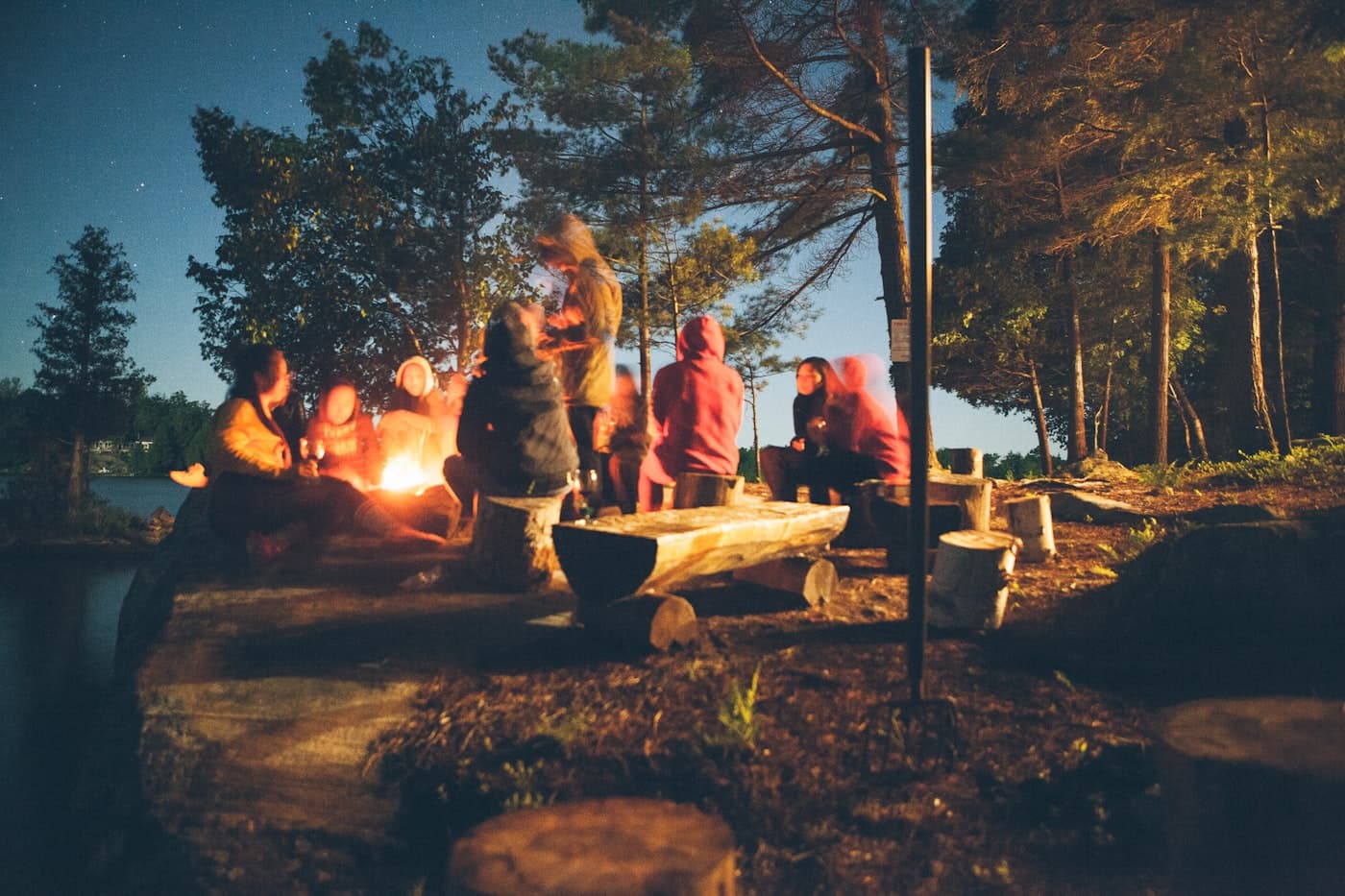
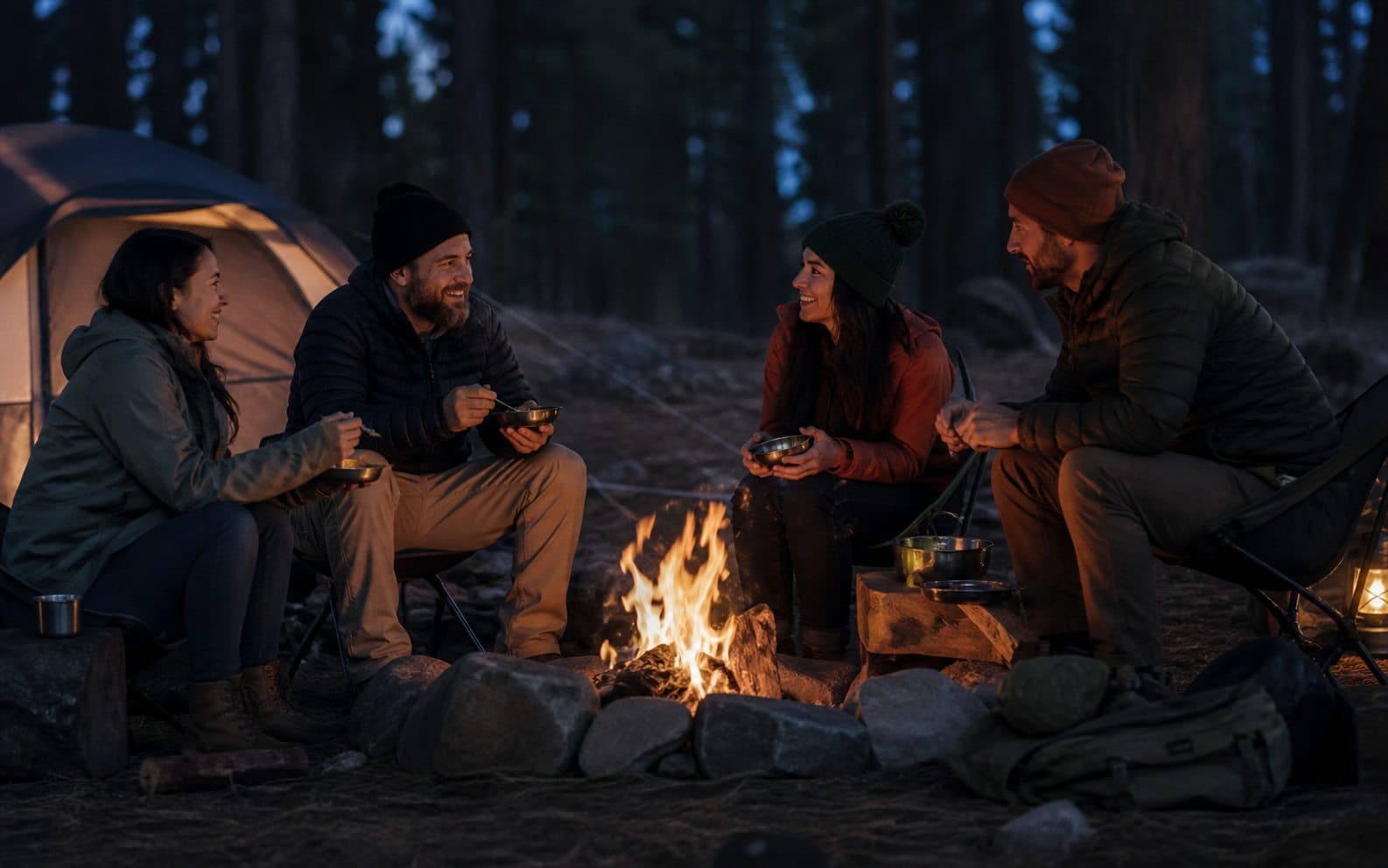
Storytelling games suit a campfire better than almost any other kind of game, for a reason that has nothing to do with the games themselves: everyone is already sitting in a circle, facing each other, in dim light, with nothing in their hands.
The rules take about thirty seconds to explain. What determines whether a round is fun or awkward is how it is run — so this guide gives you the exact opening line, a prompt grid, rescue moves and a stopping rule.
Pick the right game in 20 seconds
| Your group tonight | Start with | Use this limit |
|---|---|---|
| Kids under 7 | One-Word Story, but allow 2–3 words | One lap |
| Mixed ages | Fortunately, Unfortunately | Two laps |
| Shy or newly formed group | One-Word Story | 5-second turns, help allowed |
| Teens | Genre Switch | 60–90 seconds per genre |
| Adults who know one another | Pass-the-Story | Two sentences each |
| Everyone is tired | Two-Sentence Horror | One story each, then stop |
Best default: Fortunately, Unfortunately. Its sentence starter removes the blank-page problem, and nobody has to carry the plot alone.
A ready-to-use 15-minute round
Say this: “We are making one story together. Add one sentence when it reaches you. You may ask for a rescue word, and after two laps we must land the ending.”
Then choose one row from each column below. Roll a six-sided die twice, point without looking, or let the youngest player choose. That gives you 36 combinations without needing signal at the campsite.
| Roll | Main character | Problem |
|---|---|---|
| 1 | A ranger on their first day | Every trail sign points the wrong way |
| 2 | A raccoon with excellent manners | The campground has lost all sound |
| 3 | Two siblings sharing one flashlight | Their map adds a new lake at midnight |
| 4 | A cook guarding the last marshmallow | Something keeps returning borrowed gear |
| 5 | A dog that understands weather reports | Tomorrow's storm arrives tonight |
| 6 | A tired camper who cannot lie | A stranger asks one impossible question |
Open with: “Just after quiet hours, [character] discovered that [problem].” The grammar is not elegant. The story will survive.
Keep three rescue cards in your head:
- A sound: “Then something scratched under the picnic table.”
- A choice: “There were two paths, and neither was on the map.”
- A clock: “They had ten minutes before the rain reached camp.”
When the story reaches its final player, give them one of three ending jobs: reveal what caused it, bring everyone safely back to camp, or repeat the opening detail with a new meaning.
Start here: One-Word Story
The simplest one, and the best opener because nobody can get it wrong.
Someone says one word. Going around the circle, each person adds one word, building a sentence and eventually a story. Closely related versions are called Build-a-Story, One Word at a Time, Story in the Round or Round Robin Story; some allow a phrase or sentence instead.
It reliably produces nonsense, which is the point. Grammar collapses, someone drops in an absurd noun, and the group spends the next four words trying to make it make sense.
Adapting it: for younger kids, let each person add two or three words instead of one. A single word is surprisingly hard for a six-year-old, and the point is momentum, not difficulty.
Making it harder for a group that's warmed up: pick a theme before you start — camping, pirates, a haunted campground — or shorten turns to three seconds. Keep everyone in. Elimination rewards the quickest speaker and gives everyone else a very good reason to stop listening.
Fortunately, Unfortunately
Each person adds a full sentence, alternating between a line that starts "Fortunately…" and one that starts "Unfortunately…", each reversing the last.
This is the one to reach for with a mixed-age group, because the structure does the work. Nobody has to invent an entire premise — they just have to flip whatever the last person said. The alternating good-news/bad-news pattern gives the story a natural comic rhythm.
Pass-the-Story
One person starts with a few sentences, then hands off. The next person continues, and so on around the circle.
More freedom, which means more responsibility, which means it's the best of these three when the group is older or knows each other well — and the worst when someone genuinely doesn't want to perform. Read the group before you start this one.
It's also the natural bridge to actual campfire storytelling. If your group takes to it, our guide to scary campfire stories covers the structure that makes a told story land.
Harder variations, once the group is warm
- The three-word constraint. Before you start, someone names three unrelated words that must all appear in the story. Adds just enough friction.
- Genre switch. Someone calls out a new genre mid-story — western, romance, horror — and the next contributor has to swerve into it.
- Backwards. Start with the ending and work towards how it began. Genuinely hard and worth trying once.
- Two-sentence horror. Each person tells a complete story in exactly two sentences. Not collaborative, but it fits the same slot in an evening and it's the one people remember.
How to actually run one well
This is what separates a good round from an awkward one.
Start it yourself, badly. If you open with something polished, everyone else feels they need to match it. Open with something dumb — "Once, a raccoon applied for a job" — and you've set the bar somewhere everyone can clear.
Sit where you can see the whole circle, and go in a fixed direction so nobody has to work out whose turn it is.
Don't correct anyone. No "you can't do that." The rules are loose on purpose, and enforcement kills these games faster than anything.
Rescue people rather than waiting them out. If someone's stuck, feed them a word. Ten seconds of silence with everyone watching is uncomfortable for a shy kid, and it teaches them the game is a test.
Let anyone pass. A storytelling circle is voluntary. “Skip me this lap” should cost nothing and require no explanation.
Set the scare level before a horror round. Ask whether the group wants silly, spooky or genuinely scary. Leave real people, private fears and recent events out of it. The goal is a memorable story, not a surprise therapy bill.
What makes a round fall apart
Four things, in rough order of how often they happen:
The circle is too big. Our rule of thumb is to split beyond eight or nine people, when the wait between turns often invites side conversations. That is a hosting choice, not a law; a focused group may happily stay together.
Somebody hijacks it. One person delivers a fully formed three-minute monologue every turn and everyone else disengages. Switch to One-Word Story, where the format physically prevents it.
It has no ending. Pass-the-Story in particular will run indefinitely if nobody lands it. Fix it in advance: say up front that the story ends when it gets back round to whoever started, or after two laps.
It started too cold. Storytelling games need a group that's already talking. Open the evening with something lower-stakes — a round of jokes or one of the guessing games — and come to these once everyone's loosened up.
Six endings that stop a story cleanly
Use one when the final player has a plot but no runway:
- The “monster” was protecting something smaller.
- The missing object had been in plain sight since the first sentence.
- Everyone returns to camp, but one harmless detail has changed.
- The least suspicious character solves the problem.
- The warning from the opening finally makes sense.
- The story ends on the exact sentence it began with.
An ending does not need to explain every loose thread. Campfire stories are allowed to leave one footprint heading into the trees.
Adapting by age
Under seven: two or three words per turn, no elimination, and expect the story to be about animals. Every time.
Seven to ten: the sweet spot for One-Word Story and Fortunately, Unfortunately. Themes help.
Teenagers: they'll engage with these, but usually only after they've decided it isn't going to be embarrassing. Constraints and genre switches help — anything that makes it a challenge rather than a performance.
Adults only: Pass-the-Story and two-sentence horror. And these get much better after the group's been sitting around the fire for a while.
These work just as well inside a tent when the weather turns, which is why they show up in our list of rainy day camping activities for kids — no props, no surface, no space required.
FAQ
What is the easiest campfire storytelling game?+
Fortunately, Unfortunately is the easiest default for a mixed-age group. Each player gets a supplied sentence starter, so the structure creates the next idea and nobody has to invent a whole plot.
How long should a pass-the-story game last?+
Set the ending before play begins: one lap for a large or tired group, two laps for most groups. A 10–15 minute story usually ends while people still want another round.
How do you help someone who gets stuck?+
Allow a free pass or offer one rescue cue: a sound, a choice or a deadline. Do not count down at a shy player or remove them from the game.
Can children play campfire storytelling games?+
Yes. For children under seven, allow two or three words per turn and keep the story to one lap. Agree on a silly or gently spooky tone before starting, and let anyone pass.