guides / safety
Camping in a Thunderstorm: Where to Go
A tent is not lightning shelter. Use this campsite thunderstorm plan to identify safe shelter, know when to move, avoid false refuges and wait before returning outside.
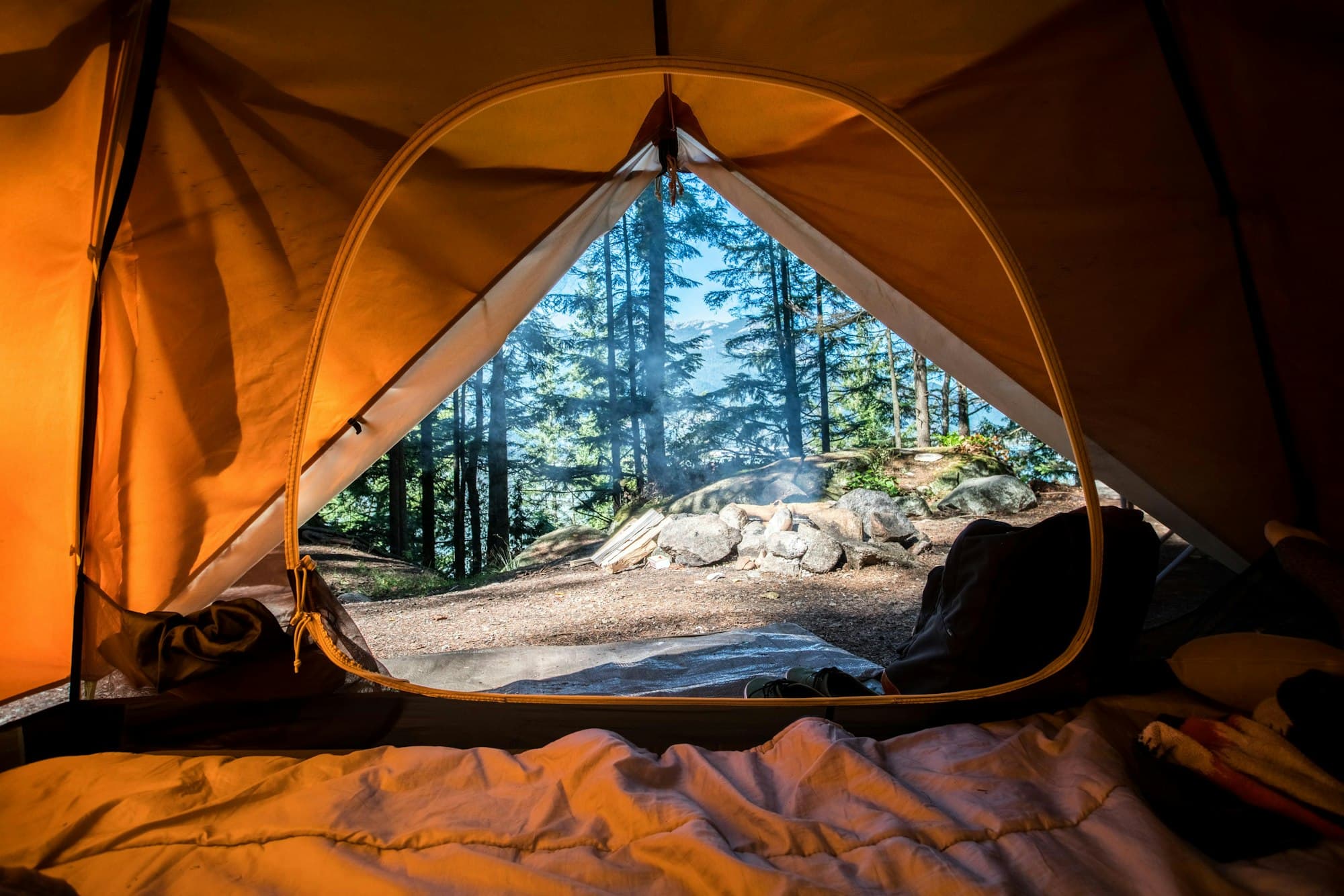
A tent does not protect you from lightning. If you hear thunder, move immediately to appropriate lightning shelter: a substantial enclosed building or an enclosed hard-topped vehicle. Do not wait for rain, a warning notification or a closer flash.
The National Weather Service says there is no safe place outside when a thunderstorm is in the area. Everything after “get inside” is either planning that helps you reach shelter sooner or last-resort risk reduction when safe shelter is genuinely unavailable.
The campsite decision table
| Situation | Action now | Do not use as lightning shelter |
|---|---|---|
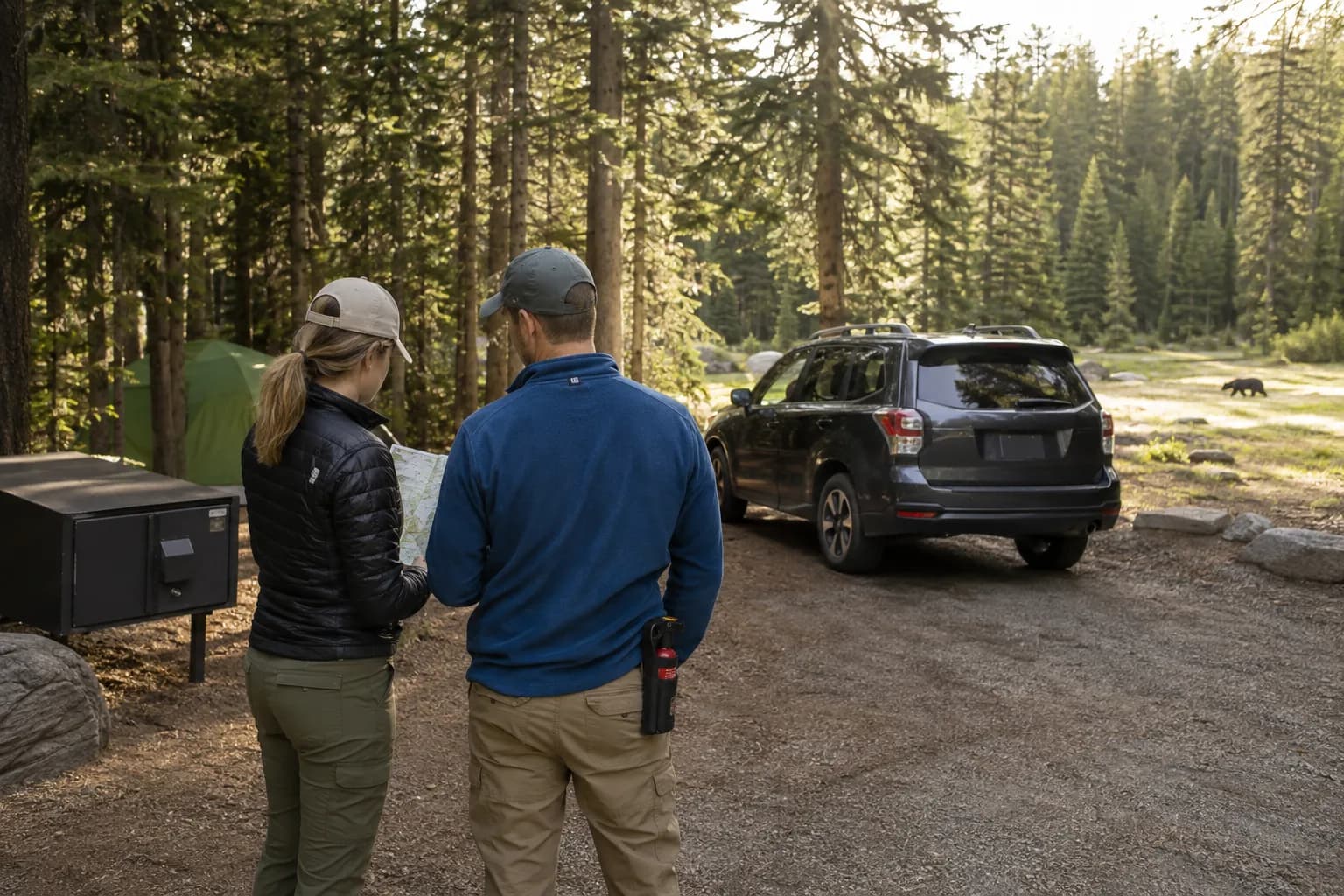
| Thunder is audible and a vehicle is accessible | Get everyone into the enclosed hard-topped vehicle, close the windows and remain inside | Tent, awning, convertible, open vehicle |
| A substantial enclosed building is closer | Enter it before the storm arrives; stay away from windows and follow posted instructions | Picnic pavilion, gazebo, porch, small open shelter |
| Thunder is forecast later | Change timing, identify shelter and calculate how long the whole group needs to reach it | “We will decide when it gets close” |
| You are on water, a ridge or exposed terrain | Leave early enough to reach safe shelter before thunder | Trees at the shoreline, rock overhang, tent |
| No building or vehicle can be reached | Use the NWS last-resort terrain guidance below while continuing to seek safer options | Any claim that an outdoor position is safe |
| Thunder has stopped | Remain sheltered for at least 30 minutes after the last thunder | A brief patch of blue sky |
If children, pets or a large group are involved, include their movement time. A five-minute walk for one adult is not necessarily a five-minute evacuation.
Before the storm: build a shelter plan
Build this plan as soon as you arrive, while conditions are calm.
- Identify the nearest substantial enclosed building and enclosed hard-topped vehicle. Note whether either is accessible overnight.
- Time the route. Include unlocking the vehicle, moving children and assisting anyone with limited mobility.
- Check multiple forecast and alert channels. Cell service can fail; the NWS recommends having reliable ways to receive current weather information, which may include NOAA Weather Radio.
- Choose a decision trigger. Hearing thunder or seeing lightning means move now. An approaching warning or threatening sky may justify moving earlier.
- Secure camp before conditions arrive only if there is time. Do not delay shelter to save chairs, a canopy or dinner.
- Know the other hazards. Strong wind, falling branches, hail and flash flooding can change which route and building are usable.
A weather app's daily icon is not a campsite plan. Use the point forecast and hourly timing for the actual location, then monitor conditions because forecasts can change.
What counts as lightning shelter
For lightning, the preferred choices are:
- a substantial enclosed building with wiring or plumbing; or
- an enclosed metal-topped vehicle with the windows closed.
Once inside a building, follow local instructions and avoid contact with plumbing, corded electrical equipment, windows and exterior doors while lightning is present. Inside a vehicle used for lightning shelter, keep windows closed and avoid touching conductive paths to the exterior.
A restroom may qualify when it is a substantial enclosed building. A portable toilet or open wash shelter does not qualify. Use the campground's designated severe-weather shelters when provided.
What does not protect you from lightning
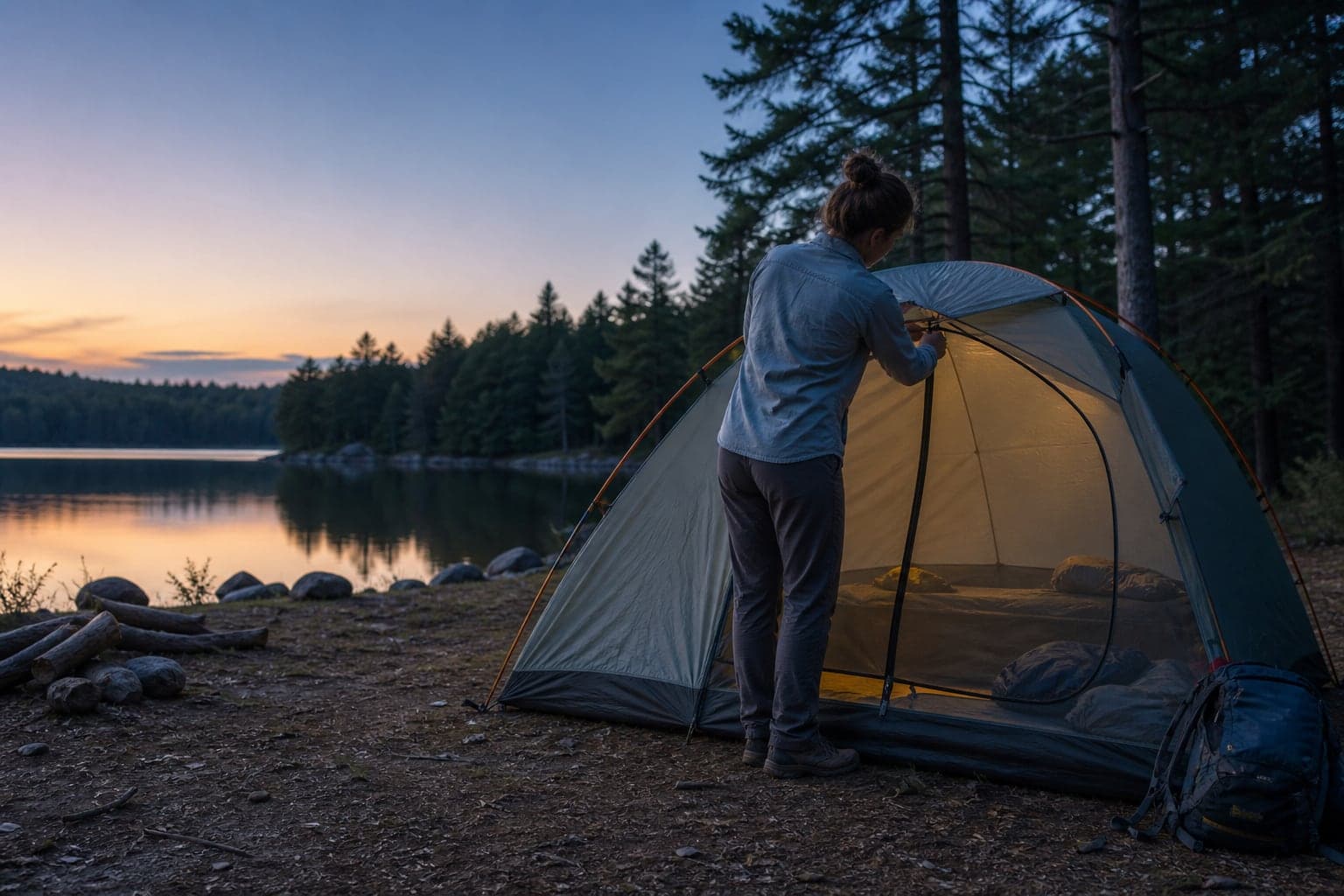
- a tent, including one with aluminum poles;
- an open-sided picnic shelter or pavilion;
- a tarp or awning;
- a lone tree or the tallest tree nearby;
- a shallow rock overhang;
- a convertible or open vehicle;
- lying flat on the ground.
Metal does not “attract” lightning in the simple way the phrase suggests, but it conducts current efficiently. The larger issue is that these structures do not provide the enclosed, grounded protection of an appropriate building or vehicle.
Do not remain in the tent because gear feels insulated. The poles, wet ground, guylines and nearby strike paths can conduct dangerous current, while the fabric provides no lightning protection.
If safe shelter is genuinely unreachable
This section does not make the outdoors safe. It summarizes NWS last-resort steps that may reduce some risk:
- leave peaks, ridgelines, hilltops and open fields;
- move away from isolated tall trees and other tall isolated objects;
- in forest, seek an area of shorter, more uniform trees rather than the tallest edge tree;
- move away from water, shorelines, fences, wet ropes and other conductive paths;
- spread group members apart so one ground current is less likely to injure several people;
- continue looking for a safer route or shelter rather than treating the chosen spot as protection.
The NWS mentions lower terrain such as a valley or ravine for lightning risk reduction. That is not permission to enter a drainage, narrow canyon, streambed or flood-prone depression during a thunderstorm. Rain may fall upstream and create a flash flood where the campsite itself appears relatively dry. Evaluate all storm hazards together.
There is no posture, foam pad or “lightning position” that makes remaining outside safe. Those measures belong to last-resort guidance, not a Plan A.
Overnight thunder: leave the tent
If thunder wakes you:
- wake everyone and put on shoes and immediately accessible layers;
- take only essential medication, keys, lights and communication equipment;
- move by the preplanned route to the building or vehicle;
- keep the group accounted for;
- remain sheltered until 30 minutes after the last thunder.
Do not spend extra minutes collapsing poles or moving every item into the car. Move people to shelter without delay.
If the route itself crosses rising water, exposed terrain or falling-tree hazards, use the safest viable alternative and contact campground staff or emergency services when appropriate. This is why identifying more than one route during daylight is valuable.
The 30-minute rule
Wait at least 30 minutes after the last sound of thunder before returning outside. If thunder occurs again, restart the clock.
Rain ending is not the trigger. A clearing sky is not the trigger. Lightning can extend beyond the part of the storm producing rain, and the NWS rule is designed to avoid returning while the threat remains.
Afterward, inspect the site for damaged branches, standing water, downed lines, unstable soil and damaged equipment before resuming normal camp activity.
When to cancel or change the trip
Change the plan when:
- thunderstorms are likely and no safe shelter can be reached in time;
- the route or campsite depends on exposed ridges, water crossings or open water during the risk window;
- flash-flood, severe-wind or tornado hazards make the campground or access route unsuitable;
- alerts cannot be received and local storm development is rapid;
- the group cannot evacuate reliably to the identified shelter.
Moving the trip, sleeping elsewhere or leaving early is not an overreaction when the safe-shelter plan fails. It is the conclusion the planning exercise was meant to produce.
For related decisions, see how to camp in the rain, night hiking safety and the broader camping safety guide.
FAQ
Does a tent protect you from lightning?+
No. The National Weather Service says a tent offers no lightning protection. Move to a substantial enclosed building or enclosed hard-topped vehicle when thunder is heard.
Is an open picnic shelter safe during lightning?+
No. Open-sided picnic shelters, pavilions, awnings and gazebos are not safe lightning shelter. Use a substantial enclosed building or enclosed hard-topped vehicle.
How long should campers wait after thunder stops?+
Wait at least 30 minutes after the last sound of thunder before returning outside. Restart the clock if thunder is heard again.
What if there is no building or vehicle nearby?+
There is no safe outdoor location in a thunderstorm. As last-resort risk reduction, leave high and open terrain, avoid isolated tall trees, water and conductive paths, spread the group apart and keep seeking a safer option. Do not enter flood-prone ravines or drainages mechanically.
Sources reviewed
Fact-checked Aug 30, 2026
These references support factual or safety-sensitive claims in this article. Access dates show when our editors last verified the source.
- National Weather Service — Lightning Safety Outdoors
Official source · Accessed Aug 30, 2026
- National Weather Service — Thunderstorm Safety
Official source · Accessed Aug 30, 2026
- National Weather Service — Campground Weather-Ready Checklist
Official source · Accessed Aug 30, 2026