campfire / outdoor activities
Night Hiking Tips
Night hiking safety from a campsite — when to avoid it, how to choose a familiar legal trail, and what changes when visibility and temperature fall.
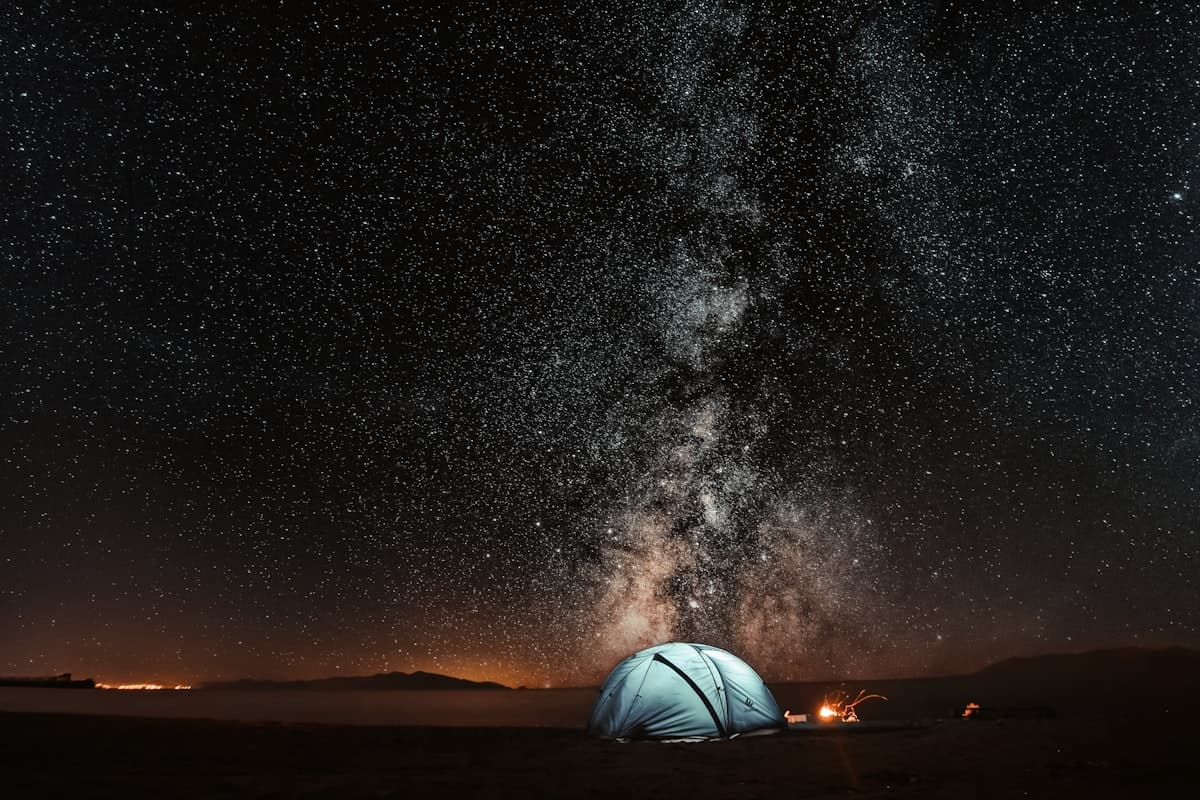
A night hike can turn a familiar trail into a memorable hour — or turn a small navigation mistake into a search problem. The first decision is not which headlamp to buy. It is whether that trail, on that night, should be hiked after dark at all.
Check whether night access is permitted
Park gates, trailheads, beaches, wildlife areas, and parking lots may close before the surrounding campground does. The National Park Service recommends checking park and trail hours before a night activity. Also check temporary closures, fire restrictions, hunting seasons, wildlife advisories, and the local forecast.
Some parks explicitly advise visitors to avoid hiking after dark because falls and wildlife encounters become harder to manage. Local park guidance wins over a generic night-hiking checklist.
Use a short route you already know
The NPS recommends becoming familiar with the route and terrain during daylight first, including steep sections, footing, water crossings, and other trail users. For a first night outing, choose a short maintained trail with obvious turnaround points rather than technical terrain, exposed edges, or a route that depends on faint landmarks.
Set a turnaround time before leaving. Darkness is not the moment to extend the hike because the viewpoint is “only another mile.”
Carry two independent light sources
Use a headlamp so both hands remain available for balance or trekking poles, and carry a separate backup light with fresh batteries. A phone flashlight is not a reliable primary or backup light: it shares power with navigation and emergency communication, is awkward to hold, and can fail after a drop.
A red-light mode can preserve night vision. The NPS notes that full dark adaptation can take about 30 minutes and that a white light resets it. Use enough light to move safely; protecting night vision is secondary to seeing a hazard.
Slow down and plan for colder conditions
Roots, rocks, and trail edges are harder to judge in a narrow beam. Reduce pace and keep the group together. Night temperatures can be lower, and approaching weather is harder to see, so bring an appropriate layer even when the campsite felt warm at departure.
Tell someone outside the group the exact route and expected return time. Carry the navigation and emergency equipment appropriate to the location; do not assume mobile service exists.
Treat wildlife as a local question
Many animals are active after dark, but the correct response varies by species and location. Review the park's current wildlife guidance before leaving, travel with others where recommended, stay on the trail, never approach or feed wildlife, and carry bear spray only where it is legal and recommended — knowing how to use it.
Our bear safety guide covers prevention, but destination-specific ranger guidance should control the actual trip.
When to skip the hike
Choose stargazing near camp or another lower-risk activity when:
- the trail or parking area is closed after dark;
- thunderstorms, heavy rain, smoke, extreme cold, or poor visibility are expected;
- the route is unfamiliar, exposed, flooded, icy, or difficult to follow;
- the group lacks two working lights or appropriate navigation;
- wildlife or hunting advisories make the area unsuitable;
- anyone is already tired, cold, impaired, or uncomfortable continuing.
Our stargazing guide offers an alternative that does not require committing to a trail after dark.
FAQ
Should you use a headlamp or flashlight for night hiking?+
Use a headlamp as the primary light so your hands remain free, and carry a separate working backup light. A phone flashlight should not be your only backup.
Should beginners night hike an unfamiliar trail?+
No. Start with a short, maintained route you have already inspected in daylight, and check that the park and trail are open after dark.
Is night hiking allowed in every park?+
No. Trail, gate, parking and activity hours vary, and temporary wildlife or weather closures may apply. Check the managing park's current rules before leaving.
Sources reviewed
Fact-checked Aug 30, 2026
These references support factual or safety-sensitive claims in this article. Access dates show when our editors last verified the source.
- National Park Service — Night Hiking Safety
Official source · Accessed Aug 30, 2026
- National Park Service — Hiking Safety at Great Smoky Mountains
Official source · Accessed Aug 30, 2026