guides / checklists
The Ultimate Camping Checklist, Organized by System
Build a camping checklist that catches missing components: core systems, trip modifiers, an owner column, a load order and a final physical touch-check.
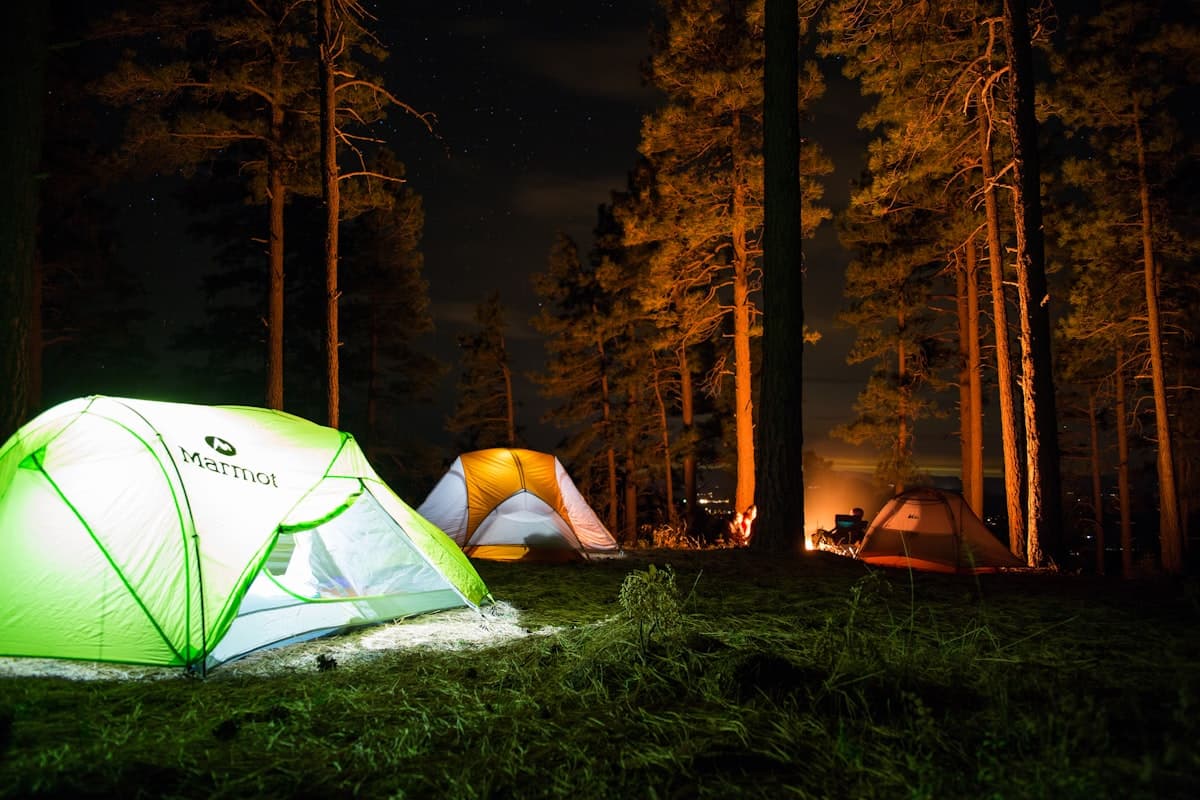
A complete camping checklist is not the longest list. It is one that confirms every working system—shelter, sleep, water, food, clothing, light, health, navigation and administration—and assigns each critical item an owner.
Use this page in three passes:
- Pack the core systems.
- Add the trip modifiers that match your forecast, people and destination.
- Run the eight-item physical touch-check at the loaded vehicle.
That sequence catches the classic problem: the tent is packed, the poles are not, and the checklist is technically very proud of itself.
Customize before you pack
Write the trip conditions at the top of your copy:
| Input | Your trip |
|---|---|
| Campground and site | |
| Dates and nights | |
| Number and ages of campers | |
| Forecast high / overnight low | |
| Rain, wind, heat or cold concern | |
| Potable water available? | |
| Toilets / showers? | |
| Cooking method permitted? | |
| Current fire status | |
| Food-storage rule | |
| Pets or accessibility needs | |
| Distance from vehicle and help |
Then label each item:
- Core: the system cannot perform its job without it.
- Conditional: required by your people, place, activity or forecast.
- Comfort: worthwhile only after the core works.
“Core” changes with the trip. A can opener is irrelevant to a menu without cans and essential to one built around them. This is why the menu and official campground page belong above the packing list.
The eight-item departure gate
With the vehicle loaded, one person points to each item while another checks it off:
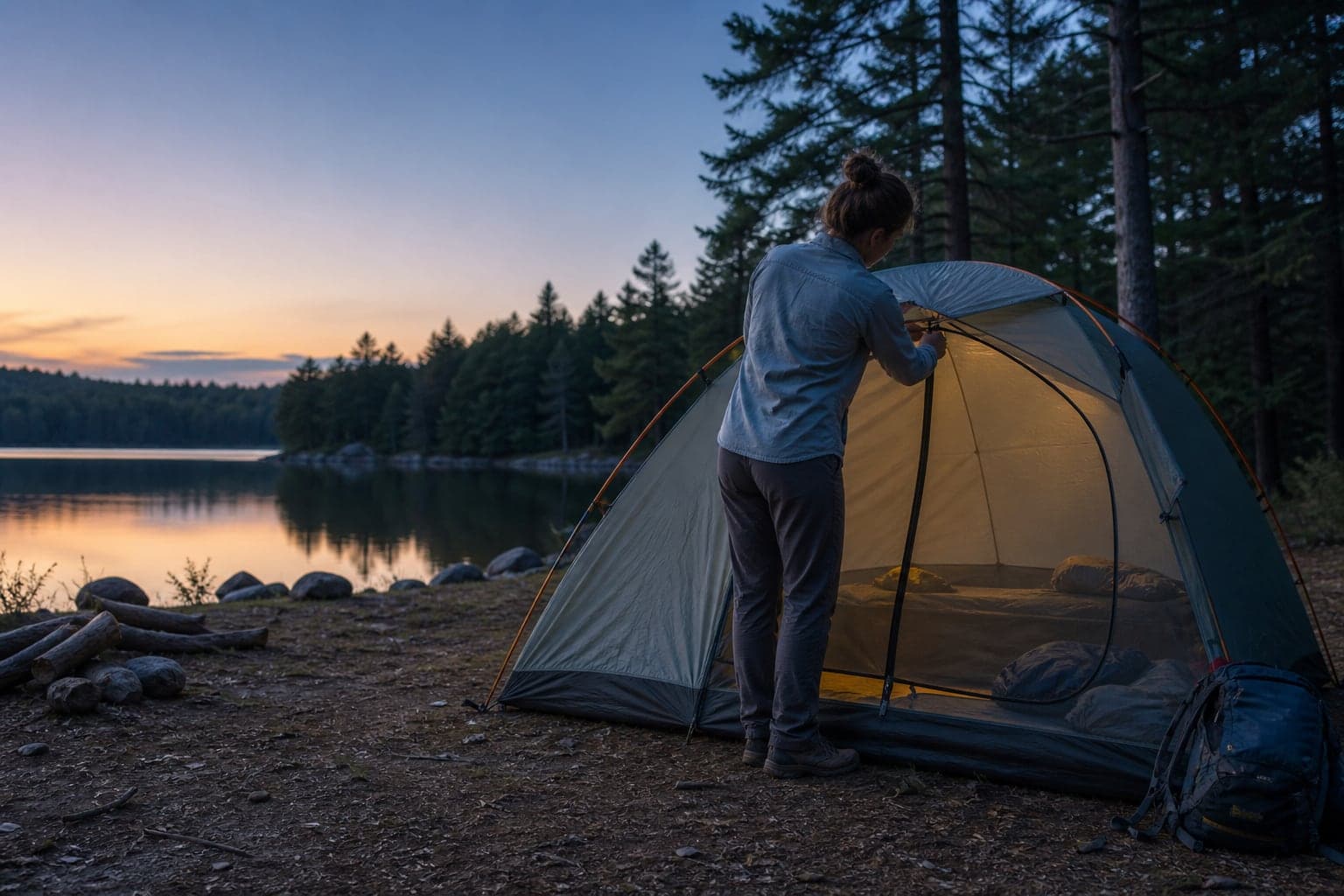
- Complete tent: body, poles, rainfly, stakes and required guylines
- Complete sleep system for every person: bag or bedding and insulating pad
- Drinking water or confirmed potable source plus containers
- Working light for every person plus reserve power
- Personal medication and checked first aid kit
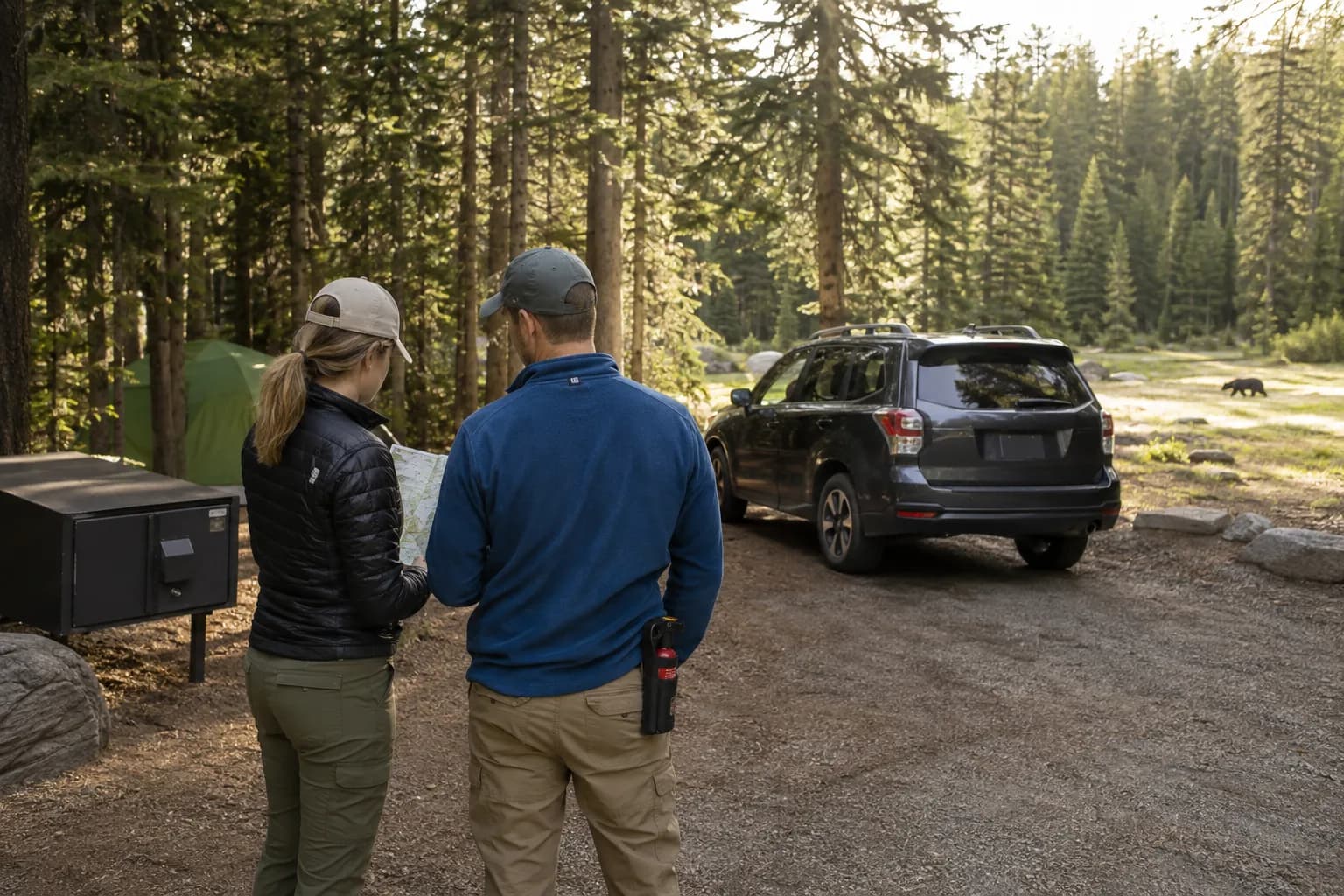
- Reservation, required permit/pass, ID and offline directions
- Complete cooking plan: permitted appliance, correct fuel, ignition and cookware—or a no-cook menu
- Weather, closure, fire and food-storage rules checked on the official source
These are not statistically ranked “most forgotten” items. They are the failure points with the largest consequences if your specific trip needs them.
Shelter system
| Pack | Priority | Verify before loading |
|---|---|---|
| Tent body | Core | Occupancy and site dimensions fit |
| Poles or frame | Core | Every section and connector is present |
| Rainfly | Core when part of the weatherproof design | Correct fly for this tent |
| Stakes | Core where required | Enough for tent and required guylines; site permits them |
| Guylines | Core in conditions/designs that require them | Attached, untangled and understood |
| Footprint or groundsheet | Conditional | Fits fully beneath the floor; no edge collects rain |
| Repair materials approved for the fabric | Conditional | Adhesive or patch suits the material |
| Living-area tarp, cord and separate stakes | Conditional | Site permits attachment; safe clearances are possible |
| Mallet | Comfort | Appropriate for site surface |
Pitch the complete shelter at home. “Poles: yes” is not the same as “the right poles connect to this tent.” Follow its manufacturer instructions for staking, ventilation, wind limits, cleaning and repairs.
For a wet forecast, add the setup order from how to camp in the rain.
Sleep system
| Pack | Priority | Verify |
|---|---|---|
| Sleeping bag, quilt or bedding per person | Core | Suitable for forecast, shelter and sleeper |
| Insulating sleeping pad per person | Core | Holds air; insulation suits ground conditions |
| Dry sleep clothing | Core in cool or wet conditions | Sealed separately |
| Pillow or clothing-filled stuff sack | Comfort | Does not steal required warm clothing |
| Extra blanket | Conditional | Useful margin for car camping |
| Earplugs / eye mask | Comfort | Consider campground noise and early light |
| Pad repair kit | Conditional | Correct for the pad material |
Do not treat a bag label as a personal guarantee. Sleep warmth depends on the full system, including ground insulation, clothing, shelter, humidity and the individual sleeper.
Water and food system
Plan meals first. Then the equipment list becomes a consequence of the menu instead of a tour of the kitchen drawers.
| Pack | Priority | Verify |
|---|---|---|
| Drinking water or treatment method | Core | Current site information confirms source and treatment need |
| Water containers | Core | Capacity covers drinking, cooking and required cleanup |
| Written menu and quantities | Core | Includes arrival and departure meals |
| Food in required wildlife-safe storage | Core | Matches the destination rule |
| Cooler and cold sources | Core for perishables | Thermometer reads 40°F/4°C or below |
| Stove | Conditional | Allowed; intended for outdoor use |
| Correct fuel | Conditional | Compatible, sufficient and undamaged |
| Lighter plus dry backup ignition | Conditional | Both tested |
| Pot/pan and lid | Conditional | Exactly what the menu needs |
| Utensils, plates and mugs | Core if needed | Counted by person |
| Knife, cutting board, can opener | Conditional | Driven by ingredients |
| Food thermometer | Conditional | Needed for foods requiring safe internal temperatures |
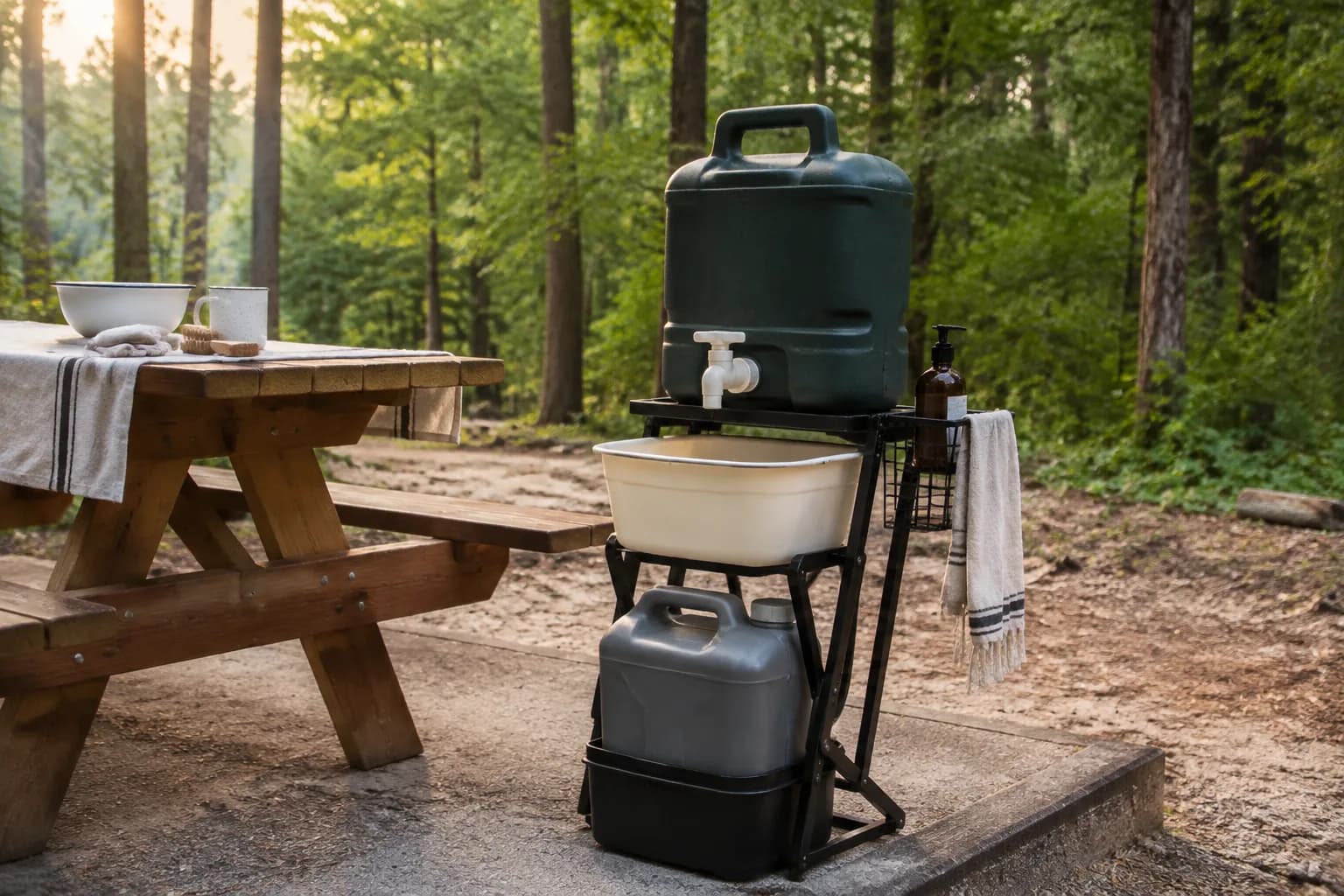
| Dish basin, soap and cloth | Conditional | Disposal follows campground rules |
| Trash and recycling bags | Core | Pack-out capacity if bins are absent |
FoodSafety.gov advises keeping perishables at 40°F/4°C or below, using a cooler thermometer, and limiting time out of temperature control. A separate drink cooler reduces how often the food cooler is opened.
Clothing system
Pack for the overnight low and planned activities, then protect one complete dry change.
| Pack | Priority | Verify |
|---|---|---|
| Base clothing for each day/activity | Core | Fits the forecast and exertion |
| Insulating layer | Conditional | Available before temperature drops |
| Rain shell | Conditional | Waterproofing and fit checked |
| Warm hat and gloves | Conditional | Match elevation and season |
| Sleep clothing | Core in cool conditions | Kept dry |
| Extra socks | Conditional | At least one dry pair protected |
| Closed footwear | Core for most camps | Broken in and activity-appropriate |
| Camp shoes | Comfort | Safe for site surface |
| Sun hat and sunglasses | Conditional | UV and exposure dependent |
| Swimwear and towel | Conditional | Activity and rules checked |
| Laundry/wet-gear bag | Conditional | Separates wet items |
Avoid packing a clothing category with no owner. “Four jackets” sounds complete until all four belong to the same adult.
Light, navigation and communication
| Pack | Priority | Verify |
|---|---|---|
| Headlamp or flashlight per person | Core | Turns on; controls understood |
| Spare batteries or charged reserve | Core | Compatible |
| Lantern | Comfort | Does not replace personal lights |
| Offline campground map and directions | Core | Opens in airplane mode |
| Paper map | Conditional | Appropriate to travel beyond campground |
| Phone and cable | Conditional | Emergency numbers saved |
| Power bank | Conditional | Charged and cable tested |
| Weather-alert method | Core where hazards are possible | Works at destination or offline alternative exists |
| Whistle | Conditional | Accessible, not buried |
| Satellite communicator | Conditional | Remote travel; subscription and check-in tested |
The National Park Service trip-planning guide recommends leaving a trip plan and preparing for emergencies. A phone is useful; a phone with no signal, no downloaded map and 6% battery is mostly a reflective rectangle.
Health, hygiene and sun/insect protection
| Pack | Priority | Verify |
|---|---|---|
| Personal medication | Core | Labelled; quantity and storage checked |
| First aid kit | Core | Opened, inventoried and current |
| Emergency information/action plans | Conditional | Accessible to another responsible person |
| Sunscreen | Conditional | Label directions and expiry checked |
| Insect repellent | Conditional | Registered product; label directions checked |
| Handwashing supplies / sanitizer | Core | Appropriate to available facilities |
| Toothbrush and toiletries | Core | Scented items stored per wildlife rules |
| Toilet paper | Conditional | Facilities and pack-out rules checked |
| Menstrual products | Conditional | Pack-out bag included |
| Trowel and waste system | Conditional | Only where permitted; local disposal rules known |
| Quick-dry towel | Conditional | Showers, swimming or rain |
Use the dedicated camping first aid kit checklist to size medical supplies to the group, activities and time to help.
Campsite, fire and repair tools
| Pack | Priority | Verify |
|---|---|---|
| Camp chairs | Comfort | Number matches people |
| Table | Conditional | Site has none and space permits |
| Multi-tool | Conditional | Legal and task-appropriate |
| Cord and clips | Conditional | No prohibited tree attachment |
| Manufacturer-compatible repair supplies | Conditional | Tent, pad and gear materials covered |
| Fire extinguisher or water bucket | Conditional | Required type/capacity checked |
| Firewood | Conditional | Bought locally and allowed |
| Fire-starting supplies | Conditional | Fire currently permitted |
Never assume a fire ring means a fire is currently allowed. Check the land manager's current restriction page shortly before departure. Parks Canada’s Buy local, burn local guidance warns that moving firewood can carry insects and disease into new areas; buy locally and leave unused wood on site.
Documents and site administration
- Reservation confirmation saved offline
- Photo ID and payment method
- Entrance pass, parking permit or activity permit
- Vehicle plate and description in the trip plan
- Check-in/check-out times
- Cancellation and no-show terms
- Site dimensions and occupancy limit
- Pet rules, if applicable
- Food-storage order
- Current fire status
- Quiet hours and generator rules
- Potable-water and washroom status
- Emergency and after-hours contacts
- Trusted contact has itinerary and overdue time
Add only the modifiers your trip needs
| Trip condition | Add or change |
|---|---|
| Rain | Living-area tarp, rain layers, sealed dry change, extra towels, wet-gear bin |
| Cold | More sleep-system margin, warm layers, insulated water storage, tested cold-weather equipment |
| Heat | More water capacity, shade plan, sun protection and lower-exertion schedule |
| Children | Clothing depth, child-specific sleep and safety gear, identification/contact plan, simple activities |
| Dog | Leash, waste bags, food/water, bedding, medication and verified park/veterinary rules |
| Wildlife food-storage area | Required locker/canister/vehicle plan for food, trash, cookware and scented items |
| Remote site | Navigation, communication, water treatment, emergency shelter, repair depth and detailed trip plan |
| No potable water | Enough carried water or a verified collection and treatment system |
| Fire ban | No-fire menu and permitted stove plan; remove fire-dependent meals |
| Accessibility needs | Site surface, distance, washroom access, equipment and support confirmed with the operator |
For quantities on a short trip, use the weekend camping checklist. For child-specific planning, use the family camping checklist.
Assign ownership: the missing column
For every core item, add initials and a state:
| System | Item | Owner | Packed | Tested / verified |
|---|---|---|---|---|
| Shelter | ||||
| Sleep | ||||
| Water | ||||
| Food | ||||
| Light | ||||
| Health | ||||
| Documents |
“Sam has the stove” is a plan. “Someone is bringing a stove” is folklore.
Load in reverse order of use
The last items loaded should be the first items needed:
- Keep rain layers, confirmation, water and first aid reachable from the cabin.
- Place the tarp and shelter where they can come out before bedding.
- Keep food separate from fuel and chemicals.
- Secure heavy objects low so they cannot become projectiles.
- Do not block the driver's view or required vehicle equipment.
- Run the eight-item touch-check only after the final door closes.
At home, store gear by system, but keep sleeping bags according to their manufacturer's storage instructions rather than assuming compressed storage is acceptable. Refill consumables immediately after the trip, while the empty fuel canister and missing bandage still have witnesses.
FAQ
What should be on a camping checklist?+
Cover complete systems: shelter, sleep, water, food, clothing, light, health, navigation, communication and documents. Then add only the modifiers required by weather, children, pets, wildlife rules, remoteness and facilities.
What are the most important things not to forget when camping?+
Physically verify the complete tent, complete sleep system, water plan, one working light per person, personal medication and first aid kit, reservation and permits, complete cooking or no-cook plan, and current weather, fire and food-storage rules.
Do you need everything on an ultimate camping checklist?+
No. Pack every item required for a working core system, then add conditional items for the actual trip. Long generic lists encourage overpacking and can still miss a required component, such as the fuel that matches the stove or the poles that match the tent.
How do you make sure nobody forgets shared camping gear?+
Assign every core item to one named person and track two states: packed and tested or verified. Finish with a physical touch-check at the loaded vehicle rather than relying only on memory or a digital checkmark.
How should camping gear be loaded in a car?+
Keep rainwear, water, first aid and documents reachable; load the tarp and shelter where they can come out before bedding; separate food from fuel and chemicals; secure heavy items low; and preserve the driver’s view.
Can you bring firewood from home when camping?+
Do not assume so. Moving firewood can spread invasive pests and may violate regulated-area or campground rules. Check the destination and border rules, then buy and burn wood locally when fires are permitted.
Sources reviewed
Fact-checked Sep 4, 2026
These references support factual or safety-sensitive claims in this article. Access dates show when our editors last verified the source.
- National Park Service — What to Bring Camping
Official source · Accessed Sep 4, 2026
- National Park Service — Trip Planning Guide
Official source · Accessed Sep 4, 2026
- Parks Canada — Camping Checklist
Official source · Accessed Sep 4, 2026
- FoodSafety.gov — Keep Food Cool for the Summer
Official source · Accessed Sep 4, 2026
- U.S. Consumer Product Safety Commission — Portable Heaters and Camping Equipment
Official source · Accessed Sep 4, 2026
- Parks Canada — Buy local, burn local
Official source · Accessed Sep 7, 2026