guides / checklists
Weekend Camping Checklist: What to Pack for 2–3 Nights
A printable car-camping checklist for two or three nights, with meal, water and stove-fuel worksheets plus arrival, weather and food-safety checks.
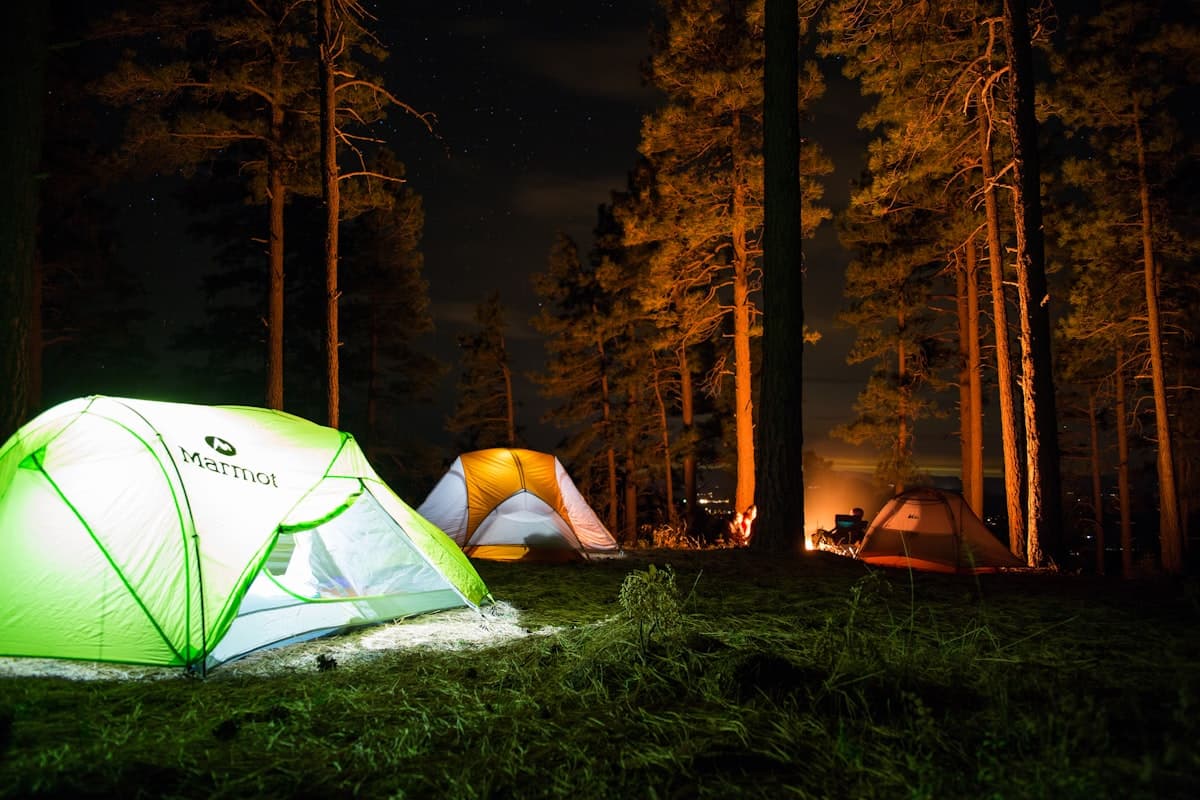
A two-night trip is short. The pile beside the car has not received that information.
This printable list is for frontcountry car camping, where you park at or near an established campsite. It does not cover backpacking, dispersed camping, winter travel or an RV's installed systems. The useful weekend question is not only what to bring; it is how many meals, how much water and how much stove fuel your actual plan requires.
Complete this six-line trip card first
Do not pack from the generic list until these answers are confirmed on the current campground or land-manager page.
| Decision | Your trip |
|---|---|
| People and nights | ____ people · ____ nights |
| Exact campground and site | ______________________________ |
| Potable water status and backup | ______________________________ |
| Forecast low / high / precipitation | ____ / ____ / __________ |
| Fire, food-storage and cooking rules | ______________________________ |
| Emergency contact and return/check-in time | ______________________________ |
- Reservation, vehicle limits, check-in and checkout verified
- Road, weather, smoke, fire and closure alerts checked
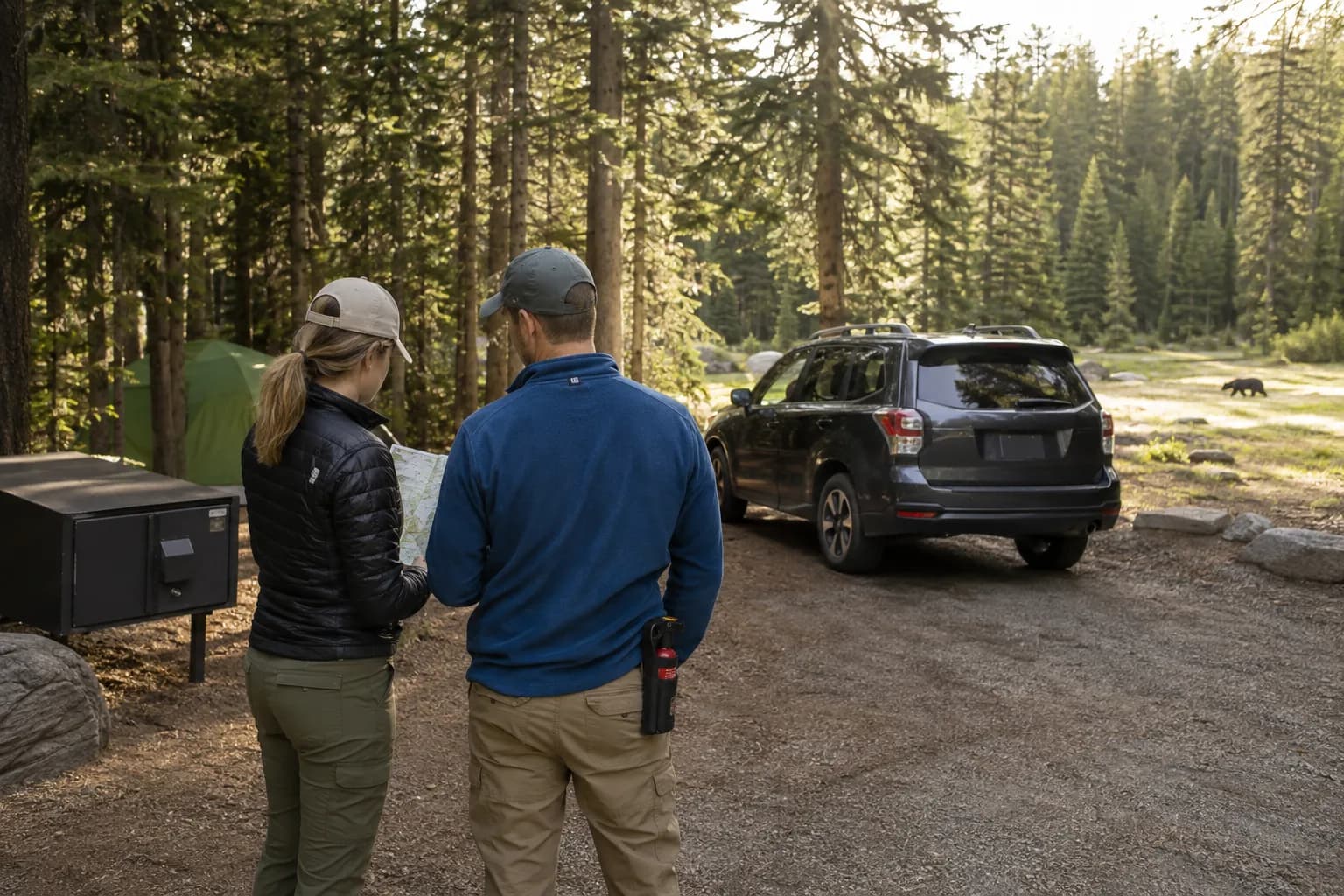
- Food and wildlife storage requirements verified
- Group needs reviewed: medication, mobility, allergies, children and pets
- Trip plan left with someone who is not coming
- A realistic Plan B or early-exit trigger agreed
The National Park Service recommends matching the trip to the group's abilities, checking current hazards and regulations, leaving an itinerary with an emergency contact and carrying extra food and water. A screenshot from last season is not a current alert.
Calculate the quantities instead of guessing
Meals
A typical two-night trip arriving before dinner and leaving after breakfast contains five meals. A third night usually adds three more. Your travel times may change that, so write the meals rather than packing for an imaginary appetite.
| Meal | Planned food | Cold storage? | Cooking minutes |
|---|---|---|---|
| Arrival dinner | ____________________ | Yes / No | ____ |
| Day 2 breakfast | ____________________ | Yes / No | ____ |
| Day 2 lunch | ____________________ | Yes / No | ____ |
| Day 2 dinner | ____________________ | Yes / No | ____ |
| Departure breakfast | ____________________ | Yes / No | ____ |
| Extra night: breakfast | ____________________ | Yes / No | ____ |
| Extra night: lunch | ____________________ | Yes / No | ____ |
| Extra night: dinner | ____________________ | Yes / No | ____ |
Add one simple shelf-stable backup meal that does not depend on a campfire or a single stove working. Do not add eight vague "just in case" dinners. That is how a weekend cooler becomes a refrigerated filing cabinet.
Water
There is no safe universal cargo number for every weekend. Heat, exertion, children, pets, cooking, cleanup, altitude, reliable potable taps and any required treatment all change the total. The National Park Service gives 2 litres per person per day or more, especially in hot climates, as a drinking rule of thumb—not as a complete allowance for drinking, cooking and washing.
Use the destination's guidance when it provides a quantity. Then calculate:
| Water use | Amount |
|---|---|
| Drinking for the group | ____ L / gal |
| Cooking and hot drinks | ____ L / gal |
| Required cleanup/hygiene | ____ L / gal |
| Arrival supply before taps are confirmed | ____ L / gal |
| Emergency margin for delays or failed water service | ____ L / gal |
| Total carried or reliably available | ____ L / gal |
- Potable tap availability and seasonal status confirmed
- Containers cleaned, filled and secured upright
- Treatment method packed if the plan relies on untreated water
- More water planned for heat or strenuous activity
- Refill point and backup source identified
If the campground advertises water, still arrive with enough to get through setup and the first part of the stay. Infrastructure occasionally takes weekends off too.
Stove fuel
Do not assume one small canister covers two people for a weekend. Fuel use changes with stove model, fuel blend, wind, temperature, cookware, simmering and whether you must boil or melt water.
- Add the cooking minutes in the meal table.
- Add planned water-boiling minutes.
- Check the stove manufacturer's burn-time and fuel instructions.
- Test the exact stove and fuel before the trip.
- Add a conservative margin appropriate to the conditions and consequences of running out.
Planned burner time: ____ minutes · Manufacturer estimate: ____ · Fuel packed: ____
Never heat a fuel canister, improvise a heat-trapping windscreen or use a camping stove inside a tent, vehicle or enclosed sleeping area. If the cooking plan fails, use the shelf-stable meal.
Printable weekend camping checklist
Keep accessible for arrival
- Reservation confirmation, permits and site directions
- Weather/closure information saved for offline use
- Headlamp for each person; spare batteries or charging plan
- First aid kit and required medication
- Drinking water for arrival
- Rain shells and one warm layer
- Tent body, rainfly, poles, stakes and footprint/groundsheet
- Stake mallet suited to the campsite surface
- Camp chairs if the site does not provide seating
- Tarp, allowed attachment system and cord if conditions warrant it
Pack this zone last so it comes out first. A headlamp underneath the sleeping bags is not arrival lighting; it is archaeology.
Shelter and sleep
- Tent checked for all parts and sized for people plus essential gear
- Sleeping bag or quilt chosen for the forecast and personal comfort needs
- Insulated sleeping pad for each sleeper
- Pillow or dedicated stuff-sack pillow
- Dry sleep clothing stored in a waterproof bag
- Earplugs if appropriate and quiet-hours plan
- Repair items compatible with tent and pads
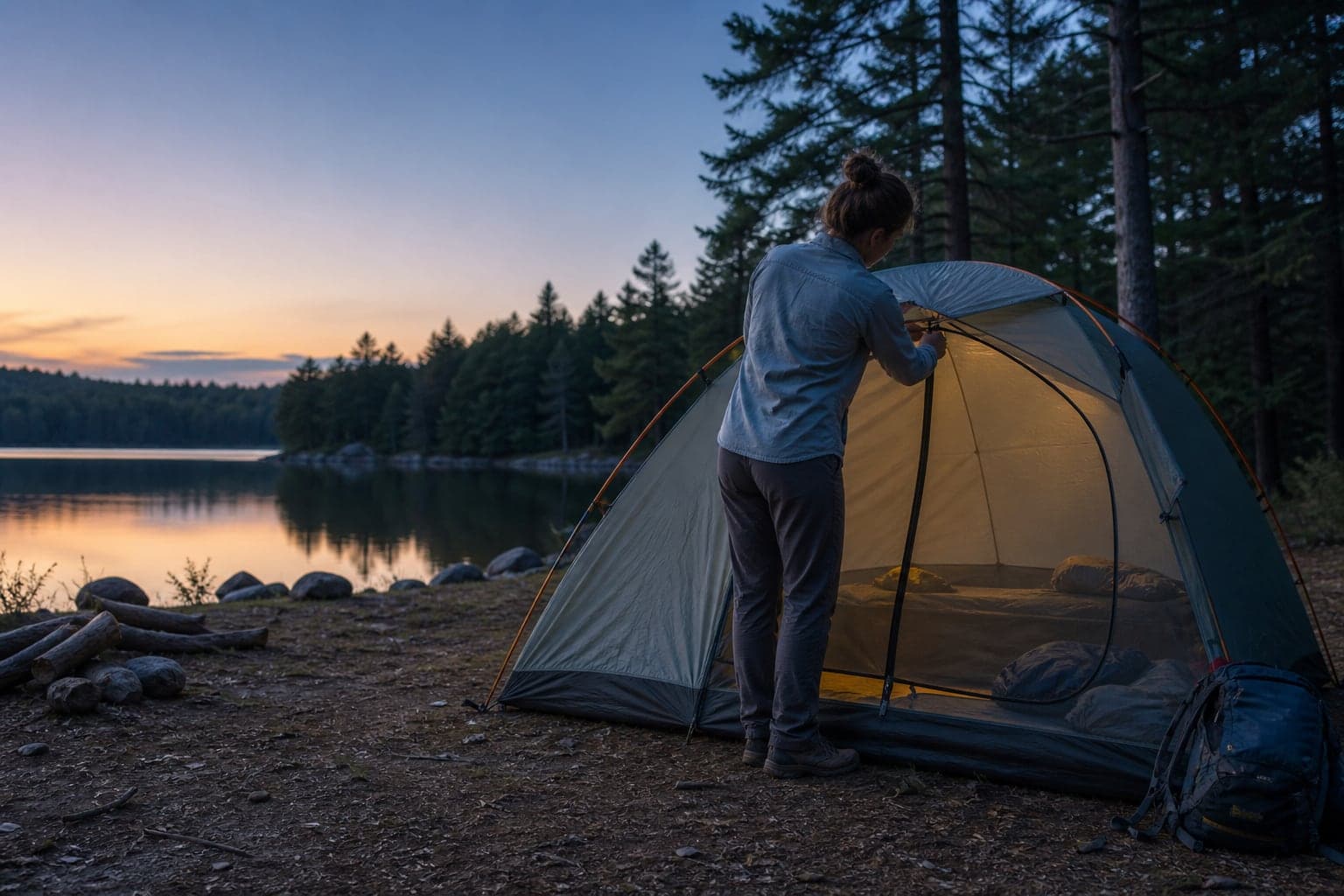
Pitch on the assigned durable pad, away from dead branches and any path water is taking through the site. Do not dig trenches or move vegetation to improve the site.
Cooking and food
- Stove approved for the planned outdoor use
- Correct fuel, calculated above
- Lighter plus separate backup ignition
- Pot and pan required by the written meal plan
- Stable cutting board and food-prep knife stored safely
- Plate/bowl, cup and utensils per person
- Pot holder or heat-safe gloves
- Food thermometer if cooking meat, poultry, seafood or egg dishes
- Cooler, cold sources and optional cooler thermometer
- Raw foods sealed below ready-to-eat foods
- Handwashing or sanitizing supplies
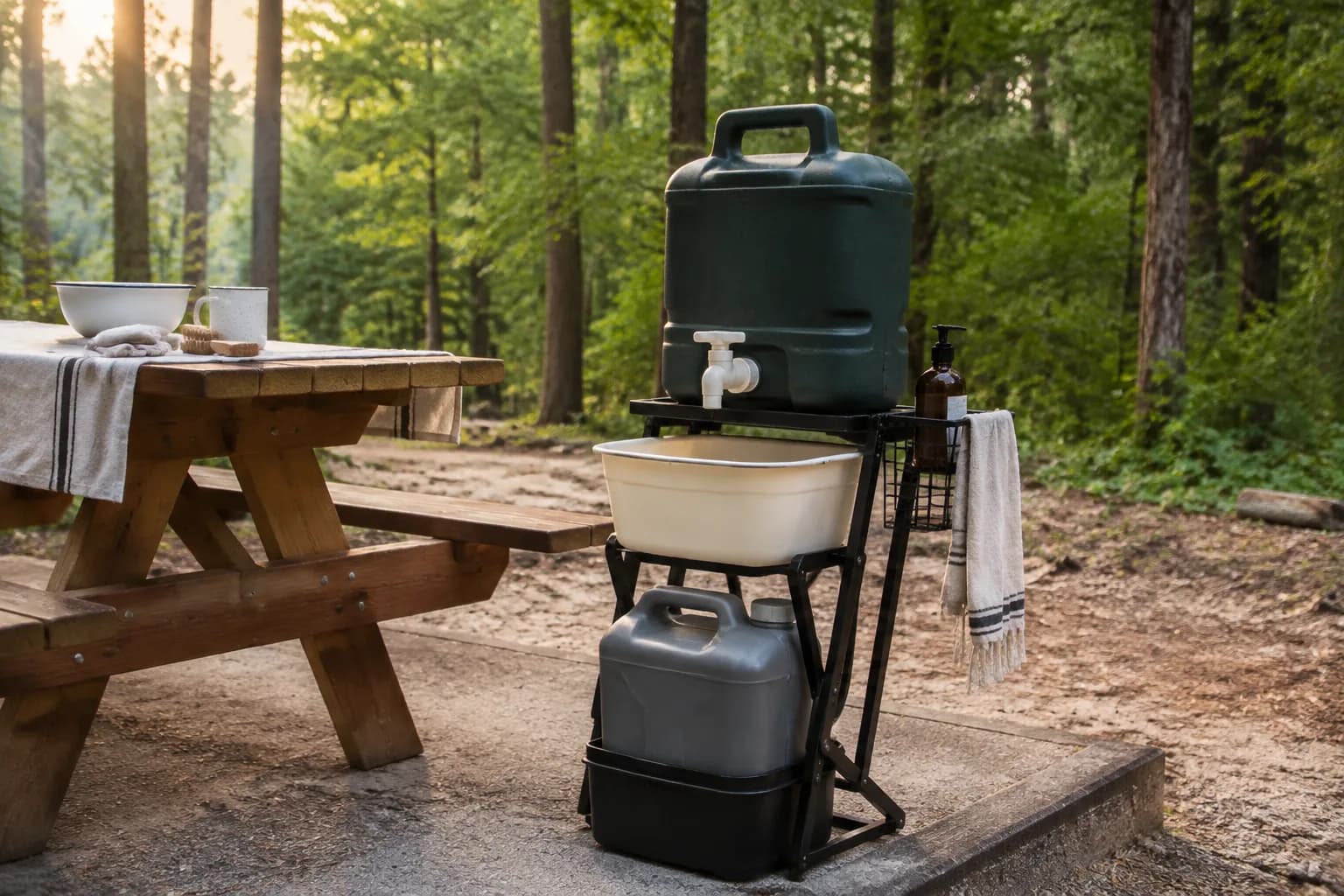
- Dish tub, sponge, small amount of soap and quick-dry towel
- Trash/recycling bags and required wildlife-resistant storage
USDA guidance says cold perishable food should remain at 40°F / 4°C or below. Perishables should not spend more than two hours above 40°F, or one hour when the temperature is above 90°F / 32°C. Pack cold or frozen food, keep the cooler shaded and closed, and follow the destination's food-storage rules even when the cooler is inside a vehicle.
"Biodegradable" soap does not mean it belongs in a lake, stream or campsite soil. Use designated wastewater facilities and follow the campground's disposal rules.
Clothing
- Underwear and socks for the plan, plus a dry reserve
- Base layers appropriate to forecast and activity
- Insulating layer for the overnight low
- Rain shell per person
- Sun hat and warm hat if conditions call for both
- Camp footwear plus one dry footwear strategy
- Sleep clothing kept separate from daytime clothing
- Swimwear only if swimming is permitted and conditions are safe
Pack clothing as systems, not a rigid outfit per day. A hot dry weekend may need fewer changes; wet conditions may require more dry socks and protected insulation.
Health, navigation and communication
- Personal medication plus necessary instructions
- First aid kit checked and understood by the group
- Sunscreen, sunglasses and lip protection
- Insect repellent used according to its label
- Paper map or downloaded offline map
- Phone, charging cable and power bank
- Backup communication appropriate to the location
- Emergency contacts, campground number and nearest appropriate care noted
- Whistle and light accessible to each responsible group member
Cell service is useful when it exists. It is not the only line in an emergency plan.
Campsite care
- Current fire rules checked; no fire treated as a complete answer
- Water and required tool ready before any permitted fire is lit
- Food, toiletries, trash and cookware stored as required
- Quiet hours and generator hours known
- All cords and guylines visible and out of shared paths
- Every brought item counted or visually swept before departure
- Site left without trenches, rock stacks, food scraps or micro-trash
If a fire is permitted, an adult stays with it, keeps it controlled and extinguishes it completely. Our foil packet meals are an option only where the fire and cooking method are allowed; the menu needs a no-fire backup.
Pack the car in four zones
| Zone | Examples | Packing order |
|---|---|---|
| Arrival | confirmation, lights, water, rainwear, tent | Last in, first out |
| Sleep | pads, bags, dry clothing | Together and protected from leaks |
| Kitchen | cooler, stove, food box, dish kit | Stable, separated from fuel as required |
| Safety/exit | first aid, medication, communication, vehicle essentials | Reachable without unloading the car |
Do not let loose equipment interfere with seats, restraints, visibility or vehicle controls. Follow the vehicle manual for load limits and cargo securement.
What can stay home
Leave an item when it has no job in the meal, sleep, weather, safety or activity plan—and when removing it does not eliminate a necessary backup.
- A second pot when every planned meal uses one
- Full-size toiletries decanted into labelled trip containers
- Duplicate gadgets with no distinct function
- Extra shoes without a wet/dry purpose
- A cooler much larger than the packed food and cold source
- Campfire-only equipment when fires are prohibited
Do not apply ultralight logic to medication, first aid, insulation, water treatment, emergency communication or a safety margin. The lightest missing item is often the one you notice most.
The five-minute departure check
- Forecast, alerts, closures and fire status checked again
- Everyone has required medication, identification and suitable clothing
- Water total and reliable refill plan confirmed
- Cooler is cold; raw and ready-to-eat foods separated
- Stove/fuel match and no-fire meal confirmed
- Tent poles, rainfly and stakes physically seen
- Lights work
- Emergency contact has itinerary and check-in time
- Driver can see clearly and cargo is secured
- Plan B still works under the current conditions
If rain is likely, how to camp in the rain covers site drainage and wet-tent packing. Families can add the child-specific items from our family camping checklist. For a broader equipment inventory, use the ultimate camping checklist.
Sources and scope
- National Park Service: camping safety before the trip
- National Park Service: what to bring camping
- USDA FSIS: food safety while hiking and camping
- U.S. Consumer Product Safety Commission: portable heaters and camping equipment
Destination rules, product manuals, current forecasts and individual medical guidance replace this general frontcountry checklist where they are more specific.
FAQ
How much water should you pack for a weekend camping trip?+
Calculate drinking, cooking, cleanup, arrival supply and an emergency margin separately. The National Park Service gives 2 litres per person per day or more in hot climates as a drinking rule of thumb, not a complete total. Use destination guidance and increase for heat, exertion and unreliable water service.
How many meals are in a two-night camping weekend?+
Arriving before dinner and leaving after breakfast usually creates five meals: arrival dinner, three meals on the full day and departure breakfast. Write down travel times and every meal; a third night generally adds another breakfast, lunch and dinner.
Is one small stove canister enough for a weekend?+
Do not assume it is. Add planned cooking and water-boiling time, check the exact stove and fuel-maker burn information, test the system and add a margin for wind, cold and the consequences of running out.
How do you keep food safe in a camping cooler?+
Keep perishable food at 40°F / 4°C or below with adequate ice or frozen packs. Pack it cold, keep raw food sealed below ready-to-eat food, shade the cooler and limit opening. Follow the USDA two-hour rule, reduced to one hour above 90°F / 32°C.
What should be packed last so it comes out first?+
Keep reservation details, lights, arrival water, rain shells, first aid and the complete tent together near the vehicle door. Safety and shelter should be reachable without unloading the entire car.
Sources reviewed
Fact-checked Sep 4, 2026
These references support factual or safety-sensitive claims in this article. Access dates show when our editors last verified the source.
- National Park Service — Camping Safely Before the Trip
Official source · Accessed Sep 4, 2026
- National Park Service — What to Bring Camping
Official source · Accessed Sep 4, 2026
- USDA FSIS — Food Safety While Camping
Official source · Accessed Sep 4, 2026
- CPSC — Portable Heaters and Camping Equipment
Official source · Accessed Sep 4, 2026