guides / checklists
Family Camping Checklist: Pack by Owner, Not by Pile
A printable family camping checklist organized by owner, with adult-only safety gear, child packing jobs, quantity decisions, and a final car-door check.
Four bags can be packed perfectly and still leave a family in the driveway asking who has the rain jackets. The fix is not a longer pile. It is an owner beside every essential item.
This printable list separates shared gear, adult-controlled gear, and one bag per child. Children can participate; adults still verify every safety-critical item, quantity, rule, and forecast.
Before packing: decide what this trip requires
A generic list cannot know whether your site has potable water, a food locker, electricity, a walk-in approach, or a fire ban. Complete this strip first.
| Trip decision | Your answer |
|---|---|
| Destination and site number | ______________________________ |
| Dates and number of nights | ______________________________ |
| Adults / children and age-specific needs | ______________________________ |
| Potable water available? Where? | ______________________________ |
| Toilet type and distance | ______________________________ |
| Required food-storage method | ______________________________ |
| Current fire rule | ______________________________ |
| Forecast, overnight low, heat, smoke, or storm concerns | ______________________________ |
| Planned water activity and required flotation | ______________________________ |
| Emergency contact, campground number, and exit route | ______________________________ |
If any answer is unknown, check the managing agency before buying or packing around an assumption. The National Park Service specifically recommends checking permits, conditions, food storage, fire rules, water availability, and emergency planning before departure.
Printable family camping checklist
Write a name beside each section. “The family” cannot carry a bin or remember a prescription.
Shared shelter and campsite bin — owner: __________
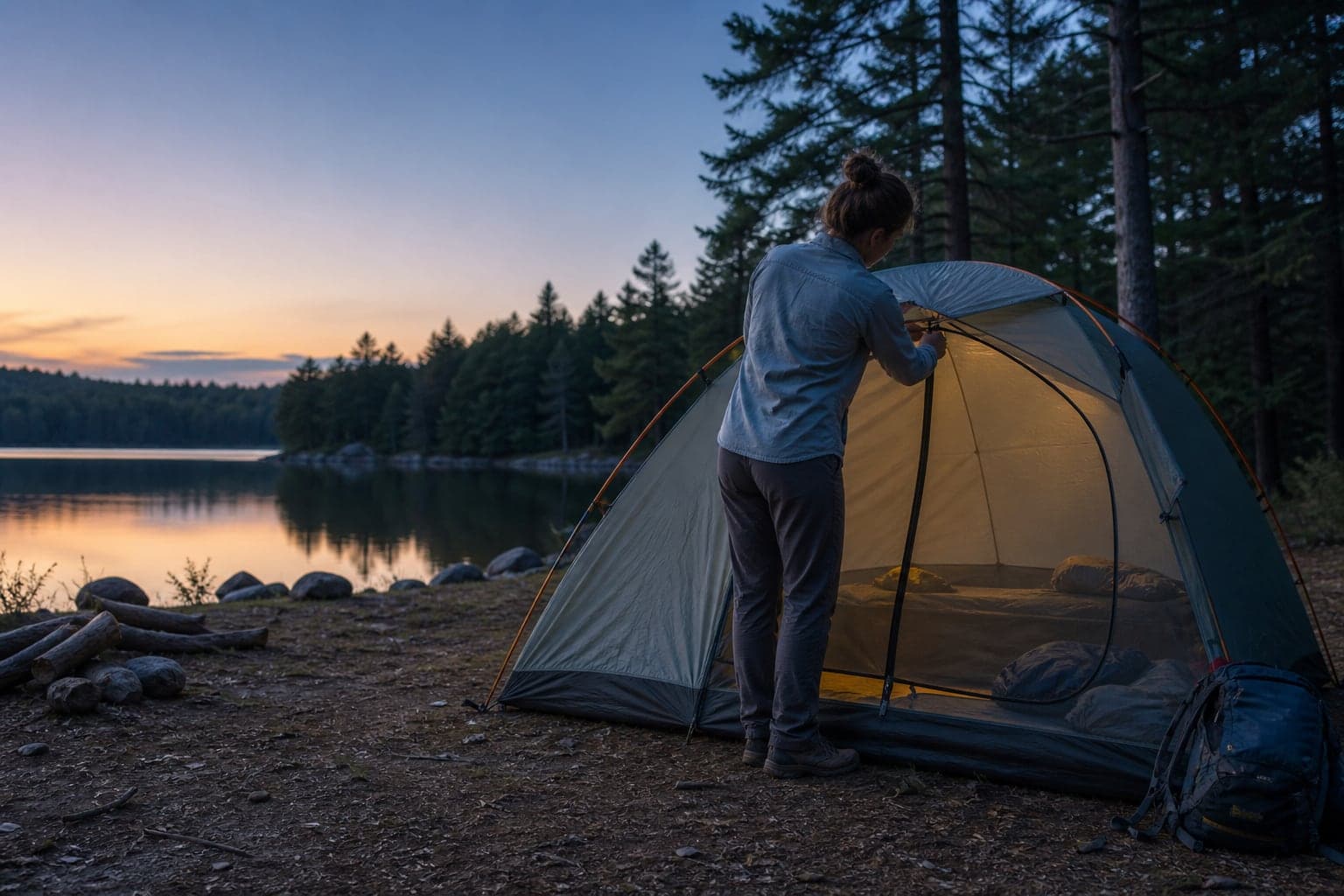
- Tent, poles, stakes, footprint or groundsheet, and manufacturer instructions
- Sleeping pads and age-appropriate sleep systems for every person
- Weather-rated tarp or shelter if the site and forecast justify it
- Guylines, repair items, and a mallet appropriate to the equipment
- Chairs or another suitable place to sit
- Table light and spare power
- Weather radio or alert method appropriate to the destination
- Printed reservation, permits, vehicle details, and offline directions
- Rubbish bags and the equipment required to follow local disposal rules
Water, hygiene, and first aid — adult owner: __________
- Drinking-water plan based on people, duration, activity, conditions, and the verified source
- Enough water to arrive safely plus an appropriate reserve for delays or source failure
- Water containers labelled for drinking
- Treatment method if the planned source is not confirmed potable
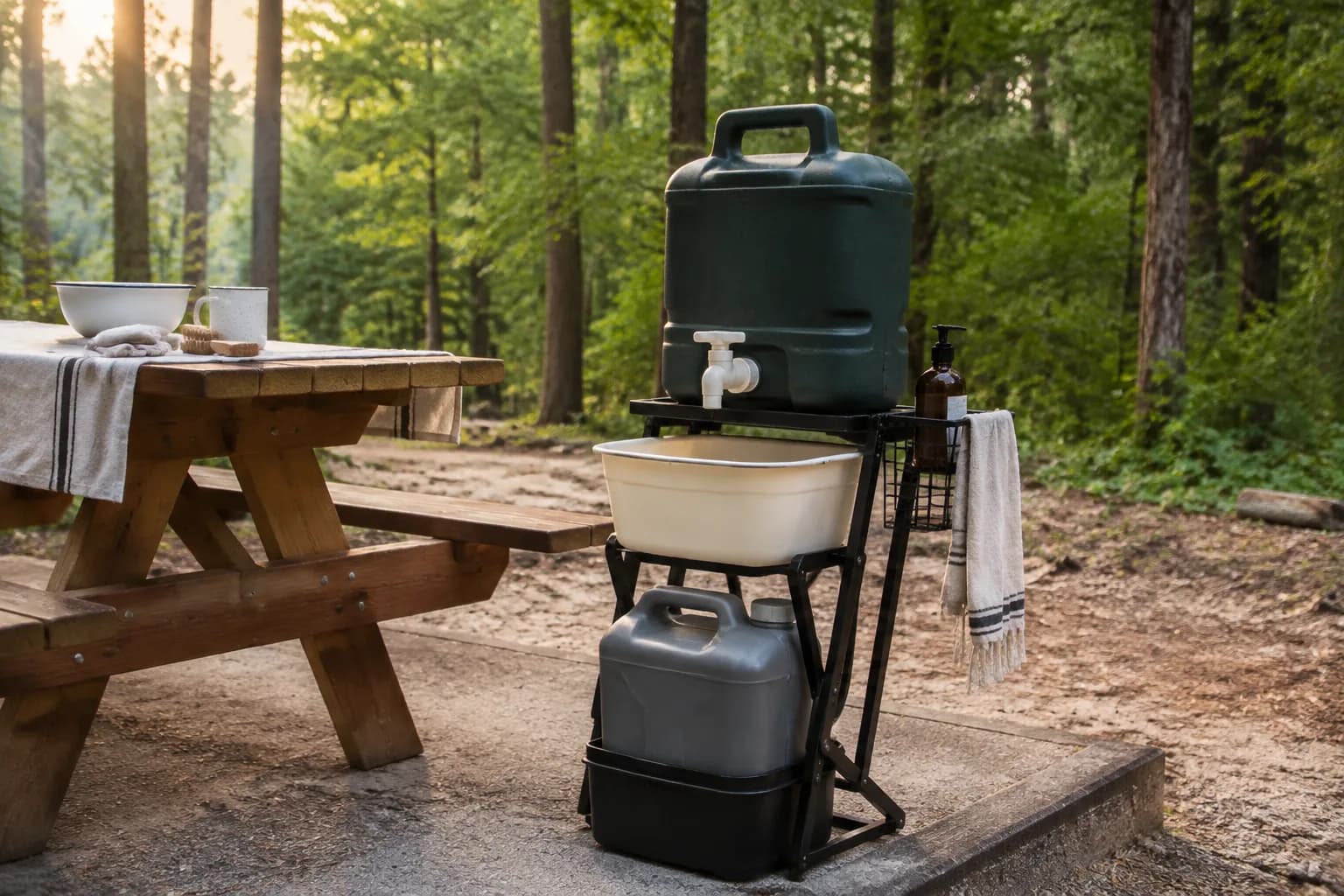
- Handwashing supplies; sanitizer as a backup when appropriate
- Toilet paper and sanitation supplies required by the campground
- Sunscreen, insect repellent, and sun-protective clothing appropriate to each person
- First-aid kit matched to the group and activities
- Health cards, allergies, emergency information, and required assistive equipment
There is no honest universal “gallons per family” number. A serviced campground in mild weather and a remote hot-weather trip are different water problems. Confirm the source, plan the consumption and cooking needs of the actual group, then carry a reserve suited to the consequence of that source failing.
Kitchen and food storage — adult owner: __________
- Meal plan with every meal, snack, and travel delay accounted for
- Stove and fuel permitted at the destination; stove tested before departure
- Ignition method kept under adult control
- Cookware, utensils, plates, cups, and bowls counted for the group
- Food thermometer when cooking meat or other foods that require temperature verification
- Cooler or shelf-stable menu capable of keeping the chosen food safe
- Raw food separated from ready-to-eat food
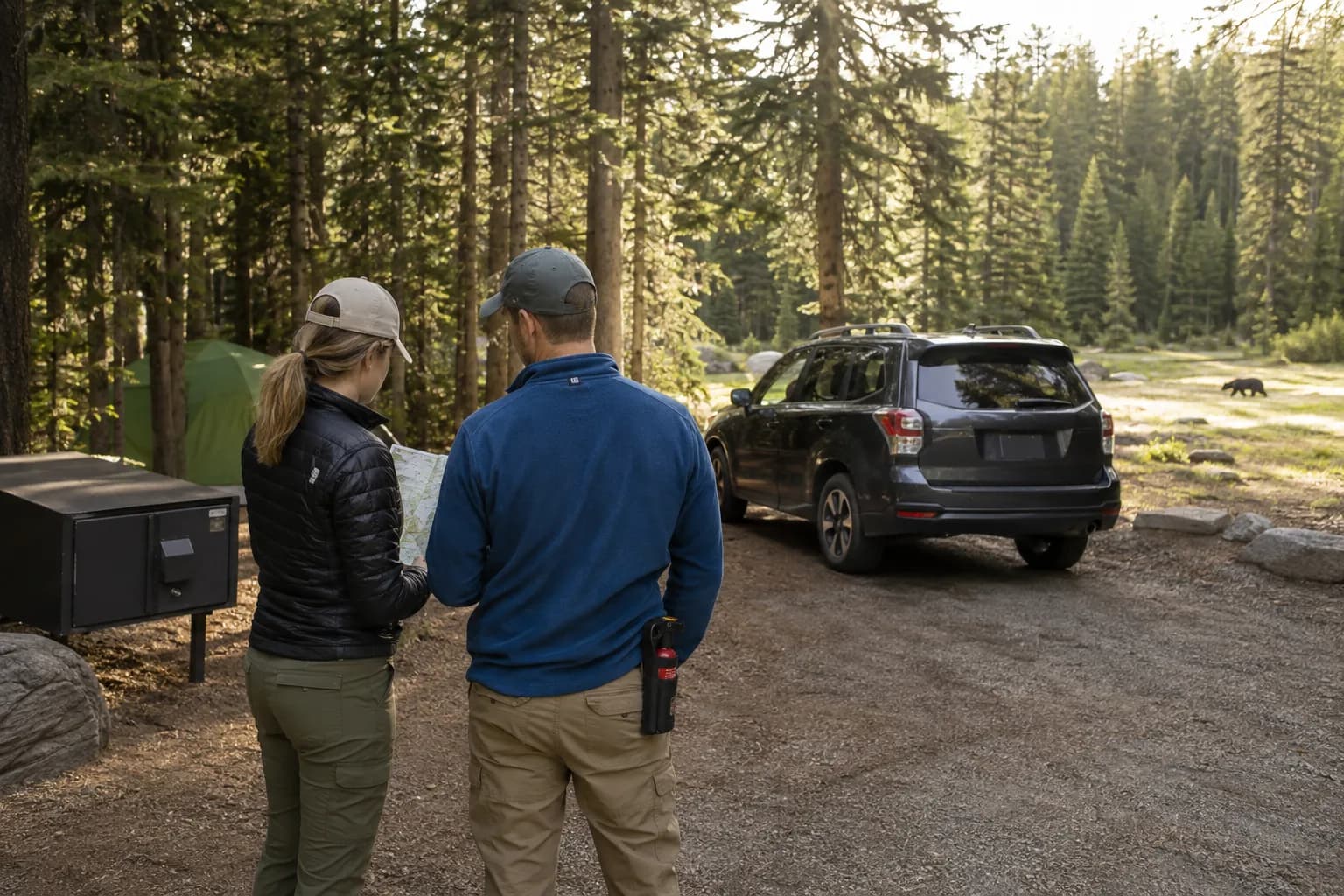
- Campground-required locker, container, vehicle storage, or other approved attractant system
- Dishwashing and wastewater plan that follows local rules
- Cleaning cloths, soap, handwashing supplies, and rubbish bags
The USDA recommends planning the menu and equipment together, keeping perishable food cold, separating raw food, cleaning hands, and using a thermometer for safe cooking temperatures. Wildlife storage is a separate requirement: follow the park’s method even when the cooler is food-safe.
Adult-controlled items — owner: __________
- All prescription and over-the-counter medicines in original labelled containers
- Correct child-specific dosing devices and written instructions
- Lighters, matches, fuel, knife, tools, and batteries secured from young children
- Keys, wallet, identification, and emergency communication device
- One working light per supervising adult, plus spare power
- Lifejackets/PFDs and other activity equipment in the correct approved sizes
- Current maps, alerts, contacts, and trip plan shared with someone not on the trip
Children should not be responsible for medicine, fuel, ignition, sharp tools, food-storage compliance, or the only copy of emergency information. The FDA advises keeping medicine out of children’s sight and reach, following the label, and using the correct dosing device rather than guessing.
Each child’s bag — child: __________ adult check: __________
- Clothing selected for the forecast, activities, mud, and a plausible weather delay
- Dry sleep clothing and enough dry socks
- Warm and rain layers that fit now
- Suitable footwear plus a dry option when conditions require it
- Personal water bottle
- Headlamp or flashlight the child can use safely, with power checked
- Toiletries appropriate to the child
- One familiar comfort item that is safe for the child’s age and sleep setup
- Book, cards, sketch pad, or another small quiet activity
- Any sensory, mobility, feeding, or communication item the child relies on
Let a child pack low-consequence personal items at a level that suits their ability. An adult performs the final check. Participation is useful; discovering at bedtime that pyjamas were replaced by seven toy trucks is merely informative.
Clothing quantity check
Do not use “one outfit per day” as a rule without looking at the trip. Instead ask:
- Can wet clothing dry, or must every wet layer be replaced?
- What is the forecast range, including the overnight low?
- Which activities predictably soak or soil clothing?
- Is laundry available?
- What dry clothing must remain untouched for sleep or an emergency?
Pack to preserve a dry, weather-appropriate option for each person. That may mean fewer outfits at a serviced summer campground and more protected layers on a cold, wet trip.
Adjust responsibility by age and ability
| Camper | Useful packing role | Adult responsibility |
|---|---|---|
| Baby or toddler | Choose between two safe comfort items; place a water bottle in the bag | Verify the entire sleep, feeding, clothing, supervision, and medicine system |
| School-age child | Pack clothing and quiet activities from a picture or written list | Check fit, weather layers, light, water, and every essential item |
| Teenager | Pack personal gear and own a defined shared task | Confirm safety equipment, conditions, boundaries, and trip plan |
| Adult | Sign off a complete section | Cross-check another adult’s critical section before loading |
Ability matters more than a birthday. For toddler-specific planning, use camping with toddlers; for older children, camping with teenagers includes an autonomy ladder.
The five-minute car-door check
Do this after loading, when correcting a miss still costs five minutes instead of an hour.
- Every person has a verified sleep system, weather layers, water plan, and light
- Medication, dosing devices, first aid, identification, and emergency contacts are present
- Tent poles and the correct fuel are physically confirmed—not remembered optimistically
- Food will remain safe and all attractants can be stored by the site’s rule
- Fire, weather, smoke, water, wildlife, road, and closure information was rechecked today
- Offline route, arrival time, reservation, and after-hours instructions are saved
- Someone outside the group has the trip plan and knows when to expect contact
- A safe Plan B exists if the site, weather, health, or equipment changes
What can stay home?
Leave an item when it has no job in the actual plan, duplicates something dependable, or creates more risk or setup work than value. We would usually skip elaborate crafts, a second complete kitchen, and “just in case” gadgets that have never been tested.
Do not cut the boring safeguards to save space. Dry layers, light, water capacity, required flotation, food storage, medicine, first aid, and an exit plan earn their room before entertainment does.
For site selection and the shape of the first trip, continue with our family camping guide. The weekend camping checklist covers a general two- or three-night load.
FAQ
What should a family pack for camping?+
Start with the destination’s rules and conditions, then assign shelter, sleep, water, food storage, cooking, lights, weather layers, hygiene, first aid, medicine, navigation, communication, and child-specific items to named owners. Use the printable sections on this page for the final check.
Should children pack their own camping bags?+
They can pack low-consequence personal items at a level suited to their ability. An adult should verify clothing, weather layers, light, water, sleep equipment, and every safety-critical item. Children should not own medicine, fuel, sharp tools, or the only emergency information.
How much water does a family need for camping?+
Calculate it from the number of people, duration, activity, weather, cooking and hygiene needs, verified potable-water access, and the consequence of a source failure. Carry enough to arrive safely plus a reserve appropriate to the trip instead of relying on one universal number.
How many clothes should children bring camping?+
Pack enough to preserve dry sleep clothing and weather-appropriate layers after expected mud, water, or rain. The correct quantity depends on the forecast, activities, drying conditions, laundry access, trip length, and each child’s needs.
What should parents check last before leaving?+
Physically confirm sleep systems, tent poles, fuel, water, food storage, medicine, first aid, lights, weather layers, current alerts, offline directions, the external trip contact, and a workable Plan B.
Planning sources
- National Park Service: what to bring
- National Park Service: safety before the trip
- National Park Service: campsite facilities and setup
- Parks Canada: camping checklist
- USDA Food Safety and Inspection Service: food safety while camping
- U.S. Food and Drug Administration: using children’s medicine safely
Sources reviewed
Fact-checked Sep 4, 2026
These references support factual or safety-sensitive claims in this article. Access dates show when our editors last verified the source.
- National Park Service — What to Bring Camping
Official source · Accessed Sep 4, 2026
- National Park Service — Camping Safely Before the Trip
Official source · Accessed Sep 4, 2026
- National Park Service — Finding and Setting Up a Campsite
Official source · Accessed Sep 4, 2026
- Parks Canada — Camping Checklist
Official source · Accessed Sep 4, 2026
- USDA FSIS — Food Safety While Hiking, Camping and Boating
Official source · Accessed Sep 4, 2026
- U.S. Food and Drug Administration — Using Children's Medicine Safely
Official source · Accessed Sep 4, 2026