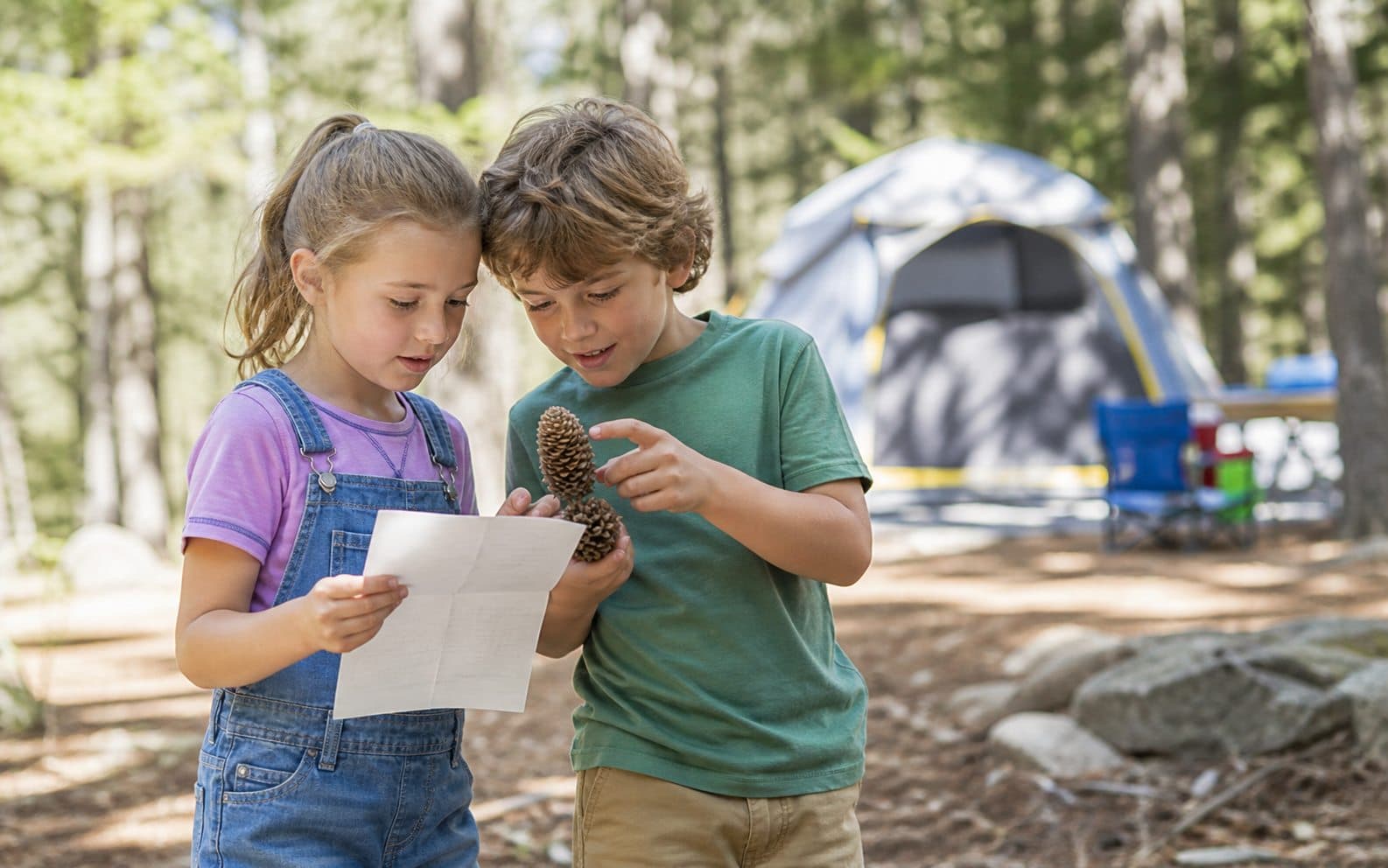
family / camping with kids
Camping with Teenagers
Camping with teenagers works better with real choices, useful responsibility, and clear safety boundaries. Use our planning tools to build the trip together.
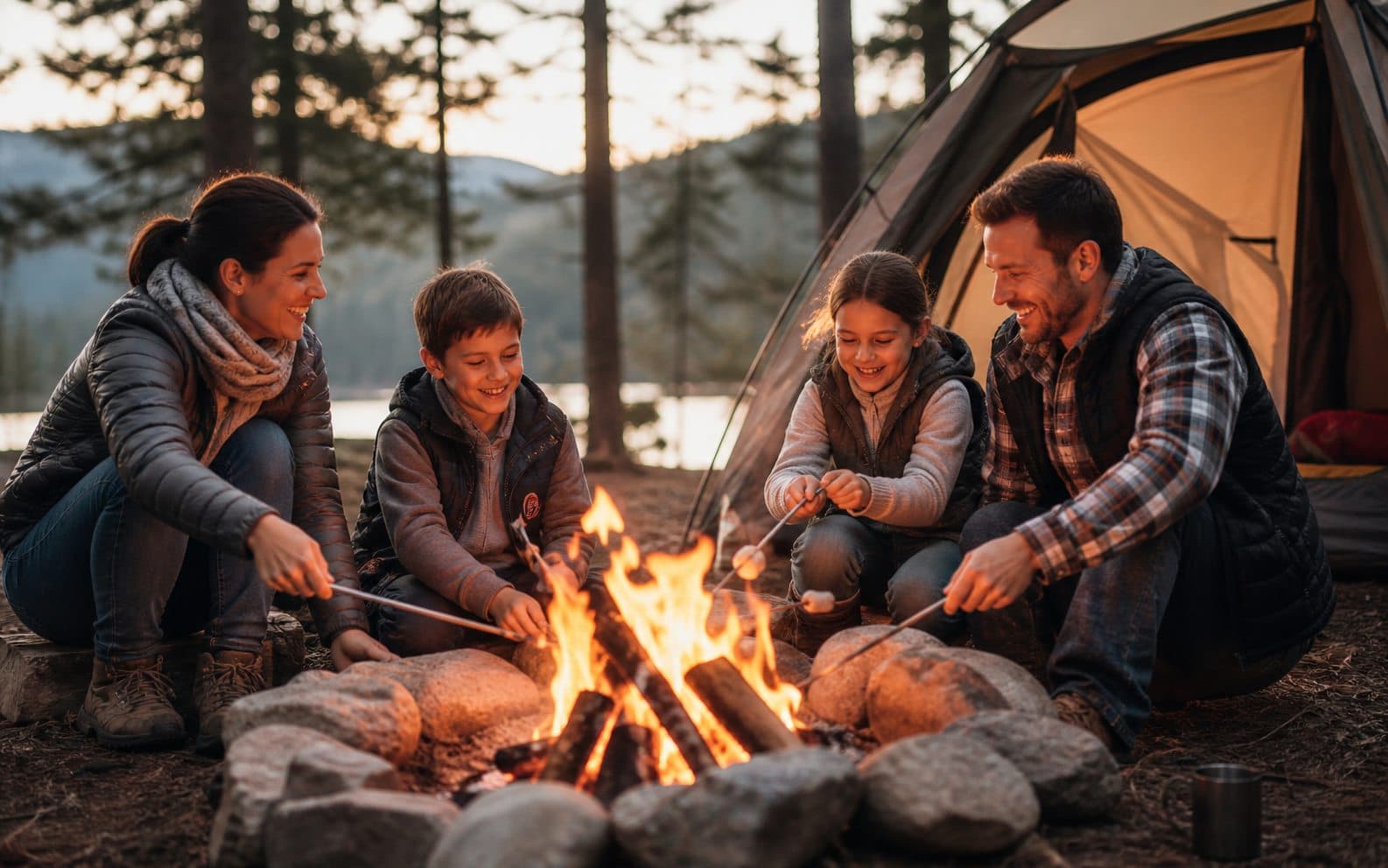
A trip with a teenager isn't a bigger version of a trip with a young child, and it isn't an adults-only weekend with one shorter adult. The packing gets easier. The negotiations get more interesting.
The best starting point is not a new activity or a stricter phone rule. Give your teenager meaningful choices, one real responsibility, and safety boundaries that nobody has to renegotiate beside a dark trail or cold lake. Water, fire, weather, and getting separated still matter; what changes is how much of the plan your teen can help own.
The real obstacle usually isn't gear
If the invitation sounds like a finished itinerary with mandatory enthusiasm, even a beautiful campground can feel like detention with pine trees. Start with two or three genuine options instead:
- "Would you rather paddle Saturday morning or hike to the lookout?"
- "Do you want to choose dinner or the evening activity?"
- "Would bringing a friend make this trip better?"
The choice has to be real. Letting someone select between two hikes after you have already chosen the destination, schedule, meals, and wake-up time is participation theatre, and teenagers are excellent theatre critics.
Give them ownership of something real
Teenagers can meaningfully run parts of a trip: choosing and cooking one full meal, tracking the route on an offline map, checking the forecast, or leading campsite cleanup. The useful distinction is between ownership and unsupervised risk. A teen can own dinner while an adult remains responsible for stove and fire safety. They can navigate while the group stays together and every adult still knows the route.
Our Dutch oven camping recipes and campfire desserts offer enough real steps for a teen-led meal. If fires are permitted, keep an adult present, water nearby, and extinguish the fire completely. The National Park Service advises never leaving children alone with a campfire and checking current fire restrictions before lighting one.
The autonomy ladder
Use this table as a starting point, not an age chart. Skill, judgment, conditions, park rules, and your teen's comfort matter more than a birthday.
| Activity | A useful choice they can own | Non-negotiable guardrails | Step back when... |
|---|---|---|---|
| Meal | Menu, shopping list, prep order | Adult handles or supervises flame according to skill; safe food storage | Fire restrictions, wildlife rules, or raw-food handling exceed their experience |
| Navigation | Route preview, map checks, calling turns | Group stays together; adult carries the route and emergency plan too | Trail is remote, poorly marked, exposed, or beyond the group's ability |
| Camp setup | Tent location from safe options, sleeping layout | Adult checks hazards, weather exposure, fire distance, and site rules | Wind, storms, dead branches, or terrain make the choice safety-critical |
| Paddling | Route idea, pace, rest stops | Properly fitted lifejacket/PFD, buddy plan, legal equipment, suitable water and weather, adult supervision appropriate to the situation | Cold water, wind, current, poor visibility, low skill, or local rules raise the consequence of a mistake |
| Free time | Activity and timing inside an agreed zone | Clear boundary, check-in time, companion where appropriate, whistle/light, and a late-return plan | The area includes water, cliffs, wildlife activity, roads, darkness, or unreliable communication |
Screen time: decide before you leave, not at the campsite
Do not let bad reception make the policy for you. Decide together before leaving: where phones help, when they go away, and whether the same rule applies to adults. The American Academy of Pediatrics recommends a family media plan built around each family's needs, with young people included in the discussion and screen-free times or places where useful.
A workable camping version might be: phones are welcome for photos, downloaded music, astronomy, and navigation; meals and one shared evening activity are phone-free; everyone gets private downtime. Download maps before leaving, pack a power bank, and never treat a phone as the only emergency plan.
What actually appeals at this age
Purposeful activities usually feel less "kid-coded" than organized games: a hike with a real destination, photography, geocaching, stargazing, a bigger cooking project, fishing, or paddling under conditions matched to the teen's skill and the required supervision. Ask what sounds worth doing rather than scheduling every hour.
Our camping activities for adults guide has slower-paced ideas that can work for teens too. Pick one anchor activity and leave room around it. A weekend does not fail because somebody reads in the hammock for two hours.
Safety looks different at this age too
More independence should come with a more explicit plan, not fewer safeguards. Parks Canada advises adult supervision for children near water, swimming with a buddy, and wearing a lifejacket while boating. Transport Canada also requires a lifejacket or PFD aboard for every person on a human-powered craft and stresses that flotation does not replace supervision.
For any time away from the campsite, agree on the exact route or zone, companions, turnaround and check-in times, what equipment goes along, and what everyone does if the teen is late. The National Park Service recommends a buddy system, route familiarity, staying on trail, and carrying whistles. "Text us if something happens" is not a complete plan where coverage can disappear.
Our camping safety basics guide covers the broader hazards. Local regulations and current conditions always override a general article.
It's still a family trip, not two trips happening in parallel
You do not need forced togetherness from breakfast to bedtime. Choose one or two anchors the whole group will share: the teen-led dinner, a hike, a paddle, or an evening game. Then protect some independent time around them.
That balance keeps the weekend from becoming either a compulsory team-building retreat or two unrelated vacations sharing one cooler.
A printable pre-trip agreement
Copy or print this before the trip. Fill it out together; a rule announced from the driver's seat does not count as joint planning.
The trip we are choosing
- The teenager chose or approved one anchor activity: ____________________
- The teenager owns one real responsibility: ____________________
- A friend is / is not joining, and the sleeping/transport plan is confirmed.
- Everyone has one block of unscheduled personal time.
Phones and communication
- Phones are welcome for: ____________________
- Phone-free times or places are: ____________________
- Offline maps and essential contacts are downloaded.
- Our backup communication plan is: ____________________
Independence and safety
- The allowed area or route is: ____________________
- The buddy or group is: ____________________
- Check-in time is: __________ Turnaround time is: __________
- If someone is late, we will: ____________________
- Weather, water, wildlife, fire rules, and park alerts were checked on: __________
- Required lifejackets/PFDs, lights, whistles, water, maps, and emergency supplies are packed.
A simple two-night plan
| When | Shared anchor | Teen-owned decision | Breathing room |
|---|---|---|---|
| Friday | Set up camp and agree on boundaries in daylight | Tent layout or music during setup | Unpack, walk, or read |
| Saturday morning | Chosen hike, paddle, or destination activity | Route checks, pace, or photo stops within the safety plan | Downtime after lunch |
| Saturday evening | Teen-planned meal | Menu and preparation; adult retains required fire/stove oversight | Phones/music afterward under the agreed plan |
| Sunday | One short group activity and pack-up | Breakfast or cleanup lead | Choice of the drive-home stop |
The schedule is deliberately light. The goal is not to defeat boredom with logistics. It is to make enough room for the teenager to become part of the trip instead of cargo in it.
Sources and safety references
- Parks Canada: camping safety tips
- Transport Canada: choosing lifejackets and PFDs
- National Park Service: preparing for a safe camping trip
- National Park Service: campfire safety
- American Academy of Pediatrics: making a family media plan
FAQ
How is camping with teenagers different from camping with younger kids?+
Teenagers can help shape the itinerary and own meaningful responsibilities, but water, fire, weather, and separation still require clear safeguards. Match independence to skill, conditions, local rules, and the specific consequence of a mistake.
Should teenagers have phone access while camping?+
There is no universal yes-or-no rule. Agree before the trip on useful phone roles, phone-free shared times, and rules that adults will follow too. Download maps and keep a backup emergency plan rather than relying on cell coverage.
What activities work well for teenagers while camping?+
Purposeful options often work better than activities framed for young children: a destination hike, photography, geocaching, stargazing, a teen-planned meal, fishing, or paddling with the equipment and supervision the conditions require.
Can a teenager hike or paddle without an adult?+
Age alone cannot answer that safely. Consider skill, judgment, companions, route or water conditions, weather, local rules, communication, and rescue consequences. Use a buddy and trip plan, require proper flotation on the water, and choose adult supervision appropriate to the situation.
Sources reviewed
Fact-checked Sep 4, 2026
These references support factual or safety-sensitive claims in this article. Access dates show when our editors last verified the source.
- Parks Canada — Camping Safety Tips
Official source · Accessed Sep 4, 2026
- Transport Canada — Lifejackets and PFDs
Official source · Accessed Sep 4, 2026
- National Park Service — Camp Safety Before the Trip
Official source · Accessed Sep 4, 2026
- National Park Service — Campfire Safety
Official source · Accessed Sep 4, 2026
- American Academy of Pediatrics — Family Media Plan
Expert guidance · Accessed Sep 4, 2026