recipes / camping meals
No-Cook Camping Meals: Cooler and No-Cooler Options
Nine complete no-cook camping meals compared by cooler need, camp prep and allergens, plus a practical two-night menu for six.
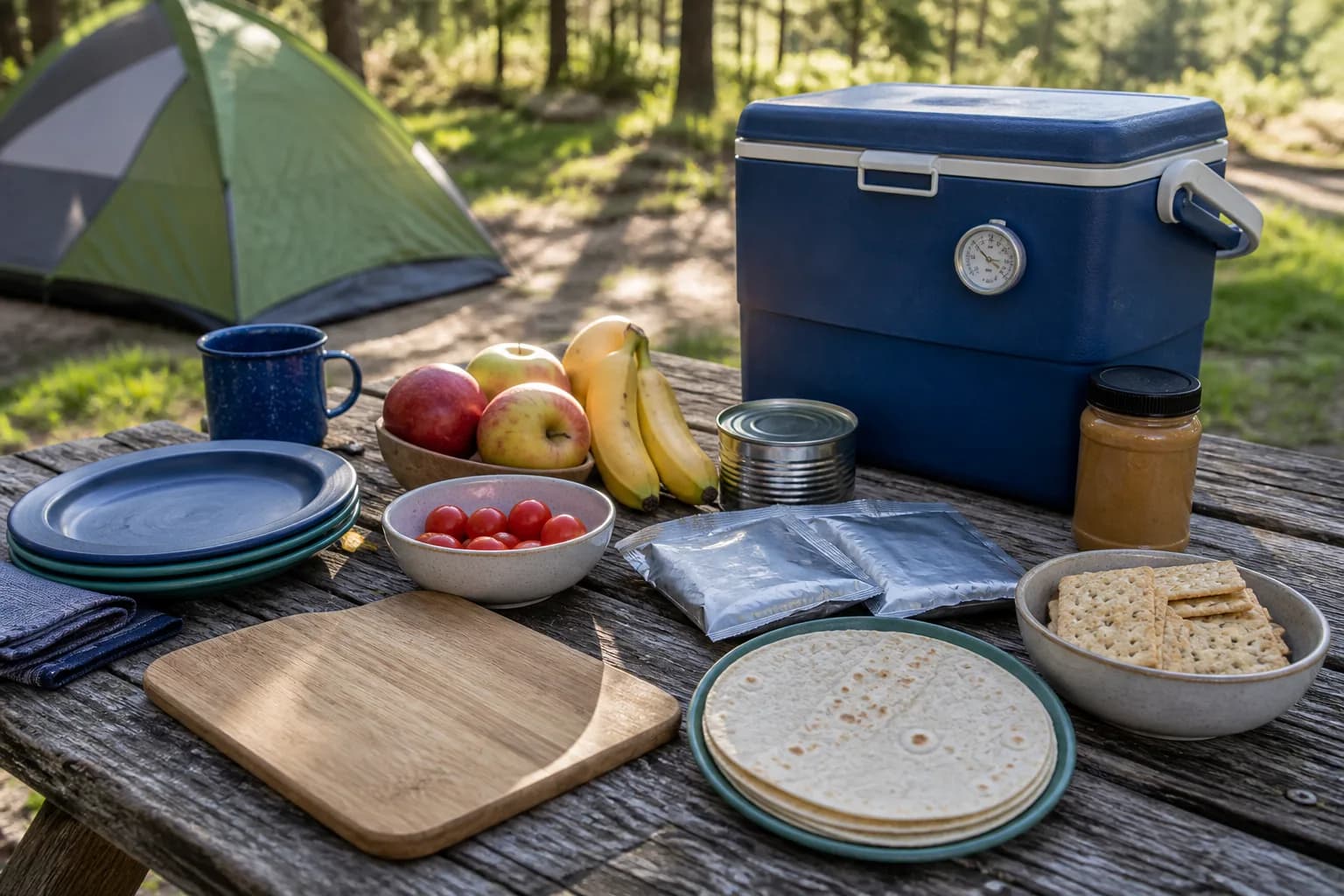
The best no-cook camping meal depends on whether you also mean no cooler. Without reliable cold holding, choose unopened products whose labels explicitly say they are shelf-stable, then open only what your group will finish. With a cooler holding 4 C / 40 F or colder, pasta salad, hummus pitas and overnight oats become practical.
For a late arrival, choose tuna and white bean wraps. For a family table, choose cowboy caviar. For a true no-cooler backup, pack nut or seed butter banana wraps. A fire ban may remove the stove from dinner, but it does not magically turn refrigerated hummus into pantry food. Labels still win.
No-cook does not automatically mean no-cooler
These are two different promises:
- No-cook: no flame, burner, grill or reheating at camp.
- No-cooler: every unopened ingredient is labelled shelf-stable at the temperature and for the time you will store it.
A meal can satisfy the first and fail the second. Prepared pasta, cut produce, dairy, cooked chicken and mixed salads remain perishable even when served cold. If a package says "keep refrigerated," the absence of a stove changes nothing.
Compare nine no-cook camping meals
Nut or seed butter banana wrap
- Meal
- Breakfast
- Cooler
- No, when every label says shelf-stable
- Shelf-stable until opened?
- Yes
- Camp prep
- 2 min
- Cleanup
- Knife
- Best use
- Departure morning or reserve
- Allergens
- Wheat; nuts unless using an appropriate seed spread
Tuna and white bean wrap
- Meal
- Lunch or dinner
- Cooler
- No before opening, if labels confirm
- Shelf-stable until opened?
- Yes
- Camp prep
- 7 min
- Cleanup
- Bowl and fork
- Best use
- Late arrival
- Allergens
- Fish and wheat
Chickpea olive crunch pita
- Meal
- Lunch or dinner
- Cooler
- No before opening, if labels confirm
- Shelf-stable until opened?
- Yes
- Camp prep
- 7 min
- Cleanup
- Bowl and fork
- Best use
- Vegetarian no-cooler meal
- Allergens
- Check pita and condiment labels
Hummus crunch pita
- Meal
- Lunch
- Cooler
- Yes, unless an unopened label explicitly says otherwise
- Shelf-stable until opened?
- Usually no
- Camp prep
- 5 min
- Cleanup
- Knife
- Best use
- First full day
- Allergens
- Sesame and wheat
Cowboy caviar
- Meal
- Lunch or shared dinner
- Cooler
- Yes after preparation
- Shelf-stable until opened?
- Some unopened ingredients only
- Camp prep
- 10 min
- Cleanup
- Bowl, knife and board
- Best use
- Group table
- Allergens
- Check chips and packaged ingredients
Chicken salad lettuce wraps
- Meal
- Lunch
- Cooler
- Yes after opening and mixing
- Shelf-stable until opened?
- Chicken and condiment packets may be
- Camp prep
- 8 min
- Cleanup
- Bowl and fork
- Best use
- Eat in one sitting
- Allergens
- Egg in many mayonnaises; check mustard
Italian pasta salad
- Meal
- Dinner
- Cooler
- Yes, continuously at 4 C / 40 F or below
- Shelf-stable until opened?
- No once prepared
- Camp prep
- Open and serve
- Cleanup
- Serving spoon
- Best use
- Planned cooler meal
- Allergens
- Wheat and dairy; check processed meat
Caprese pita
- Meal
- Lunch or light dinner
- Cooler
- Yes
- Shelf-stable until opened?
- No
- Camp prep
- 5 min
- Cleanup
- Knife and board
- Best use
- Early in the trip
- Allergens
- Dairy and wheat
Overnight oats
- Meal
- Breakfast
- Cooler
- Yes
- Shelf-stable until opened?
- No once mixed with milk or yogurt
- Camp prep
- Open and eat
- Cleanup
- Jar and spoon
- Best use
- Fast group morning
- Allergens
- Check oats, milk, yogurt and toppings
| Meal | Type | Cooler | Shelf-stable until opened? | Camp prep | Cleanup | Best use | Allergens |
|---|---|---|---|---|---|---|---|
| Nut or seed butter banana wrap | Breakfast | No, when every label says shelf-stable | Yes | 2 min | Knife | Departure morning or reserve | Wheat; nuts unless using an appropriate seed spread |
| Tuna and white bean wrap | Lunch or dinner | No before opening, if labels confirm | Yes | 7 min | Bowl and fork | Late arrival | Fish and wheat |
| Chickpea olive crunch pita | Lunch or dinner | No before opening, if labels confirm | Yes | 7 min | Bowl and fork | Vegetarian no-cooler meal | Check pita and condiment labels |
| Hummus crunch pita | Lunch | Yes, unless an unopened label explicitly says otherwise | Usually no | 5 min | Knife | First full day | Sesame and wheat |
| Cowboy caviar | Lunch or shared dinner | Yes after preparation | Some unopened ingredients only | 10 min | Bowl, knife and board | Group table | Check chips and packaged ingredients |
| Chicken salad lettuce wraps | Lunch | Yes after opening and mixing | Chicken and condiment packets may be | 8 min | Bowl and fork | Eat in one sitting | Egg in many mayonnaises; check mustard |
| Italian pasta salad | Dinner | Yes, continuously at 4 C / 40 F or below | No once prepared | Open and serve | Serving spoon | Planned cooler meal | Wheat and dairy; check processed meat |
| Caprese pita | Lunch or light dinner | Yes | No | 5 min | Knife and board | Early in the trip | Dairy and wheat |
| Overnight oats | Breakfast | Yes | No once mixed with milk or yogurt | Open and eat | Jar and spoon | Fast group morning | Check oats, milk, yogurt and toppings |
Choose by constraint, not by the prettiest photo
If you have no cooler
Choose the banana wrap, tuna and white bean wrap, or chickpea olive pita. Confirm shelf stability on each package; similar-looking products can have different storage instructions. Bring sizes your group can finish at one meal, because opening a can or pouch changes the storage problem.
If your cooler is reliable
Use a thermometer and choose meals that reward cold holding: overnight oats for a fast morning, hummus pitas for lunch, or pasta salad for dinner. Pack the meal you will eat last at the bottom, surround food with ice or frozen packs, keep the cooler shaded and open it briefly.
If you are feeding a group
Cowboy caviar and pasta salad scale cleanly because everyone serves from one bowl. Wraps are better when allergies or strong preferences differ: keep fillings separate, label them and give each dietary lane its own utensil. One shared spoon can undo a beautifully organized allergy plan in about three seconds.
If you are arriving late or facing a fire restriction
Use a meal assembled from sealed shelf-stable ingredients. You can eat before darkness turns tent setup into a group puzzle, and the plan still works if open flames and fuel appliances are restricted. Check the current order: a no-cook menu solves the heat source, not every park rule about food, wildlife or waste.
If water is limited
Choose wraps assembled from ready-to-eat ingredients and wash produce at home with safe water. Any water used to wash hands, rinse produce, mix food or clean utensils must be potable or properly treated. A clear stream is scenery, not a food-prep tap.
For the recipes below, multiply the base quantity by number of diners divided by four, then round packaged ingredients up to whole containers. Increase portions for long, strenuous days based on your group's known appetite; the formula is a shopping aid, not a calorie prescription.
Three meals that can work without a cooler
The qualification matters: they work without a cooler only while the packaged ingredients remain unopened and their own labels confirm shelf stability.
1. Nut or seed butter banana wraps
Serves 4 | Camp prep: 2 minutes | Best for: breakfast or reserve
Pack:
- 4 medium tortillas;
- 1/2 cup nut butter or an allergy-appropriate seed spread;
- 4 whole bananas;
- cinnamon or 4 sealed honey packets, optional.
Spread about 2 tablespoons on each tortilla, add one banana and roll. Use a clean knife or separate single-serve spread packs where cross-contact matters. Check both the tortilla and spread labels; "seed butter" is not automatically safe for every allergy.
This is the least glamorous meal here and the most useful when the cooler fails, departure morning arrives early, or the planned dinner remains at home beside the refrigerator. A reserve meal earns its space by being boring at exactly the right moment.
2. Tuna and white bean wraps
Serves 4 | Camp prep: 7 minutes | Best for: late-arrival dinner
Pack:
- 2 tuna pouches, about 74 g / 2.6 oz each;
- 1 can white beans, about 398 ml / 15 oz, with a pull tab or can opener;
- 4 large tortillas;
- 4 single-serve mustard packets;
- 1 lemon;
- 1 small whole cucumber, washed at home with safe water;
- pepper and 4 oil packets, optional.
At mealtime, drain the beans, mix them with tuna, mustard, lemon and diced cucumber, then divide among the tortillas. Open the tuna and beans only when the group is ready to eat. Finish the mixture in that sitting unless leftovers can immediately go into a cooler verified at 4 C / 40 F or below.
For a vegetarian version, replace tuna with a second can of beans and add olives. The fish-free version still needs label checks for tortillas and condiments.
3. Chickpea olive crunch pitas
Serves 4 | Camp prep: 7 minutes | Best for: vegetarian no-cooler lunch
Pack:
- 2 cans chickpeas, about 398 ml / 15 oz each;
- 4 pitas;
- 1 cup olives in sealed packages sized for one meal;
- 1 pint whole cherry tomatoes, washed and dried at home;
- 1 lemon;
- 4 oil packets;
- dried oregano and pepper.
Drain and lightly mash half the chickpeas, leave the rest whole, then mix with olives, tomatoes, lemon, oil and oregano. Stuff into pitas. Do not assume an opened olive jar or leftover chickpea mixture can spend the afternoon on the table; use meal-sized packages or move leftovers straight into verified cold holding.
Six meals for a measured cooler
4. Hummus crunch pitas
Serves 4 | Camp prep: 5 minutes | Best for: first-day lunch
Pack 2 cups hummus, 4 pitas, 1 cucumber, 2 bell peppers and a handful of whole cherry tomatoes. Wash and dry the produce at home, then keep the hummus and cut produce at 4 C / 40 F or below. Spread, fill and serve.
Most hummus sold from a refrigerated case needs refrigeration. Only treat a different product as shelf-stable when its unopened label explicitly says so, and follow the after-opening directions. Sesame and wheat are the obvious allergen checks; flavoured hummus can add more.
5. Cowboy caviar
Serves 4 as a main with chips | Camp prep: 10 minutes | Best for: a shared table
Combine:
- 1 can black beans, drained;
- 1 can corn, drained;
- 1 bell pepper, diced;
- 1 pint cherry tomatoes, halved;
- 1/2 small red onion, diced;
- juice of 2 limes;
- 2 tablespoons olive oil;
- 1/2 teaspoon cumin;
- 1 large bag tortilla chips.
Prepare it at camp with clean equipment and safe water, or make it at home and refrigerate it promptly in a shallow container. Once mixed and chilled, it is a perishable prepared food. Keep it cold and return the bowl to the cooler rather than letting it become the picnic table's permanent centrepiece.
6. Chicken salad lettuce wraps
Serves 4 | Camp prep: 8 minutes | Best for: one-sitting lunch
Pack:
- 2 cans or pouches fully cooked chicken, about 280 to 340 g / 10 to 12 oz total;
- 4 tablespoons commercial mayonnaise in sealed packets;
- 2 tablespoons mustard;
- 2 celery stalks, washed at home and kept cold;
- 8 large lettuce leaves or 4 tortillas;
- pepper.
Open and mix everything immediately before lunch. Commercial mayonnaise is not the villain folklore makes it: USDA explains that its acidity tends to inhibit bacterial growth. The cooked chicken, cut produce and mixed salad are the perishable part, so keep them cold and make only what the group will finish.
Many commercial mayonnaises contain egg. Check every label, keep an allergy-safe portion and utensil separate before the common bowl is mixed, and use a different binder when required.
7. Italian pasta salad
Serves 4 | Home prep: about 25 minutes | Camp prep: open and serve
Use:
- 340 g / 12 oz dry short pasta;
- 1 pint cherry tomatoes, halved;
- 1 cup olives;
- 1 bell pepper, diced;
- 170 g / 6 oz mozzarella, cubed;
- 1/2 cup commercial Italian dressing.
Cook the pasta at home, combine the ingredients, then cool promptly in shallow containers and refrigerate. Keep it continuously at 4 C / 40 F or below during transport and at camp.
Health Canada advises eating refrigerated leftovers within two to three days. That clock begins when you prepare the salad, not when you unzip the tent. A thermometer-verified cooler can maintain safe cold holding; merely owning a cooler cannot.
For a dairy-free version, omit mozzarella and add a second can of beans at serving time. For gluten-free diners, use a suitable pasta and keep preparation tools separate.
8. Caprese pitas
Serves 4 | Camp prep: 5 minutes | Best for: early-trip lunch
Pack 4 pitas, 340 g / 12 oz fresh mozzarella, 1 pint whole cherry tomatoes, 1 packed cup basil leaves and 4 balsamic glaze packets. Slice the mozzarella and tomatoes at serving time, tuck them into pitas with basil and finish with glaze.
Keep the cheese cold and use clean hands, board and knife. This option is quick, but it is not a no-cooler meal. Substitute a labelled shelf-stable bean filling rather than trying to negotiate with dairy on a warm afternoon.
9. Overnight oats
Serves 4 | Home prep: 8 minutes | Camp prep: open and eat
Mix in four clean containers:
- 2 cups rolled oats;
- 2 cups pasteurized milk or an appropriate alternative;
- 1 cup yogurt or an appropriate alternative;
- 2 tablespoons maple syrup;
- 1 teaspoon cinnamon;
- 1 cup berries, added after washing and drying.
Refrigerate promptly and keep at 4 C / 40 F or below. Check oats, milk, yogurt and toppings for the allergens relevant to your group. If the cooler cannot reliably hold temperature, switch to the banana wraps rather than mixing oats with a perishable liquid.
For more morning choices, the dedicated easy camping breakfast ideas guide compares hot and cold breakfasts by effort, cleanup and cold holding.
A two-night no-cook camping menu for six
This plan assumes car camping, a cooler confirmed at 4 C / 40 F or below, potable water and departure after breakfast on day three. It deliberately uses the most temperature-sensitive prepared food earlier and keeps one shelf-stable reserve.
| When | Meal | Quantity for 6 | Why it sits here |
|---|---|---|---|
| Arrival dinner | Tuna and white bean wraps | 4 tuna pouches, 2 cans beans, 6 tortillas, 6 mustard packets, 1 cucumber, 2 lemons | Sealed ingredients survive delays; assemble after the tents are secure |
| Day 2 breakfast | Overnight oats | 3 cups oats, 3 cups milk, 1 1/2 cups yogurt, 3 tbsp maple syrup, 1 1/2 cups berries | Prepared cold meal used within the first full day |
| Day 2 lunch | Hummus crunch pitas | 3 cups hummus, 6 pitas, 2 cucumbers, 3 peppers, 1 pint tomatoes | Fast individual assembly; easy to separate dietary lanes |
| Day 2 dinner | Italian pasta salad | 510 g / 18 oz dry pasta plus 1.5 times the base additions | One bowl and no flame; preparation date still remains inside the leftovers window |
| Day 3 breakfast | Nut or seed butter banana wraps | 6 tortillas, 3/4 cup spread, 6 bananas | No dependence on the cooler for departure |
| Reserve | One labelled shelf-stable serving per person | 6 meal bars or 6 extra wrap kits chosen for the group's allergies | Covers delay or cooler failure without creating a second hidden meal plan |
The reserve row is the entire emergency reserve for this trip. Do not add it again elsewhere in the shopping list. If your route or emergency plan requires more food, calculate that separately and say why.
Pack cold meals in reverse order, with later meals deeper in the cooler. Keep drinks in a second cooler when possible so the food cooler is not opened every time someone wants water. The quiet luxury of a two-cooler system is not aesthetics; it is fewer blasts of warm air around dinner.
No cooler? Choose from the label, not folklore
A category name does not prove shelf stability. Smoked fish, hummus, cheese, cooked grains and ready-to-eat pouches can look travel-friendly while still carrying refrigeration instructions.
Build a no-cooler meal with this sequence:
- Read the unopened storage instruction. Look for explicit room-temperature or shelf-stable storage, not an assumption based on packaging.
- Check the after-opening instruction. If it says refrigerate after opening, buy a size your group can finish immediately.
- Keep whole produce whole. Wash and dry it at home; cut it only when the meal begins.
- Pack one complete serving together. A tuna pouch is not dinner if the tortillas are in another vehicle.
- Carry a sealed reserve. Choose it for actual dietary needs and labels, not just calories printed on the front.
Refrigerated smoked salmon is not "shelf-stable-ish." Keep it cold exactly as labelled. Public Health Agency of Canada also lists refrigerated smoked fish among foods of concern for people at higher risk of listeriosis, including pregnant people, older adults and people with weakened immune systems. For a group with higher-risk diners, choose a different filling that fits current public-health guidance.
The cold-chain and clean-hands system
No-cook food removes the stove, not the safety work.
Measure the cooler
Pre-chill food in the refrigerator before departure. Fill the cooler with ice or frozen packs, keep it shaded and place a thermometer where you can read it quickly. Food must stay at or below 4 C / 40 F; "the ice had not completely melted" is not a temperature measurement.
If perishable food exceeds the applicable time-temperature limit, discard it. Do not taste it, smell it or plan to cook it later. Health Canada warns that appearance, smell and taste cannot tell you whether food is contaminated.
Separate ready-to-eat food
No-cook ingredients will not receive a kill step at camp. Keep them in watertight containers away from raw meat carried for another meal. USDA guidance says raw meat and poultry should ideally use a separate cooler; in one cooler, pack them below ready-to-eat food so leaks cannot drip onto it.
Use clean hands and a clean board. Wash with soap and safe water before food prep and after touching waste, pets or raw food. Hand sanitizer is useful when soap and water are unavailable, but it does not make a dirty knife or contaminated cutting board clean.
Use potable or properly treated water
Use safe water for drinking, washing produce, mixing food, ice and cleaning utensils. CDC guidance notes that even clear stream water can contain germs. When a water source is uncertain, follow an appropriate treatment method and product instructions; our water purification guide explains the choices and limits.
Plan allergen lanes before serving
Read packaged-food labels every time you buy and again before serving, because ingredients and facilities can change. Separate the allergy-safe portion before the shared bowl is mixed, then use distinct utensils, cutting surfaces and storage bags. A substitute is only suitable when it matches the specific person's needs.
This article names common concerns, not every possible allergen. Follow the person's allergy plan and local medical advice rather than treating a recipe note as clearance.
What no-cook meals solve - and what they do not
They solve open-flame restrictions, fuel problems, cooking time and much of the washing up. They do not solve:
- unreliable cold holding;
- unsafe water;
- wildlife-resistant food storage requirements;
- allergy cross-contact;
- an opened package with refrigerated-storage instructions;
- a group that expected a hot dinner after a cold, wet day.
That last point is not a safety issue, but it is a trip-design issue. For cold-weather or morale-sensitive trips, use no-cook food as the legal backup and choose a permitted hot option when current rules allow it. The broader easy camping meals guide compares no-cook, one-pan and fire-based choices, while make-ahead camping meals covers meals prepared at home and safely reheated at camp.
Frequently asked questions
What is the difference between no-cook and no-cooler camping meals?+
No-cook means you do not heat the meal at camp. No-cooler means every unopened ingredient is explicitly labelled for shelf-stable storage under your conditions. Pasta salad, hummus, dairy and mixed chicken salad can be no-cook while still requiring continuous cold holding at 4 C / 40 F or below.
What are the best camping meals without a cooler?+
Nut or seed butter banana wraps, tuna and white bean wraps, and chickpea olive pitas can work when every packaged ingredient is labelled shelf-stable before opening. Use meal-sized packages, keep whole produce whole until serving and finish opened food immediately unless it can move into verified cold holding.
How long will a no-cook meal stay safe in a cooler?+
There is no universal number of days based only on owning a cooler. Measure the cooler and keep perishable food at or below 4 C / 40 F. Prepared leftovers also carry their own storage clock; Health Canada advises eating properly cooled refrigerated leftovers within two to three days, counted from preparation.
Can I use no-cook meals during a fire ban?+
Yes, a genuinely no-heat meal avoids a stove or fire, but check the current order because restrictions and food-storage rules vary. A fire ban does not change refrigeration instructions, safe-water needs or wildlife requirements.
How do I keep no-cook camping food cold?+
Pre-chill food, use enough ice or frozen packs, verify 4 C / 40 F or below with a cooler thermometer, keep the cooler shaded and open it briefly. A separate drinks cooler reduces repeated warming of the food cooler.
How do I adapt no-cook meals for food allergies?+
Read every label at purchase and service, choose substitutions for the specific person, separate their portion before mixing shared food, and use distinct utensils, boards and storage. A generic swap such as seed butter or gluten-free bread is not automatically suitable for every allergy.
Related guides
- Easy camping breakfast ideas for hot and cold mornings ranked by effort
- Easy camping meals when your menu can include a stove or fire
- Make-ahead camping meals for the freezer-and-reheat approach
- Camping coffee for methods that separate brewing from water treatment
- How to purify water while camping when potable water is not supplied
- Car camping essentials for the cooler, kitchen and backup systems around the food
Sources reviewed
Fact-checked Aug 31, 2026
These references support factual or safety-sensitive claims in this article. Access dates show when our editors last verified the source.
- Health Canada - Summer food safety tips
Official source · Accessed Aug 31, 2026
- Health Canada - Food safety tips for leftovers
Official source · Accessed Aug 31, 2026
- USDA FSIS - Food safety while hiking, camping and boating
Official source · Accessed Aug 31, 2026
- USDA FSIS - Reheating food left outside refrigeration
Official source · Accessed Aug 31, 2026
- USDA FSIS - Does mayonnaise cause foodborne illness?
Official source · Accessed Aug 31, 2026
- CDC - Water treatment when hiking, camping or traveling
Official source · Accessed Aug 31, 2026
- Health Canada - Food allergen labelling
Official source · Accessed Sep 7, 2026
- Public Health Agency of Canada - Listeriosis prevention and risks
Official source · Accessed Aug 31, 2026
- Food Allergy Canada - Kitchen tips to prevent allergen cross-contact
Expert guidance · Accessed Sep 7, 2026