recipes / camping meals
Camping BBQ Recipes: 12 Grill-Ready Meals With Fire-Ban Backups
Make 12 practical camping BBQ recipes, each paired with a no-cook backup that uses overlapping ingredients when charcoal, wood or every flame becomes unavailable.
The smartest camping BBQ menu is not twelve meals that all depend on the same flame. It is a set of grill-ready dinners whose bread, vegetables, sauces and toppings can become a real meal when the heat source is prohibited, empty or broken.
This guide pairs every barbecue recipe with a no-cook backup. The backup is not “eat the raw ingredients cold.” It uses a separate shelf-stable or safely chilled protein and the same supporting groceries, so one change in the fire order does not turn dinner into crackers and resentment.
The most useful BBQ camping recipes are not merely a longer list of things to grill. They preserve the meal's structure when heat disappears. The pairings, quantities and timing ranges below are an editorial planning system checked against the cited official safety guidance, not a recorded Keepsake Camp field test.
Choose your meal and its backup
| Grill-ready meal | Matched no-cook backup | Cooler dependence | Best trip moment |
|---|---|---|---|
| BBQ chicken slaw pitas | Pouch-chicken slaw pitas | High | First dinner |
| BBQ meatball skewers | Lentil-slaw wraps | High for meatballs | First dinner |
| Shrimp and pineapple tacos | Tuna-pineapple slaw tacos | High for shrimp | First dinner |
| Portobello BBQ sandwiches | White-bean antipasto rolls | Medium | Lunch or dinner |
| Lemon salmon cucumber pitas | Canned-salmon cucumber pitas | High for fresh salmon | First dinner |
| Steak and corn salad | Black-bean corn salad | High for steak | First dinner |
| Grilled cabbage, chickpea and feta bowls | Cold chickpea slaw bowls | Medium | Lunch or dinner |
| BBQ tofu skewer bowls | BBQ chickpea bowls | Medium | Lunch or dinner |
| Corn and bean quesadillas | Cowboy-caviar wraps | Medium | Lunch |
| Grilled flatbread pizzas | Cold antipasto flatbreads | Medium | Lunch |
| Breakfast grill sandwiches | Banana seed-butter bagels | High for eggs | First breakfast |
| Pineapple shortcakes | Peach granola cups | Low | Dessert |
The backup column assumes unopened shelf-stable packages or ingredients maintained at the temperature required by their labels. “No-cook” describes the method, not immunity from food-safety rules.
First: read the restriction, not the rumour
“Fire ban” is not a universal appliance setting. One order may prohibit wood and charcoal while allowing a certified liquid-fuel stove. Another may prohibit every open flame. Rules can differ between a national park, provincial park, municipality, private campground and surrounding public land. For national parks, Parks Canada's current fire-management page is the starting point; continue to the live notice for the exact park.
Use this sequence:
- Find the current notice from the authority responsible for the exact campsite.
- Read which fuels and appliances are prohibited or exempt.
- Check whether cooking is limited to a provided ring, grill or designated area.
- Recheck on arrival; printed trip notes can become obsolete.
- If the wording is unclear, ask campground staff or use the no-cook plan.
| What the current order allows | What this menu can use |
|---|---|
| Wood and charcoal allowed | Approved grill, provided grate or permitted appliance |
| Wood/charcoal prohibited; gas appliance expressly allowed | Compatible propane or liquid-fuel grill used exactly as permitted |
| Every flame prohibited | No-cook backup only |
| Wording unclear | No-cook backup until the authority clarifies |
Never move a charcoal grill into a tent, shelter, vehicle or camper. Fuel-burning cooking equipment produces carbon monoxide and belongs outside in a well-ventilated location.
How the paired-ingredient system works
Each recipe has four layers:
- grill protein or main: the ingredient that needs heat;
- backup protein: canned, pouched or ready-to-eat food kept sealed until needed;
- shared base: pita, roll, tortilla, flatbread, greens or grain product;
- shared flavour: slaw, sauce, pickles, herbs or vegetables.
If grilling is allowed, the unopened backup returns home. If the grill plan fails, the raw ingredient stays safely cold and the backup takes its place. Do not partially cook meat, wait for a rule change and finish it later.
Twelve camping BBQ recipes and backups
Every main recipe serves four.
1. BBQ chicken slaw pitas
Serves 4 | Home prep: 15 minutes | Grill: 15–20 minutes | Equipment: tongs + thermometer
Grill version: Marinate 680 g / 1 1/2 lb boneless chicken thighs at home in 1/3 cup barbecue sauce. Keep cold in a sealed container. Grill over medium heat, brushing only with clean reserved sauce, until the thickest pieces reach 74°C / 165°F. Slice on a clean board and serve in 4 pitas with 3 cups vinegar slaw.
No-cook backup: Replace raw chicken with enough unopened shelf-stable chicken pouches to provide about 340 g / 12 oz total—typically four 85 g pouches or two larger pouches. Mix with barbecue sauce only when serving, then add the same slaw and pitas. Follow the pouch label after opening.
Why the pair works: slaw improves while it waits, and the bread and sauce serve both versions.
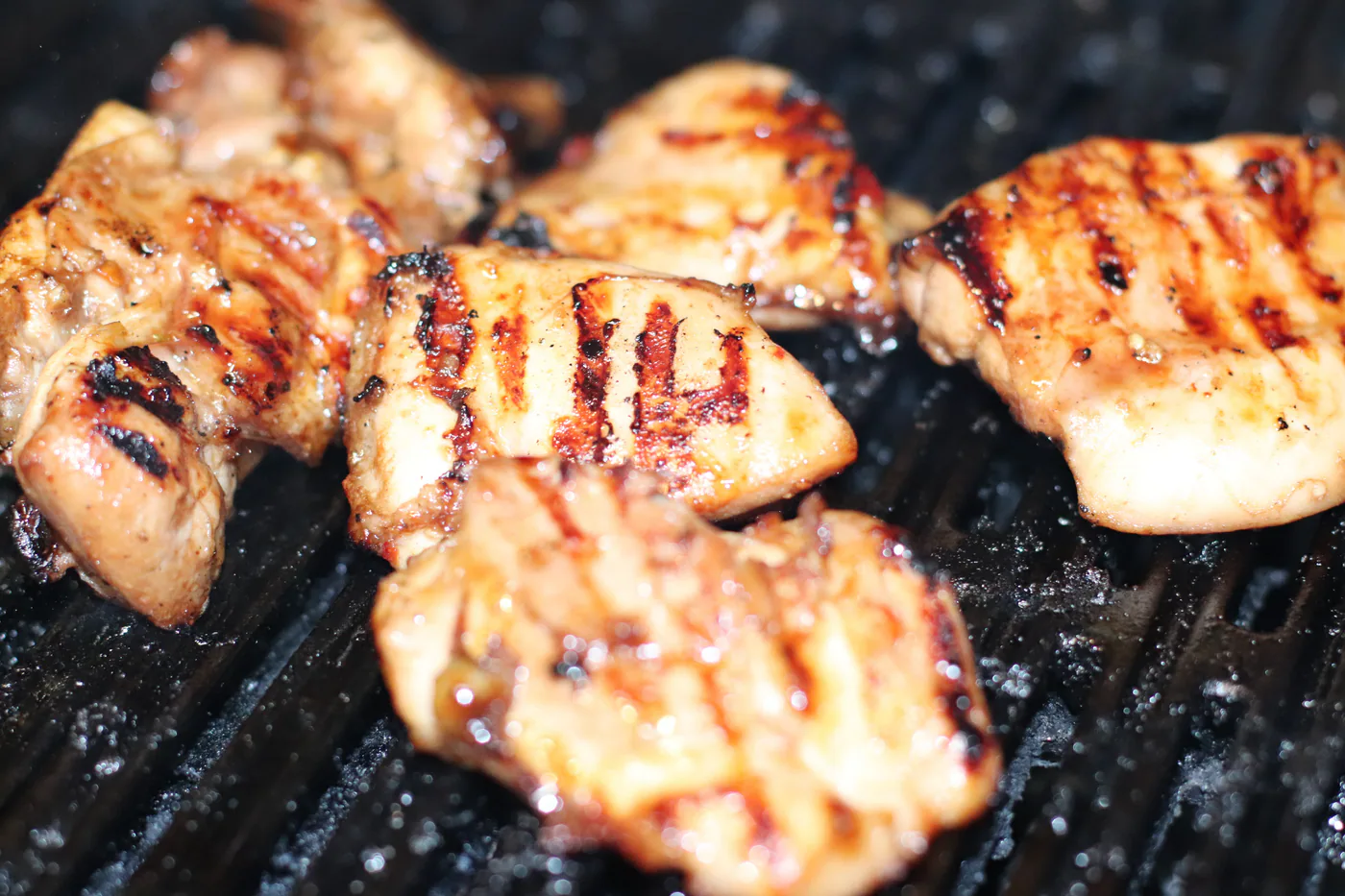
The grill version needs measured doneness; the pouch-chicken backup needs no heat. The slaw, sauce and pitas work for either route.
2. BBQ meatball skewers
Serves 4 | Home prep: 18 minutes | Grill: 12–16 minutes | Equipment: skewers + tongs + thermometer
Grill version: Form 680 g / 1 1/2 lb ground beef into 20 firm small meatballs and chill them in a sealed container so they hold their shape. At camp, run two parallel skewers through each row of five meatballs, alternating with thick red-onion pieces, or use a grill basket. Brush with clean barbecue sauce and grill over medium heat until every meatball reaches 71°C / 160°F. Serve with 3 cups vinegar slaw and 4 tortillas.
No-cook backup: Drain 2 cans of lentils, season them with barbecue sauce and fold them into the same slaw and tortillas. Two cans provide a proper main for four instead of asking one lonely can to carry dinner.
3. Shrimp and pineapple tacos
Serves 4 | Home prep: 15 minutes | Grill: 6–8 minutes | Equipment: separate skewers + tongs + thermometer
Grill version: Keep 680 g / 1 1/2 lb peeled shrimp cold. Thread the shrimp separately from pineapple chunks so neither ingredient controls the other's cooking time. Grill until the shrimp reach 74°C / 165°F, then serve in 8 small tortillas with pineapple-cabbage slaw and lime.
No-cook backup: Replace the shrimp with about 340 g / 12 oz of shelf-stable tuna before draining—typically two standard cans. Fold it into the same pineapple-cabbage slaw, finish with lime and divide among the tortillas. Fresh seafood is the plan; sealed tuna is the exit ramp.
4. Portobello BBQ sandwiches
Serves 4 | Home prep: 10 minutes | Grill: 10–14 minutes | Equipment: tongs + small brush
Grill version: Brush 4 large portobello caps with oil and barbecue sauce. Grill over medium heat, turning once, until tender and browned. Serve in 4 sturdy rolls with jarred roasted peppers and cabbage.
No-cook backup: Mix 2 drained cans of white beans with chopped roasted peppers, 3 tablespoons vinaigrette and pepper. Spoon into the same rolls with cabbage. Pack a jar size the group can finish or chill the remainder as its label directs.
5. Lemon salmon cucumber pitas
Serves 4 | Home prep: 12 minutes | Grill: 8–12 minutes | Equipment: fish spatula + thermometer
Grill version: Brush four 140 g / 5 oz salmon portions with oil and lemon. Grill skin-side down when applicable, turning only if needed, until the thickest part reaches 70°C / 158°F. Serve in pitas with cucumber and yogurt-dill sauce kept cold.
No-cook backup: Use about 340 g / 12 oz of canned or pouched salmon before draining, with lemon, cucumber and the same sauce. Fresh fish belongs on the first night; do not ask a weakening cooler for a favour on day three.
6. Steak and corn salad
Serves 4 | Home prep: 15 minutes | Grill: 12–18 minutes | Equipment: tongs + thermometer
Grill version: Grill 570 g / 1 1/4 lb sirloin and 4 corn cobs. Cook the steak to the preferred doneness while meeting applicable local safety guidance, rest it, then slice over greens with corn, tomatoes and vinaigrette.
No-cook backup: Combine 2 drained cans of black beans, 1 drained can of corn, tomatoes, greens and the same vinaigrette. Use unopened cans that are shelf-stable; once opened, serve immediately or maintain safe cold storage.
7. Grilled cabbage, chickpea and feta bowls
Serves 4 | Home prep: 12 minutes | Grill: 10–14 minutes | Equipment: tongs + serving bowl
Grill version: Cut one small cabbage into four wedges, keeping enough core attached to hold each wedge together. Brush with oil and grill over medium heat until the edges char and the centres soften. Chop and toss with 2 drained cans of chickpeas, 225 g / 8 oz feta, lemon and 4 warmed pitas.
No-cook backup: Shred the cabbage at camp and toss it with the same chickpeas, feta, lemon and a little oil. Serve with the pitas. This fallback still needs safe cold storage for feta but does not depend on a flame.
8. BBQ tofu skewer bowls
Serves 4 | Home prep: 15 minutes | Grill: 10–14 minutes | Equipment: skewers + tongs
Grill version: Press and cube 450 g / 1 lb firm tofu. Thread it separately from 2 peppers and brush with barbecue sauce. Grill until browned and hot, turning gently. Serve over shelf-stable ready-to-eat grain pouches only if their labels permit eating without heating, or over tortillas.
No-cook backup: Use 2 drained cans of chickpeas tossed with barbecue sauce, shredded cabbage and the same base. Tofu and opened grain products require refrigeration according to their labels.
9. Corn and black-bean quesadillas
Serves 4 | Home prep: 8 minutes | Grill: 10–12 minutes | Equipment: griddle + spatula
Grill version: Mix 2 drained cans of black beans, 1 cup corn and 1/2 cup salsa. Divide with 2 cups grated cheese among 8 tortillas. Fold and grill on a griddle until crisp and hot throughout.
No-cook backup: Leave out the cheese or keep it safely cold, add diced pepper and lime, and serve the bean-corn mixture as cowboy caviar inside the tortillas. Pack chips if a soft cold tortilla is not how your group wants the story to end.
10. Grilled flatbread pizzas
Serves 4 | Home prep: 10 minutes | Grill: 8–12 minutes | Equipment: tongs + grill-safe cover
Grill version: Toast one side of 4 naan breads, turn, then divide 1 cup tomato sauce, 2 cups grated mozzarella, 1 sliced pepper and 1 cup sliced mushrooms among them. Cover until the cheese melts and the bases crisp.
No-cook backup: Spread the flatbreads with shelf-stable olive tapenade from a package the group will finish. Top with jarred roasted peppers, whole cherry tomatoes and cold-held cheese if available. Call it antipasto flatbread, not uncooked pizza; expectations affect dinner more than SEO does.
11. Breakfast grill sandwiches
Serves 4 | Home prep: 5 minutes | Grill: 12–15 minutes | Equipment: griddle + spatula + thermometer
Grill version: Toast 4 split English muffins. Cook 4 eggs on a griddle to 74°C / 165°F, add cheese and assemble with tomato.
No-cook backup: Spread 4 bagels with shelf-stable peanut, nut or seed butter and add banana slices at serving. Choose a spread appropriate for the group's allergies and prevent cross-contact.
12. Pineapple shortcakes
Serves 4 | Home prep: 8 minutes | Grill: 4–8 minutes | Equipment: tongs
Grill version: Cut one peeled pineapple into rings or spears. Grill for 2–4 minutes per side until marked and warm. Serve over 4 shelf-stable shortcakes with cinnamon sugar.
No-cook backup: Use one large 796 mL / 28 oz can of peaches packed in juice, drained at serving, with granola and the same cinnamon sugar. Add shelf-stable whipped topping only when both its unopened and after-opening storage instructions fit the trip.
A two-night paired menu
This example chooses only a few recipes; the twelve options are a library, not a dare.
| When | Planned BBQ meal | Packed backup | Ingredient overlap |
|---|---|---|---|
| Friday dinner | BBQ chicken slaw pitas | Pouch-chicken slaw pitas | Pitas, slaw, sauce |
| Saturday breakfast | Breakfast grill sandwiches | Banana seed-butter bagels | Bread base and fruit |
| Saturday lunch | Grilled cabbage, chickpea and feta bowls | Cold chickpea slaw bowls | Cabbage, chickpeas, feta, lemon, pitas |
| Saturday dinner | Steak and corn salad | Black-bean corn salad | Corn, greens, tomato, dressing |
| Saturday dessert | Pineapple shortcakes | Peach granola cups | Fruit-dessert pantry |
| Sunday breakfast | Remaining bagels and fruit | Same | No new cooler burden |
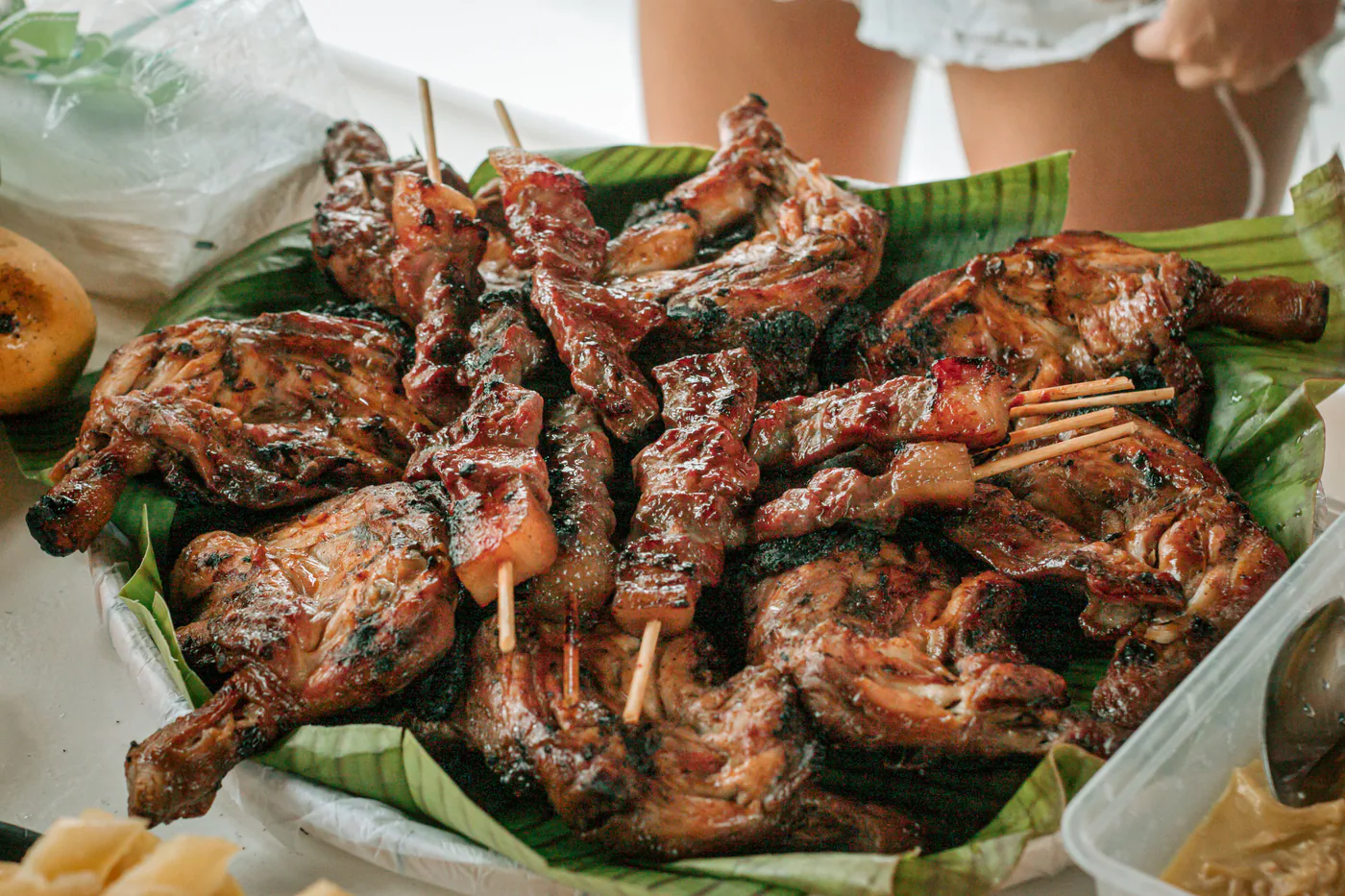
The planned route can end in a shared grilled platter. The backup route should still provide four real portions, not a decorative spoonful of beans.
The dry backup module adds a compact set of shelf-stable packages—not four duplicate meals. If all planned cooking succeeds, keep unopened packages for another trip or use them at home.
Pack the contingency kit separately
Put these items in one labelled dry bag or bin:
- enough chicken pouches to provide about 340 g / 12 oz total for Friday dinner;
- two standard 398 mL / 14 oz cans of chickpeas for Saturday lunch;
- two standard cans of black beans and one can of corn for Saturday dinner;
- one large 796 mL / 28 oz can of peaches, granola and cinnamon sugar for dessert;
- seed or nut butter appropriate for the group;
- four bananas, extra pitas and four bagels;
- oil, vinegar, mustard and barbecue sauce packets;
- a manual can opener;
- one clean mixing bowl and serving utensil.
That list matches the sample menu above. If you choose a different pair from the twelve options, swap in the backup protein and quantity named in that recipe instead of carrying every can in the article.
Do not bury the can opener beneath the tent stakes. A backup you cannot open is modern sculpture.
Cooler and cross-contamination rules
- Keep perishable food at or below 4°C / 40°F.
- Store raw meat and fish sealed at the bottom, away from produce and ready-to-eat food.
- Use separate plates and utensils for raw and cooked food.
- Clean the thermometer between readings.
- Cook fresh fish early in the trip.
- Do not return cooked food to a raw-food plate.
- If a ban cancels dinner, keep the raw ingredient safely cold; do not leave it on the table while debating alternatives.
- On hot summer days, Health Canada advises not leaving food at room temperature for more than one hour.
For a larger set of meals designed from the start without heat, see no-cook camping meals. For a general two-night grill menu, compare 15 camping grill recipes. If wood coals are explicitly permitted and you want technique rather than contingency, use how to grill over an open fire. For broader meal planning, use easy camping meals.
What the backup does not solve
A no-cook option does not solve:
- a cooler that has already warmed above safe holding temperature;
- unsafe drinking water;
- a food allergy that was not considered during packing;
- wildlife-attractant storage requirements;
- missing utensils or a can opener;
- a closure or evacuation order.
Food remains a scented item. Store it, garbage, dishes and toiletries according to the campground's wildlife rules even when no cooking occurs.
Frequently asked questions
What can I cook on a camping BBQ?
Choose food that benefits from fast direct heat and can be cut into even portions: skewers, burgers, sausages, medallions, sturdy fish, corn, firm vegetables, flatbreads and fruit. Use a griddle for eggs, quesadillas and small ingredients.
What camping meals work during a fire ban?
It depends on the official order. If every flame is prohibited, use genuinely no-cook meals such as pouch-chicken pitas, bean wraps, canned-salmon pitas, antipasto flatbreads or seed-butter bagels. If a certified gas appliance is expressly allowed, compatible grill recipes may still work.
Can I use a propane grill during a fire ban?
Only when the current authority expressly permits that appliance, fuel and location. Some orders distinguish liquid-gas devices from wood and charcoal; others are more restrictive. Verify the exact notice instead of assuming.
Should I bring raw meat if a fire ban is possible?
Bring it only when you can keep it safely cold and have a separate ready-to-eat backup. If the forecast and restriction risk are high, choosing a fully no-cook menu is simpler than transporting raw food you may not cook.
Are canned foods safe without a cooler?
Many unopened cans and pouches are shelf-stable, but the product label controls. After opening, serve immediately or refrigerate as directed. Damaged, bulging, leaking or badly rusted cans should not be used.
The Keepsake Camp verdict
Our preferred system is not “bring twelve backup dinners.” It is pack one shared menu and a small shelf-stable protein kit that can reroute it.
The chicken becomes pouch chicken. The steak salad becomes bean-and-corn salad. The grilled dessert becomes canned fruit and granola. Dinner changes, but the trip does not need to stage a committee meeting beside an unused grill.
Sources reviewed
Fact-checked Sep 25, 2026
These references support factual or safety-sensitive claims in this article. Access dates show when our editors last verified the source.
- Health Canada — Barbecue and portable butane stove safety
Official source · Accessed Sep 25, 2026
- Health Canada — Safe cooking temperatures
Official source · Accessed Sep 25, 2026
- Health Canada — Summer food safety tips
Official source · Accessed Sep 25, 2026
- USDA FSIS — Food safety while hiking, camping and boating
Official source · Accessed Sep 25, 2026
- USDA FSIS — Grilling food safely
Official source · Accessed Sep 25, 2026
- National Park Service — Cooking in camp
Official source · Accessed Sep 25, 2026
- Parks Canada — Fire management and current park status
Official source · Accessed Sep 25, 2026