recipes / campfire recipes
How to Grill Over an Open Fire: Heat Zones, Timing, and 9 Progressive Recipes
Learn to grill over an open fire by building a coal bed, creating heat zones and reading the grate, then practise with nine recipes arranged from easiest to hardest.
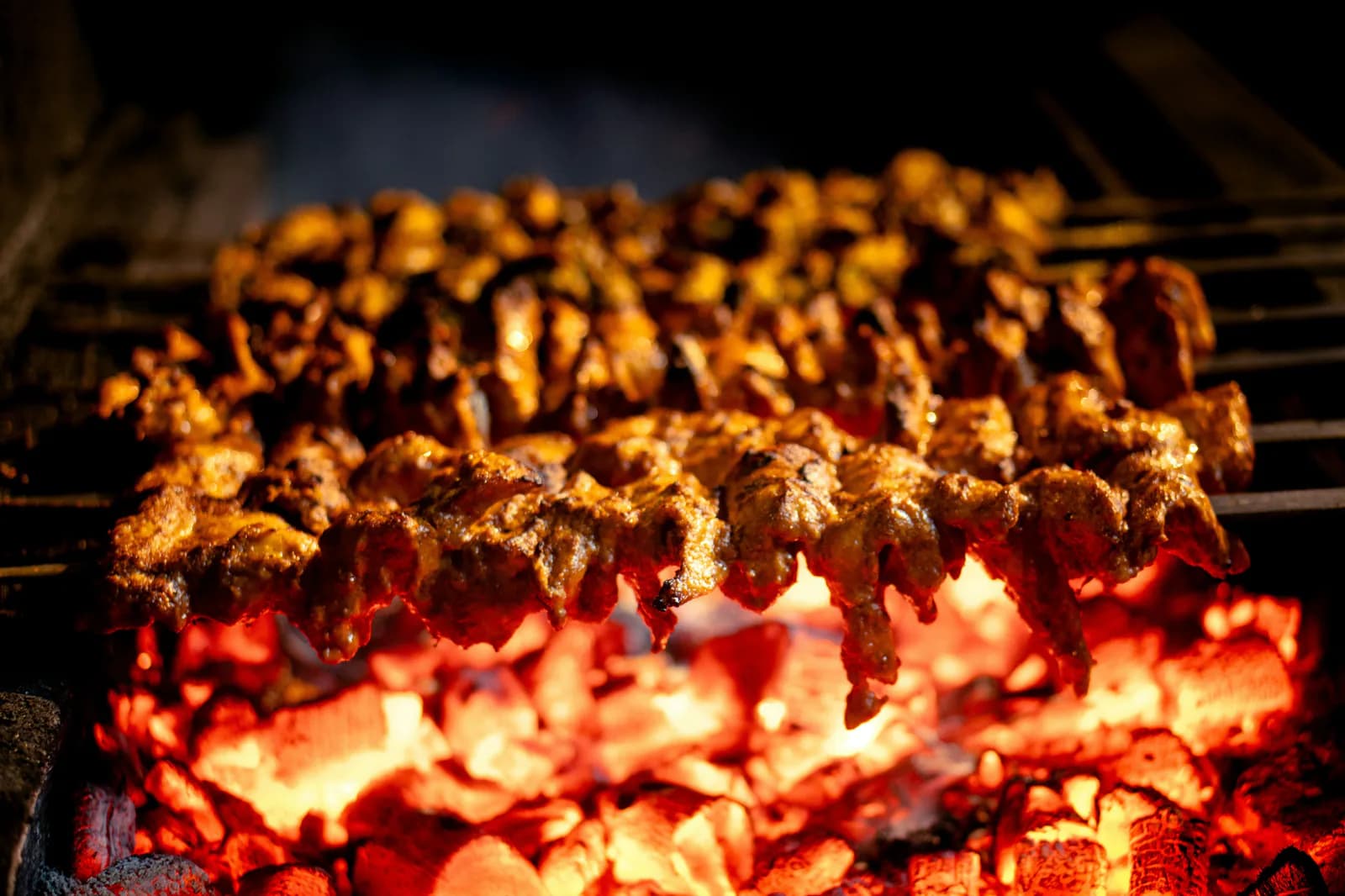
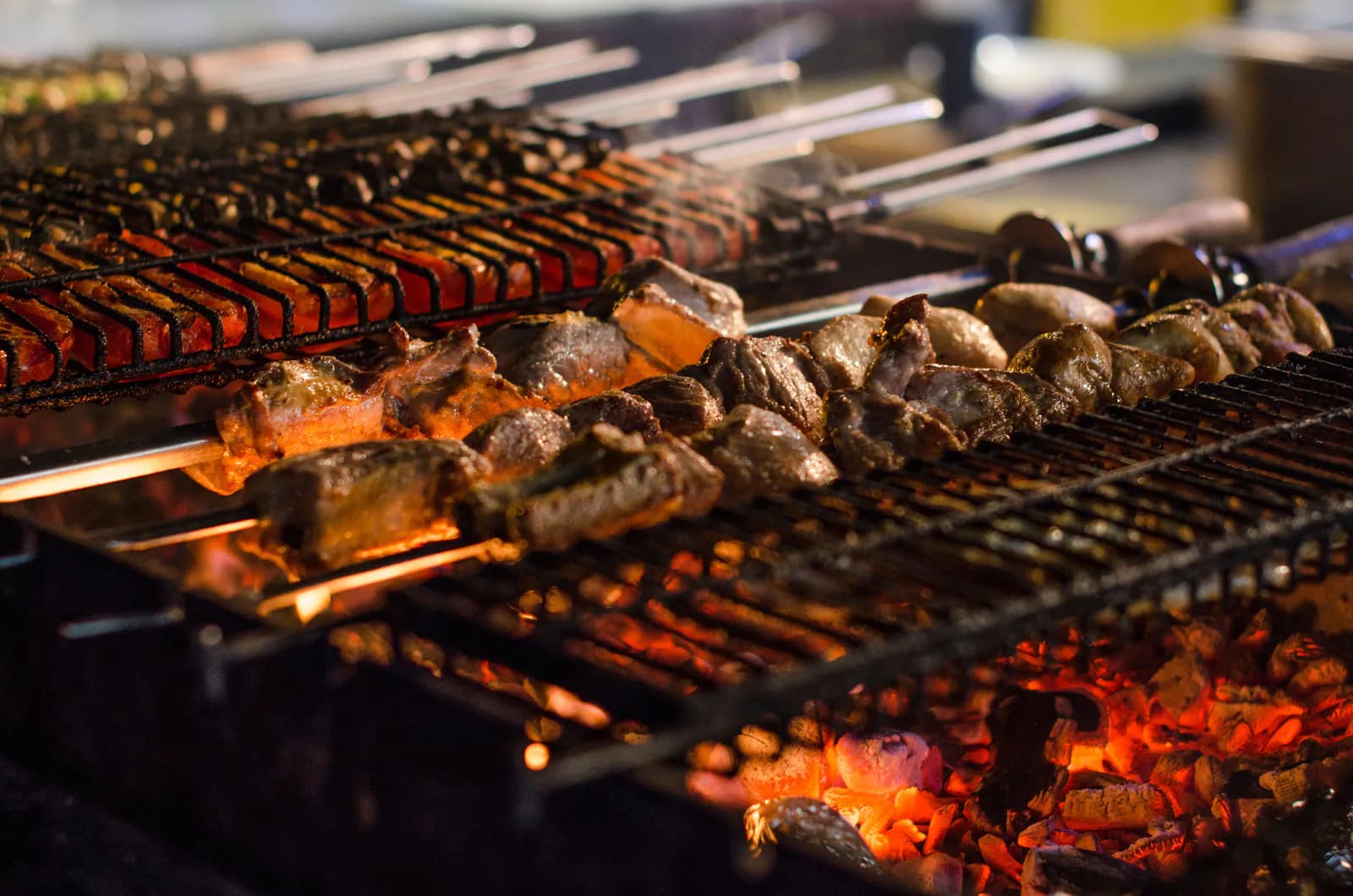
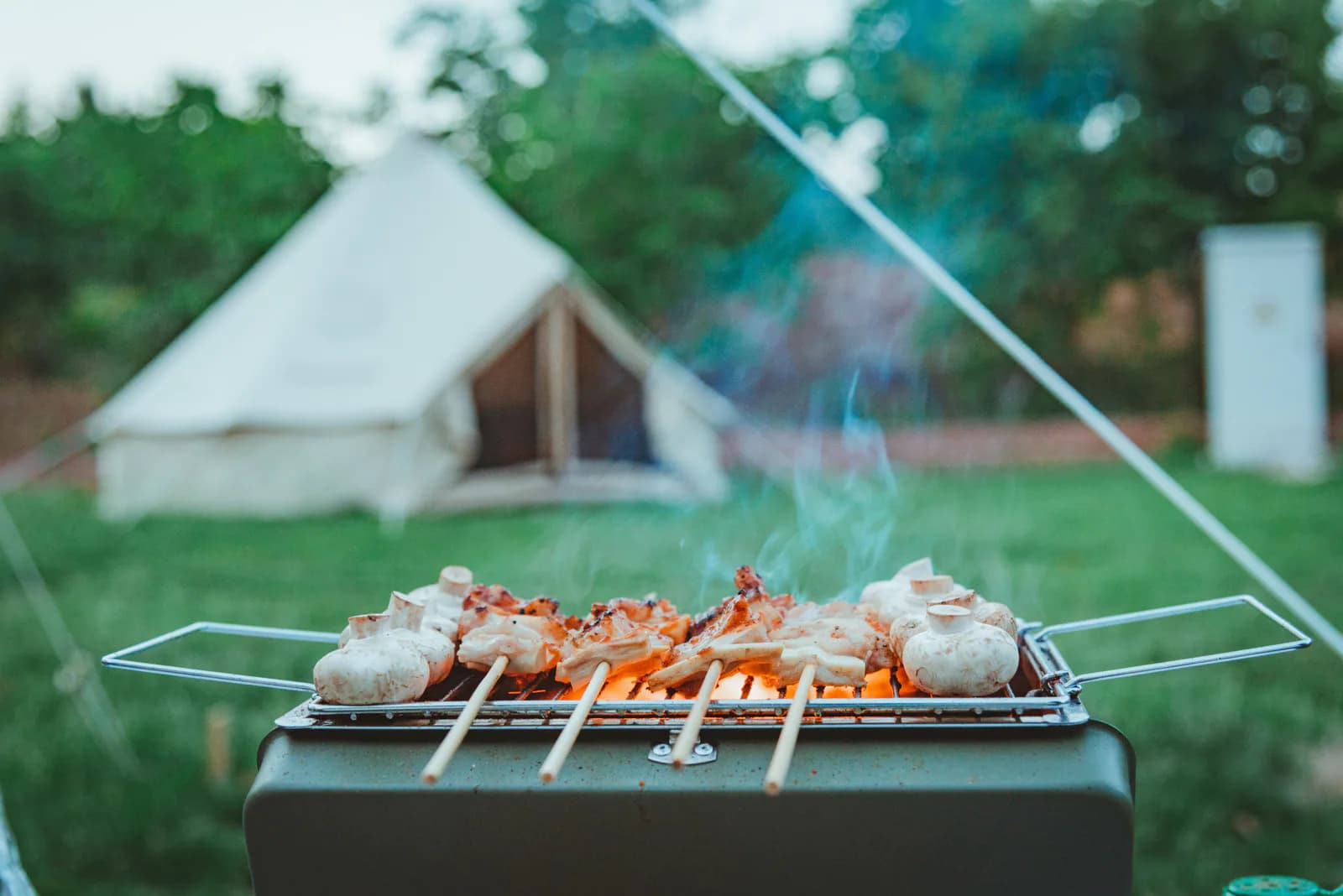
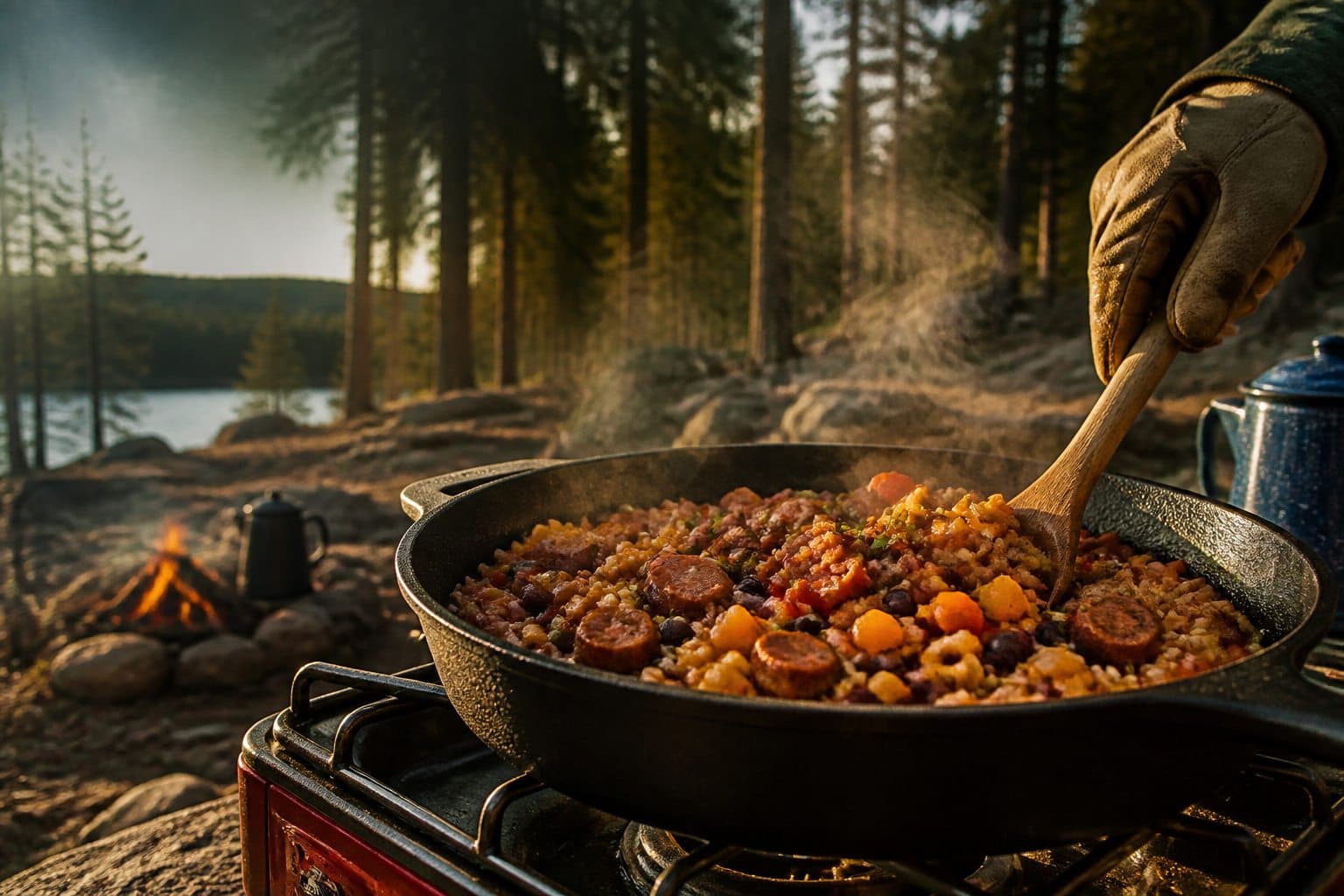
Do not grill over tall flames. Build the fire early, wait for a broad bed of glowing coals, rake those coals into a hot zone and a cooler zone, then move food between them instead of asking one patch of fire to do everything.
That single change fixes most open-fire cooking failures. Flames are dramatic but inconsistent. Coals are boring in exactly the way dinner needs.
Grilling over an open fire is really grilling over a managed coal bed, not holding food in tall flames. The zone sequence, timing ranges and recipe progression below are an editorial synthesis of the cited safety guidance and cooking principles, not a recorded Keepsake Camp field test. Use them as planning estimates; current site rules, fire behaviour and measured food temperature remain the deciding evidence.
This guide assumes a designated fire ring or cooking area where a wood fire and cooking grate are currently allowed. It does not explain how to build an improvised fire pit, collect prohibited wood or work around a restriction. The land manager's current rule wins every argument, including this article. For national parks, begin with Parks Canada's live fire-management page, then open the status page for the exact park.
The open-fire method in seven steps
- Verify permission. Check the campground notice and current official restriction before lighting anything.
- Use the provided ring. Clear combustible objects only as the site rules allow; do not rearrange protected ground or build a stone pit.
- Prepare shutdown equipment first. Have plenty of water and the required tools beside the ring.
- Build a modest fire early. Use permitted fuel and give it time to become coals.
- Create two heat zones. Rake a deeper coal bed under one side of the grate and leave the other side thin or empty.
- Cook by movement. Brown over the hot zone, finish or hold over the cooler zone.
- Extinguish completely. Drown, stir, drown and check for heat until every ember is cold.
If dinner must happen in ten minutes, use a permitted propane grill. Open-fire cooking begins with waiting.
What a usable coal bed looks like
You are ready to cook when most of the fuel has collapsed into glowing coals with a light ash coating and only occasional small flames. The grate should be stable, level and positioned so you can reach food without leaning over the ring.
You are not ready when:
- flames continuously wrap around the grate;
- logs are still shifting or collapsing;
- smoke is blowing directly through the cooking area;
- the only hot spot is a narrow column in the centre;
- you cannot reach the grate without placing your arm above flame;
- wind is carrying embers beyond the ring.
Do not use the popular bare-hand “hold test” as a temperature measurement. It depends on distance, wind and the person doing it, and it asks you to place skin over a fire. Use grate height, coal depth, food response and a surface thermometer when your equipment supports one.
Build three functional zones
| Zone | Coal arrangement | What it does | Foods that belong there |
|---|---|---|---|
| Hot | Deep, even coal bed | Browning and fast cooking | Toast, thin vegetables, first side of burgers |
| Medium | Thinner coal layer | Controlled cooking | Sausages, skewers, corn, halloumi |
| Cool/holding | Few or no coals directly below | Finishing, resting and flare-up escape | Thick food, cooked batches, delicate bread |
On a small grate, two zones are enough: hot and cooler. The important part is preserving somewhere to move food when fat drips, sugar darkens or one corner runs hotter than expected.
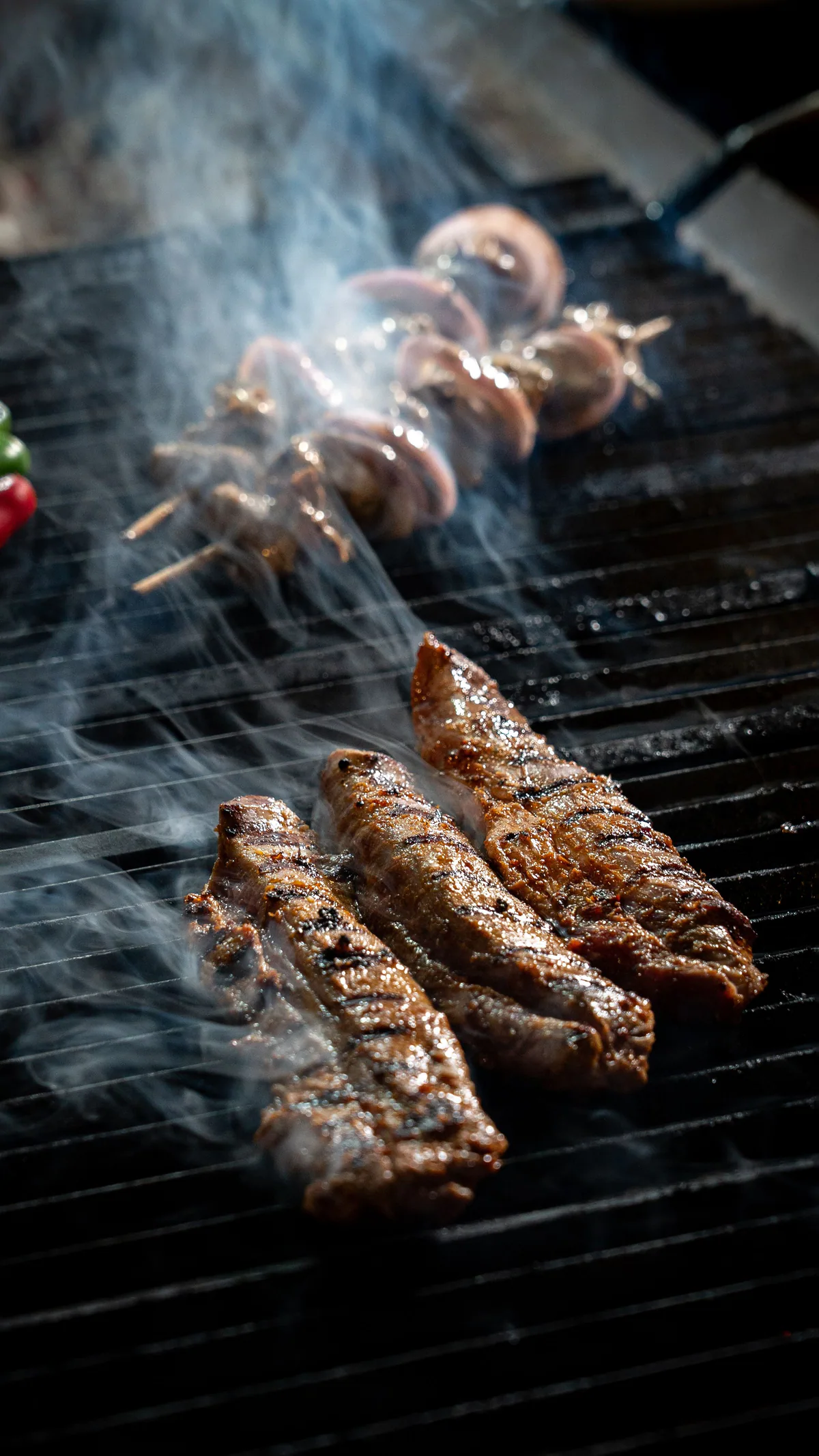
Smoke and browning are signals to watch, not proof of doneness. Move food between zones and let the thermometer make the safety decision.
Your open-fire equipment list
- a stable, food-safe campground grate or purpose-built campfire grill;
- long-handled tongs and a sturdy spatula;
- heat-resistant gloves;
- a digital instant-read food thermometer;
- a grill-safe skillet for small or fragile food;
- two clean plates: one for raw food and one for cooked food;
- a small brush or scraper approved for the grate;
- water and the shutdown equipment required by the site;
- a headlamp that illuminates food without requiring one hand.
Inspect a public grate before use. Remove loose debris using an appropriate tool and heat it as directed by the facility or equipment guidance. Never assume a visibly black surface has been sanitised by history.
Nine recipes, easiest first
The order is a learning sequence. The first recipes show you how the zones behave without risking an expensive main. Later recipes require closer temperature control.
1. Coal-bed toast with tomato
Serves 4 | About 5 minutes | Practises: moving between zones
Brush 8 sturdy bread slices lightly with oil. Toast over the hot zone for 30–60 seconds at a time, moving pieces as they colour. Rub the warm bread with a cut garlic clove and top with 2 chopped tomatoes, salt and pepper.
Bread reports heat immediately. If it blackens before you can turn it, the grate is too close or the coal bed is too concentrated.
2. Charred corn with lime
Serves 4 | About 10–15 minutes | Practises: rotation
Brush 4 shucked corn cobs with oil. Cook over medium coals, rotating a quarter-turn every few minutes. Move them to the holding zone when kernels are tender and browned in spots. Finish with lime and salt.
Do not wait for every kernel to match. Campfire heat has opinions.
3. Pepper and onion planks
Serves 4 | About 8–12 minutes | Practises: different finish times
Quarter 3 peppers lengthwise and cut 2 onions into thick rounds, keeping the root end attached. Oil and season. Start onions over medium heat, then add peppers. Move finished pieces aside instead of waiting for the entire grate to agree.
Serve in rolls, tortillas or beside a main. Cutting vegetables into pieces too large to fall through the grate is a technique, not laziness.
4. Halloumi and zucchini skewers
Serves 4 | About 10 minutes | Practises: staggered starts
Cut 450 g / 1 lb halloumi and 2 zucchini into large pieces. Thread them on separate skewers, brush with oil and oregano, then cook zucchini first. Add the cheese only when vegetables are almost tender. Halloumi should brown without sitting long enough to dry out.
Finish with lemon and serve in pitas. Halloumi contains milk; check bread labels for the group.
5. Sausages with mustard slaw
Serves 4 | About 15–25 minutes | Practises: finishing away from direct heat
Pack 4 sausages and a home-prepared slaw kept cold. Brown the sausages over medium coals, then move them to the cooler zone and turn regularly until beef or pork sausage reaches 71°C / 160°F, or poultry sausage reaches 74°C / 165°F.
Serve in rolls with slaw and mustard. A burnt casing is not evidence of a cooked centre.
6. Open-fire burgers
Serves 4 | About 12–16 minutes | Practises: managing fat flare-ups
Form 680 g / 1 1/2 lb ground beef into four equal patties with a shallow centre indentation. Keep cold until the grate is ready. Brown over the hot zone, then move sideways if dripping fat causes flame. Cook each patty to 71°C / 160°F and transfer it to a clean plate.
Never spray water onto a grease flare-up. Move the food, reduce oxygen when the equipment has a lid and let the flare settle.
7. Chicken-thigh skewers
Serves 4 | About 15–20 minutes | Practises: even sizing and temperature checks
Cut 680 g / 1 1/2 lb boneless chicken thighs into even pieces. Marinate at home with oil, lemon, garlic and oregano; refrigerate promptly. Thread at camp with small gaps between pieces.
Cook over medium coals, moving skewers away from flare-ups, until the thickest pieces reach 74°C / 165°F. Check more than one piece because fire heat is uneven. Use a clean platter and clean thermometer between readings.
8. Cast-iron lemon fish
Serves 4 | About 10–16 minutes | Practises: protecting delicate food
Place four 140 g / 5 oz firm white-fish fillets in a lightly oiled grill-safe skillet. Add lemon slices, pepper and a small knob of butter or oil. Set the skillet over the medium zone and turn it as needed so one side does not race ahead.
Cook until the thickest part of each fillet reaches 70°C / 158°F. Use fish on the first night and keep it at 4°C / 40°F or below until cooking.
9. Skillet peaches with maple oats
Serves 4 | About 8 minutes | Practises: residual heat
Quarter 4 firm peaches and place them in a grill-safe skillet with 1 tablespoon butter or oil. Cook over the thinning medium zone until just tender. Add 1 cup granola or oat crumble and 2 tablespoons maple syrup for the final minute.
This is the right dessert for a dying coal bed. Do not rebuild a large fire for six minutes of fruit.
Temperature targets that still apply outdoors
| Food | Minimum used in this guide |
|---|---|
| Ground beef or pork | 71°C / 160°F |
| Poultry, including poultry sausage | 74°C / 165°F |
| Beef or pork sausage | 71°C / 160°F |
| Fish | 70°C / 158°F |
| Reheated leftovers | 74°C / 165°F |
Health Canada's current safe-cooking table and USDA tables are not identical for every whole cut. Follow the authority that applies where you are. This guide uses the Canadian target where the featured recipe needs one and never treats cooking time or colour as proof.
Diagnose the fire before blaming the recipe
| Symptom | Likely cause | What to do now | What to change next time |
|---|---|---|---|
| Food blackens immediately | Too close to a deep coal bed | Move to the holding zone | Raise the grate or thin the coals |
| Food stays pale and cold | Fire has not produced enough coals | Cover safely if equipment allows or wait | Start 30–60 minutes earlier |
| One edge always burns | Uneven coal depth or wind | Rotate the food and use the cooler side | Rake a wider, even bed and add a wind-safe barrier only if approved |
| Soot coats the food | Cooking over flame or smoky fuel | Move away from flames | Wait for clean coals and use permitted dry fuel |
| Burgers trigger flames | Fat is hitting hot coals | Move sideways; do not spray water | Preserve an empty escape zone |
| Chicken browns but remains cold inside | Pieces are too large or heat is too aggressive | Move to medium heat and continue to temperature | Cut evenly and start lower |
| Vegetables fall through | Pieces are too small | Use a skillet or grill basket | Cut planks or larger sections |
| Dinner is late | The fire was started at mealtime | Switch to the legal backup meal | Treat coal-making as part of the recipe |
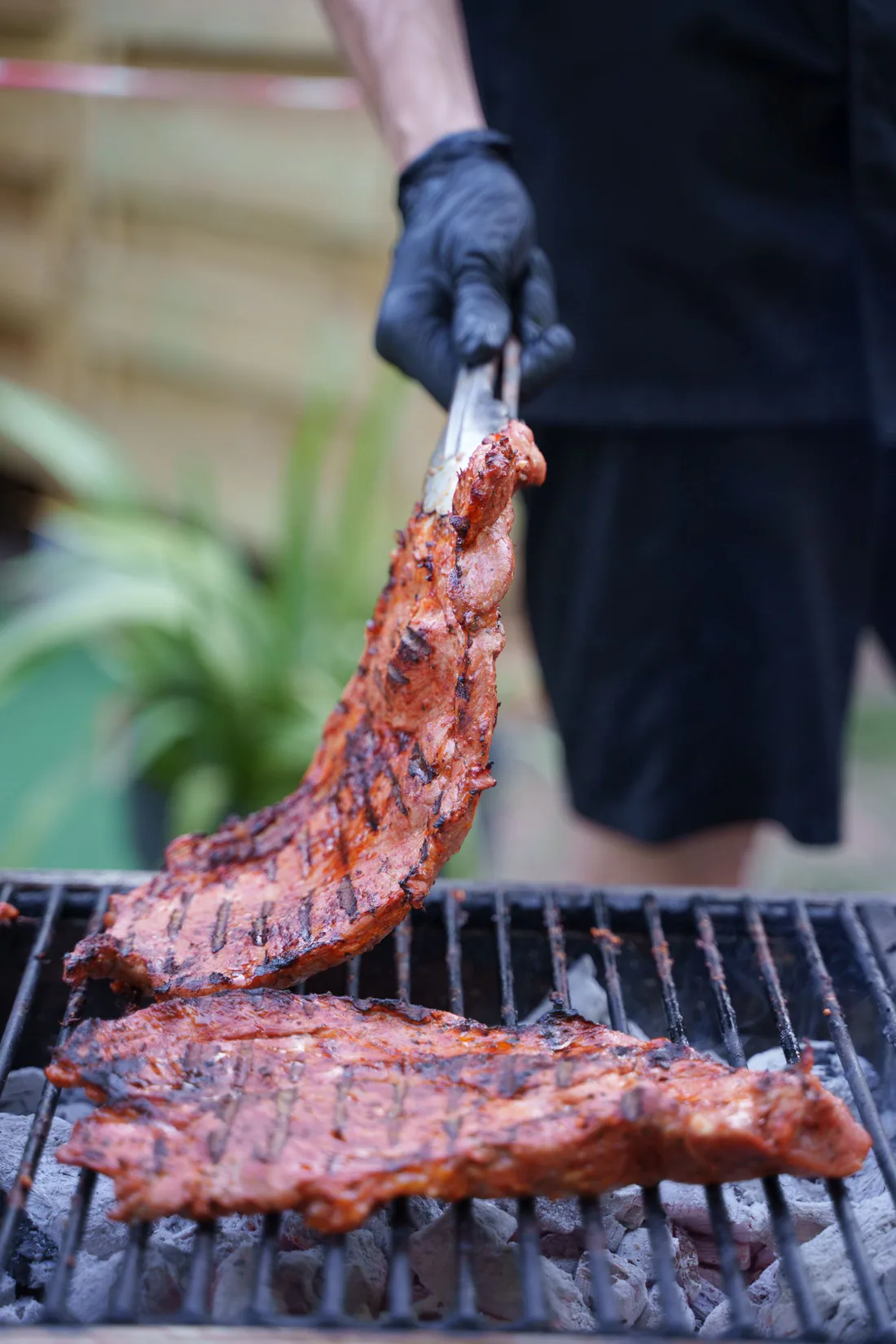
Tongs let you move food sideways when one zone runs hot. Browning still cannot replace an internal-temperature check.
Direct heat, indirect heat and the campfire translation
Direct heat means food sits above the active coal bed. It is useful for browning thin or fast-cooking food.
Indirect heat means the food is beside the main coal bed or above a section with few coals. It is useful for finishing thicker food without burning the exterior.
Combination cooking means browning first, then moving to gentler heat. Burgers, sausages and chicken benefit from this. The method matters more than a universal minute count because the fire refuses to read recipes.
When to abandon the open-fire plan
Use a permitted grill, stove or no-cook meal when:
- a restriction prohibits the fire or fuel;
- wind carries sparks or makes the grate unsafe;
- the ring, grate or surrounding area is unstable;
- you cannot obtain enough permitted fuel without collecting illegally;
- there is not enough daylight or water to cook and extinguish properly;
- the group needs predictable food now;
- you cannot keep raw ingredients cold while waiting.
Changing the cooking method is not failing at camping. It is noticing the actual campsite.
For portable-grill meals with a complete two-night plan, see 15 camping grill recipes. For a menu designed around changing restrictions, use our camping BBQ recipes with fire-ban backups.
For a more contained first step over coals, start with foil-packet camping recipes. When the main course is under control, campfire desserts gives the fading heat one useful final job.
Extinguish the cooking fire completely
Stop adding wood early. When cooking is finished, follow the responsible authority's method and site rules. The standard sequence is to drown, stir, drown and check for heat until every ember, coal, log end and patch of ash is cold.
No flame is not enough. No smoke is not enough. Our complete campfire shutdown guide covers hidden embers, charcoal and an escaped fire.
Frequently asked questions
Should you grill over flames or coals?
Use a stable bed of glowing coals for most grilling. Tall flames create uneven heat, soot and flare-ups. Small occasional flames may appear, but they should not be the primary heat source.
How long should a campfire burn before cooking?
There is no universal time. Fuel size, moisture, weather and fire size change it. Plan roughly 30–60 minutes for a modest fire to develop a useful coal bed, but judge readiness by the coals and fire stability rather than the clock.
Can you put a regular grill grate over a fire?
Use only a stable, food-safe grate designed or approved for that use. A household oven rack or improvised metal can have unknown coatings, spacing or heat resistance. Prefer the campground's provided grate or purpose-built campfire equipment.
How do you control heat without a grill knob?
Control coal depth, grate distance and—most importantly—food position. Keep a hot zone and a cooler holding zone so food can move sideways as conditions change.
The Keepsake Camp verdict
If this is your first open-fire meal, cook corn and sausages before attempting chicken for eight people. A coal bed is a skill, not a filter you apply to dinner.
Build less fire, preserve a cooler zone and let the thermometer overrule your confidence. The result will taste more like dinner and less like a story everybody retells for the wrong reason.
Sources reviewed
Fact-checked Sep 25, 2026
These references support factual or safety-sensitive claims in this article. Access dates show when our editors last verified the source.
- National Park Service — Cooking in camp
Official source · Accessed Sep 25, 2026
- Smokey Bear — Campfire safety
Official source · Accessed Sep 25, 2026
- Health Canada — Safe cooking temperatures
Official source · Accessed Sep 25, 2026
- Health Canada — Barbecue and portable butane stove safety
Official source · Accessed Sep 25, 2026
- USDA FSIS — Grilling food safely
Official source · Accessed Sep 25, 2026
- Parks Canada — Fire management and current park status
Official source · Accessed Sep 25, 2026