guides / camping tips
Cowboy Camping: A Go-or-No-Go Guide
Cowboy camping means sleeping outside without a tent. Use this go-or-no-go check for weather, bugs, wildlife rules, site hazards, insulation and a fast backup plan.
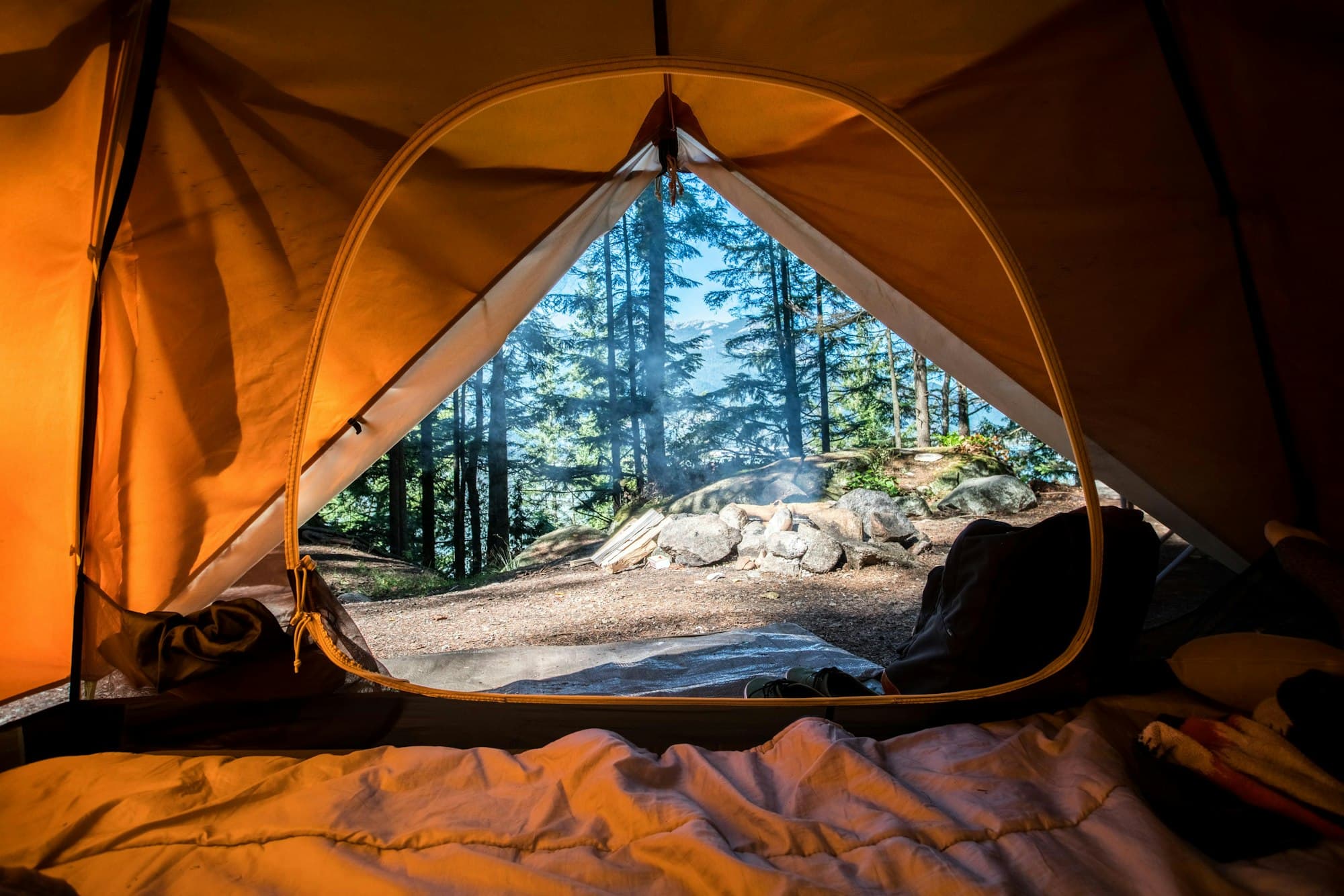
Cowboy camping means sleeping outside without a tent: usually a sleeping pad and bag or quilt on a groundsheet, sometimes with a bivy or bug net. The stars are the feature. So are the insects, dew and every weather decision a tent normally helps absorb.
For a first attempt, choose a legal, familiar, developed campsite on a stable clear night, keep a ready shelter or vehicle close, and abandon the idea at the first failed safety check. Cowboy camping is worth trying when the conditions make it easy. It is not an exam in stubbornness.
The go-or-no-go check
Every row must have a credible answer before bedtime.
| Check | Go | No-go or change the plan |
|---|---|---|
| Permission | The land manager or campground permits the sleeping setup | Rules are unclear, or the site requires a designated shelter/location you cannot meet |
| Thunderstorms | No thunderstorm threat and you know the nearest substantial building or hard-topped vehicle | Thunderstorms are forecast, thunder is heard, or safe shelter cannot be reached in time |
| Rain and wind | The hourly forecast is stable and your backup can be deployed before conditions arrive | Precipitation, gusts or changing conditions exceed the sleep system and backup plan |
| Temperature | Pad insulation and sleep system suit the expected low with margin for the sleeper | Rating is unknown, pad is uninsulated, or cold would require “toughing it out” |
| Bugs and ticks | Local pressure is manageable with a net, clothing and labeled repellent measures | Biting insects prevent sleep or tick habitat cannot be avoided or managed |
| Wildlife and food | Local attractant-storage rules are understood and every scented item is secured away from sleep | Food, trash, toiletries, pet food or a cooler would remain beside the bed |
| Ground and overhead hazards | Durable, permitted surface; no drainage path, dead limbs, rockfall or obvious animal route | The only space is fragile vegetation, a low drainage, hazardous tree zone or travel corridor |
| Exit plan | Shelter or vehicle is genuinely ready and everyone knows the trigger to move | The “backup” is buried, incomplete, distant or depends on waiting until gear is wet |
One no-go does not mean the whole trip is cancelled. It means sleep in the tent, vehicle or other permitted shelter and try again on a better night.
What you actually need
The core system is short:
- Sleeping pad: ground insulation matters as much as cushioning. Choose an R-value appropriate to the conditions and sleeper rather than assuming a thick air mattress is warm.
- Sleeping bag or quilt: use a temperature rating appropriate to the expected low, your clothing, pad and personal cold tolerance. A published rating is not a guarantee of comfort for every body.
- Groundsheet: keep it under the sleep system so it does not collect rain. It protects against damp soil and abrasion; it is not a roof.
- Headlamp: keep it reachable, not somewhere underneath the person who swore they would remember.
- Weather-ready layer: hat, dry insulation and rain shell should be accessible without unpacking the entire bag.
- Bug strategy: this may be a head net, fully suspended mosquito net, repellent used according to its label and clothing selected for local insects.
- Ready backup: a pitched tent, compatible tarp system, permitted vehicle or other shelter you can enter quickly.
A bivy can reduce exposure to splash, wind or insects depending on its design, but it also changes ventilation and condensation. “Waterproof” does not mean comfortable in every temperature and humidity combination. Read the bivy's instructions and test it before relying on it as the only weather plan.
Read the hourly forecast, not the daytime icon
A sunny symbol for the afternoon says little about 3 a.m. Look at the point forecast for the campsite and inspect the overnight hours for:
- temperature and wind chill;
- precipitation probability and timing;
- wind speed and gusts;
- thunderstorm potential;
- humidity, cloud cover and dew point where available;
- active watches, warnings and local hazards.
Dew forms when surfaces cool enough for moisture in the air to condense. That means a “zero percent rain” night can still leave the shell of a sleeping bag damp. A breathable cover or bivy may help with some exposure, but site airflow and fabric temperature still matter. Pack so that a damp outer surface can be dried safely the next day.
Thunder is a hard stop. The National Weather Service says a tent is not safe lightning shelter; a substantial building or enclosed hard-topped vehicle is the safe option. If thunder is audible, move to that shelter and wait at least 30 minutes after the last thunder before returning outdoors.
Choose a sleeping spot that does less harm—and fewer unpleasant things to you
At a developed campground, stay within the designated campsite or tent pad. In dispersed areas, follow the land manager's rules and use durable or already impacted surfaces. Leave No Trace recommends developed or existing sites where available and warns against “site creep” into surrounding vegetation.
Before laying down, inspect the exact body-sized area and what surrounds it:
- Look up: dead or unstable branches, damaged trees and rockfall terrain are reasons to move.
- Look down: remove small loose objects by hand, but do not trench, clear vegetation or remodel the site.
- Follow water: avoid depressions, dry channels, stream edges and terrain that can receive runoff from elsewhere.
- Read traffic: do not sleep on a trail, a social path to the toilet, or an obvious wildlife route.
- Keep distance from hazards: fire rings, roads, cooking areas and required food-storage locations need their own space.
The absence of tent walls does not make a fragile patch of meadow a better campsite. It only makes the impact shaped more like you.
Bugs are a design constraint, not a character test
If mosquito pressure is high, use a properly suspended net that cannot rest against exposed skin. The CDC recommends sleeping under a mosquito net when sleeping outside in relevant conditions and following the directions for treated products. A head net alone protects the head, not hands, clothing gaps or the rest of the sleep system.
Ticks require a separate plan. The CDC advises avoiding brush and tall grass where possible, using an EPA-registered repellent as directed, considering 0.5% permethrin-treated clothing and gear according to product instructions, and checking the body, clothing, equipment and pets afterward.
Our detailed guide to preventing mosquito bites while camping covers product choices, clothing and camp setup. If the bug plan turns the open-air bed into a complicated half-tent that still lets insects through, pitch the actual tent. The stars will cope.
Keep food and scented items away from the sleep system
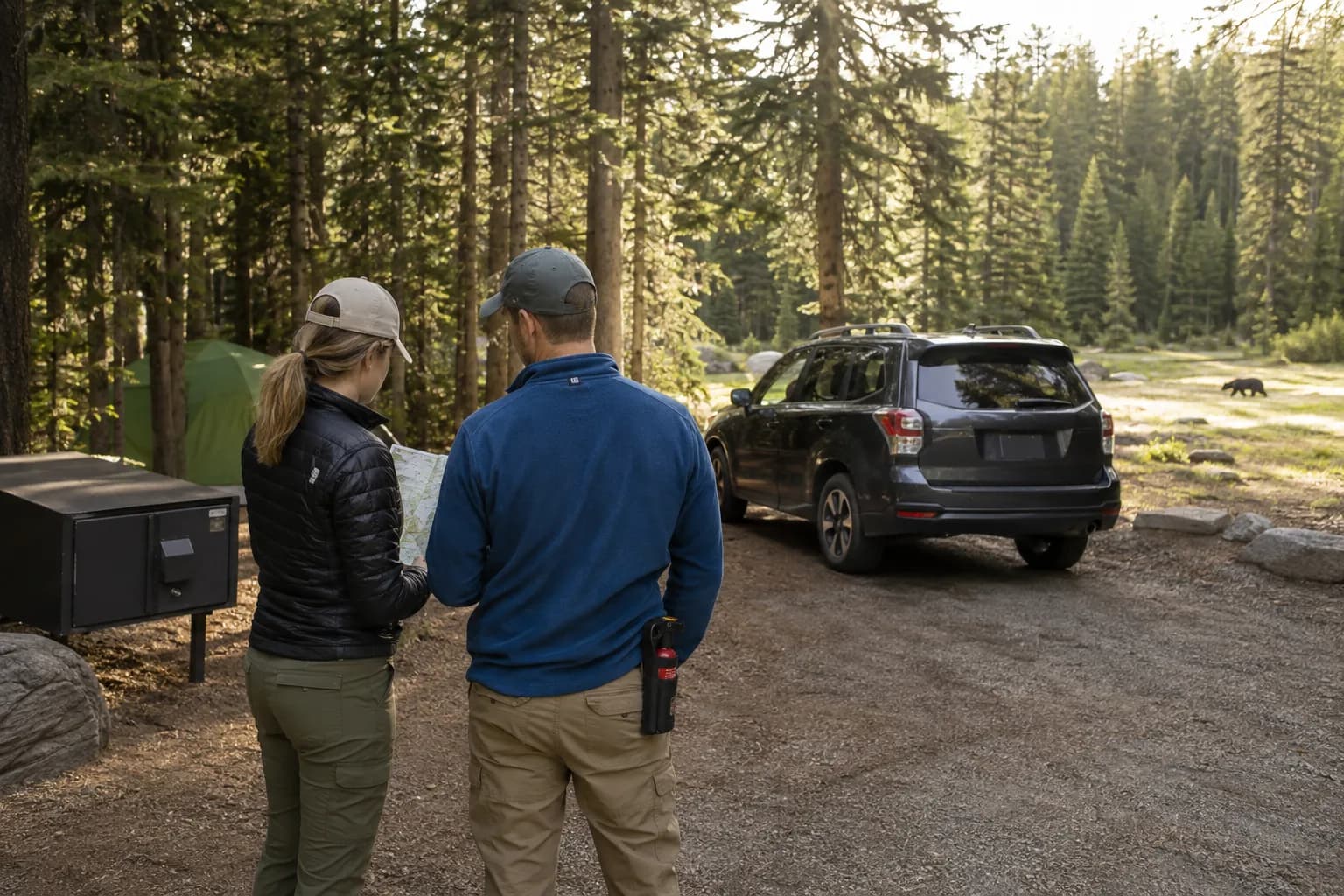
Cowboy camping does not relax wildlife rules. Secure food, garbage, cookware, toiletries, pet food and other attractants exactly as the campground or land manager requires. That may mean a locker, hard-sided vehicle or approved bear-resistant container; the allowed method varies by location.
The National Park Service advises campers not to take food into a tent and to ask rangers or campground hosts about local wildlife alerts and storage distances. An open bed provides even less separation. Do not keep snacks “for later” beside the sleeping bag, and do not assume a sealed cooler is wildlife-resistant.
Also check whether sleeping without an enclosed shelter is permitted at the exact site. Rules can differ between frontcountry campgrounds, backcountry permits and wildlife-management areas. If the written rule is unclear, contact the land manager instead of translating silence into permission.
Build the backup before you need it
For a first night, the best backup is already pitched or requires almost no assembly. Decide the abort triggers while conditions are calm:
| Trigger | Action |
|---|---|
| Thunder heard or lightning seen | Move immediately to a substantial building or enclosed hard-topped vehicle; a tent is not lightning shelter |
| Rain begins or radar/alerts show imminent weather | Protect the sleep system and move before insulation becomes wet |
| Wind increases beyond control of the setup | Move to the prepared shelter; do not chase loose bedding around camp |
| Unmanageable insects | Use the complete bug shelter or move inside |
| Wildlife enters or repeatedly investigates camp | Follow local wildlife guidance; do not approach, feed or use food as a distraction |
| Shivering, numbness, confusion or inability to warm | Move to shelter, add dry insulation and seek appropriate help; do not wait for the experience to improve itself |
| Anxiety prevents rest | Move. Sleep is part of safety, and no outdoor badge is being awarded at breakfast |
Put shoes, headlamp and essential layers in the same reachable position every time. Keep the route to the backup free of guylines and loose gear. If children or another first-timer are involved, agree that anyone can call the move without debate.
A low-risk first attempt
Use this sequence:
- Reserve or choose a campsite where the setup is allowed.
- Pick a night with stable conditions and manageable insects.
- Arrive in daylight and inspect overhead hazards, drainage and wildlife information.
- Set up the tent or confirm the vehicle sleep option before laying out the cowboy system.
- Secure every attractant according to local rules.
- Place the pad, bag, bug protection, shoes, headlamp and layers in a repeatable layout.
- Recheck the hourly forecast and alerts before sleeping.
- Move to the backup at the first trigger instead of negotiating with the forecast at 2 a.m.
If that night goes well, the next step is not necessarily a remote exposed bivouac. Try a second permitted site with similarly forgiving conditions and refine what actually affected sleep: ground insulation, condensation, bugs, noise or the simple feeling of exposure.
Is cowboy camping worth it?
Yes—when you want the open-sky experience, the rules permit it, conditions are genuinely stable and a failed experiment has an easy exit. It can turn an ordinary clear night into the part of the trip people remember.
No—when the appeal depends on ignoring a storm chance, wildlife rule, bug problem or inadequate sleep system. A tent does not make a camper less adventurous. Sometimes it simply makes tomorrow better.
For adjacent planning, see our car-camping essentials, rain camping guide and van camping guide.
FAQ
What is cowboy camping?+
Cowboy camping is sleeping outdoors without a tent, usually on a sleeping pad with a sleeping bag or quilt and a groundsheet. Some campers add a bivy or suspended bug net, but the defining feature is an open sleeping setup rather than an enclosed tent.
Is cowboy camping safe?+
It can be a reasonable choice when it is permitted, the weather is stable, the site has been checked for overhead, drainage and wildlife hazards, insects are managed, food is stored correctly and a fast backup shelter is ready. Thunderstorms, unclear rules, inadequate insulation or an unusable backup are no-go conditions.
Can you cowboy camp at a regular campground?+
Only if the specific campground and site rules allow it. Check the land manager’s current regulations, permit terms and wildlife guidance; do not assume that renting a tent pad automatically permits every sleeping setup.
Do you need a bivy for cowboy camping?+
Not always. On a stable dry night, a pad, suitable sleep insulation and groundsheet may be enough. A bivy can add splash, wind or insect protection depending on its design, but may increase condensation and is not a substitute for safe thunderstorm shelter.
What should make you stop cowboy camping during the night?+
Move to the prepared shelter for thunder or lightning, incoming rain, uncontrolled wind, unmanageable insects, wildlife activity, inability to stay warm, or anxiety that prevents useful sleep. Decide these triggers before bedtime.
Sources reviewed
Fact-checked Aug 30, 2026
These references support factual or safety-sensitive claims in this article. Access dates show when our editors last verified the source.
- National Weather Service — Lightning and Outdoor Safety
Official source · Accessed Aug 30, 2026
- National Park Service — During Your Stay
Official source · Accessed Aug 30, 2026
- Leave No Trace — Travel and Camp on Durable Surfaces
Expert guidance · Accessed Aug 30, 2026
- CDC — Preventing Tick Bites
Official source · Accessed Aug 30, 2026
- CDC — About Mosquito Nets
Official source · Accessed Aug 30, 2026