guides / camping tips
Van Camping
Van camping without a conversion — how to verify an overnight site, build a flat sleep system, manage condensation, and avoid carbon-monoxide hazards.
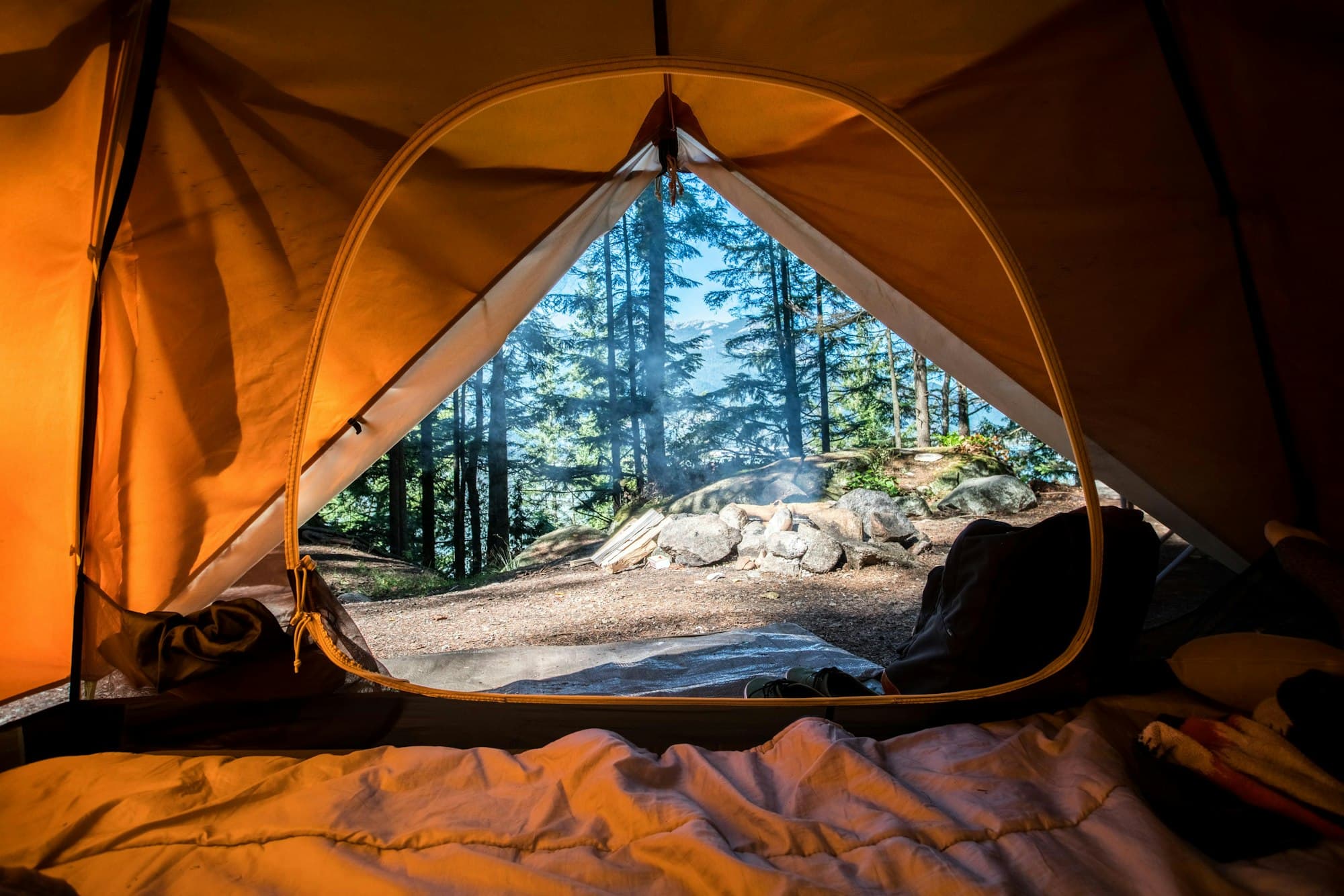
You do not need cabinets, solar panels, or a photogenic cedar ceiling to try van camping. For a first weekend, a legal overnight site, a flat sleep system, suitable bedding, airflow, and a safe exit plan matter far more than a full conversion.
The useful question is not “Can a mattress fit?” It is “Can two people sleep here safely, legally, and without moving half the vehicle into the rain at bedtime?”
Start with the overnight rule, not the gear
Sleeping in a vehicle is not automatically permitted wherever parking is allowed. Rules vary by park, municipality, land manager, campground, site type, and season. For example, Grand Teton and Yosemite permit sleeping in vehicles only in designated campgrounds, not in pullouts or ordinary parking areas.
Before driving, verify:
- that overnight camping is permitted on the exact site;
- that your vehicle type and length fit the reservation;
- check-in, quiet-hour, generator, food-storage, and stay-limit rules;
- road closures, weather, fire restrictions, and seasonal access;
- whether the site is a drive-in site rather than tent-only or walk-in.
A map pin, a social-media recommendation, or the absence of a “No Overnight Parking” sign is not permission. Use the current page of the land manager or obtain confirmation from the campground.
Van or tent? Make the decision before packing
| Your actual situation | Better first choice | Why |
|---|---|---|
| One or two sleepers, a verified vehicle campsite, flat cargo floor | Van | Fast arrival and no wet shelter to pack |
| Bed blocks a door or requires loose gear around your face | Tent | A clear exit matters more than avoiding setup |
| Family, dog, or bulky wet equipment fills the remaining volume | Tent or larger shelter | Sleeping and storage stop competing for the same space |
| Heavy condensation during the home test | Fix airflow first; otherwise tent | Wet bedding is not a successful shelter system |
| Any plan involving an idling engine, stove, lantern, grill, or unapproved heater inside | Neither until the plan changes | Ventilation cannot make combustion safe in a sleeping vehicle |
This is not a verdict on vans in general. It is a verdict on the layout in front of you.
Test the sleep system at home
Fold or remove seats according to the vehicle manual and measure the usable length, width, and height with doors closed. Lie down on the actual pad before the trip. A small slope or seat hinge that feels harmless for two minutes can become the night's main character.
A basic setup usually needs:
- a pad or mattress that does not block doors or controls;
- sleeping bags or bedding suited to the forecast overnight low;
- privacy covers that do not prevent an emergency exit;
- a small amount of ventilation;
- a headlamp within reach;
- keys stored where they cannot be lost or accidentally activate the vehicle;
- a clear path to at least one door.
Secure loose equipment before sleeping and before driving. Never modify seats, batteries, wiring, fuel systems, or restraints without appropriate technical guidance.
Copy this measurement card
Measure with the doors closed and the exact bedding in place. A mattress dimension from a product page is not the same as usable sleeping space.
| Check | Your measurement or answer |
|---|---|
| Flat sleeping length | ____ in / ____ cm |
| Narrowest usable width | ____ in / ____ cm |
| Headroom when lying down | ____ in / ____ cm |
| Door that opens from inside | __________ |
| Backup exit | __________ |
| Keys accessible without leaving bed | Yes / No |
| Loose gear secured for sleep and driving | Yes / No |
| Bed-to-seat conversion time | ____ minutes |
If either sleeper cannot lie flat or reach an exit without unloading gear, the setup has failed before the trip starts.
Ventilate for moisture — without defeating security
People release moisture while breathing, so windows can collect condensation overnight. Use rain guards or insect screens designed for the vehicle if needed, and open windows only as far as conditions and security allow. Wipe moisture in the morning and dry bedding before packing it away.
Ventilation does not make a combustion appliance safe inside a vehicle. Do not use a camp stove, charcoal device, lantern, grill, or unapproved fuel-burning heater in the sleeping space. Follow the vehicle manual for ventilation and never defeat locks, alarms, airbags, or other safety systems to create a sleeping layout.
Treat carbon monoxide as a hard boundary
Carbon monoxide is colorless and odorless. The CDC warns that exhaust-system leaks can allow it to build up inside a vehicle, and that a snow-blocked tailpipe can cause a rapid, deadly buildup.
Do not run the engine for overnight heat. Keep the exhaust clear of snow and debris, and do not park where another vehicle's exhaust or a generator is directed toward your openings. Follow the vehicle manufacturer's instructions and have exhaust concerns inspected before the trip.
If a carbon-monoxide alarm sounds or occupants develop headache, dizziness, weakness, nausea, chest pain, or confusion, move everyone to fresh air and seek emergency help. Do not go back inside to search for the source.
Keep cooking and food management outside
Cook only in a permitted, stable outdoor location and follow the appliance manufacturer's clearances. A raised hatch, open door, awning, screen room, or cracked window does not turn the van into an outdoor kitchen. Keep flames and hot cookware away from the vehicle, dry vegetation, fuel, and fabric, and follow current fire restrictions. In wildlife country, store food, coolers, toiletries, garbage, and cooking equipment exactly as the park requires; the vehicle is not an approved food locker in every destination or situation.
Our car-camping essentials guide helps plan the rest of a vehicle-supported campsite without pretending the van must contain an entire kitchen.
When a tent is the better shelter
Choose a tent when the vehicle cannot provide a flat bed, enough usable volume, safe ventilation, or an unobstructed exit. A tent also separates sleeping space from wet equipment and may work better for families or longer stays.
Van camping earns its place on quick arrivals, solo or two-person trips, and wet departures because there is less shelter to pitch and pack. It stops being simple when every bedtime requires rebuilding the entire cargo layout.
At the opposite end, cowboy camping removes both vehicle and tent, but only makes sense when the destination rules, forecast, insects, and wildlife conditions support it.
A realistic first-trip test
Book one night at a legal developed campsite close enough to leave if the setup fails. Arrive before dark, build the bed while you can see, test every door from inside, and keep cooking outside. The next morning, write down what actually caused friction before buying permanent hardware.
A weekend test answers the important questions more honestly than a conversion shopping list.
The morning-after scorecard
Do not grade the test by whether you technically made it until sunrise. Record what needs to change:
- Sleep: Could everyone lie flat and turn over?
- Exit: Could each person reach a usable door in the dark?
- Air: Was the glass lightly fogged, dripping, or dry?
- Bedding: Did anything become damp enough to lose warmth?
- Storage: How many items had to move before bed and again before driving?
- Safety: Did cooking, fuel, wet gear, or another vehicle's exhaust drift toward the sleeping area?
- Time: How long did setup and reset actually take?
One serious exit, exhaust, or combustion problem is a stop sign. A cramped pillow is a design note.
FAQ
Do you need to convert a van to go van camping?+
No. A legal campsite, flat sleeping pad, weather-appropriate bedding, privacy, ventilation and a clear exit can be enough for a short trial. Test the complete arrangement at home before buying a permanent build.
Is it legal to sleep in a van at any campground or parking area?+
No. Parking permission and overnight-camping permission are different. Rules also vary by campground and site type. Verify the exact location with its current land-manager or campground rules.
Can you run a van engine overnight for heat?+
Do not use an idling engine as overnight heat. Carbon monoxide is colorless and odorless, and exhaust leaks or a blocked tailpipe can allow it to build up inside the vehicle.
Sources reviewed
Fact-checked Sep 4, 2026
These references support factual or safety-sensitive claims in this article. Access dates show when our editors last verified the source.
- National Park Service — Grand Teton Camping Rules
Official source · Accessed Sep 4, 2026
- National Park Service — Yosemite Campground Regulations
Official source · Accessed Sep 4, 2026
- CDC — Carbon Monoxide Poisoning Basics
Official source · Accessed Sep 4, 2026
- CDC — Clear Snow from Tailpipes
Official source · Accessed Sep 4, 2026
- CPSC — Carbon Monoxide and Camping Equipment
Official source · Accessed Sep 4, 2026