destinations / cities
Montréal in Fall: Best Time for Colours and What to Do
Choose the right fall dates for Montréal, then build a car-free colour day, a food-and-neighbourhood day, or a foliage day trip.
For the best balance of fall colour and a city that still works if the leaves are early, aim for late September through mid-October. Start with Mount Royal and neighbourhood parks, add Old Montréal or a public market, and keep one day flexible for a trip toward the Laurentians, Lanaudière, or the Eastern Townships.
Montréal is a resilient Canadian fall choice because foliage is not the only reason to be there. A perfect colour day is excellent. A windy, grey day still has food, museums, neighbourhoods, markets, and enough coffee to negotiate peace with the forecast. Compare it with other regions in our fall in Canada guide before committing to your dates.
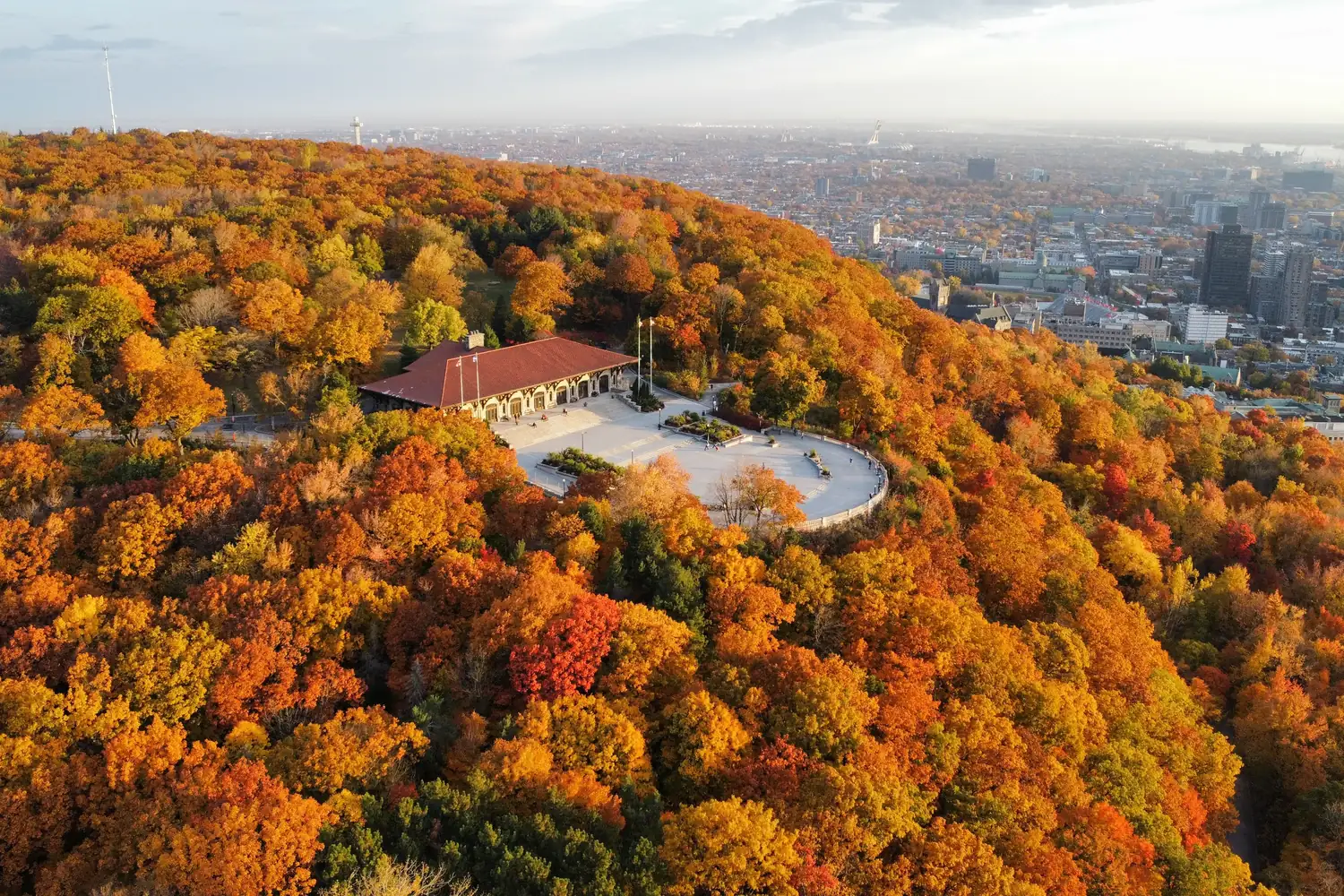
Mount Royal in autumn, with Montréal beyond. Photo by Maëlig Bouchereau via Pexels.
Choose your Montréal fall plan
| Your priority | Best starting plan | Car needed? | Weather sensitivity |
|---|---|---|---|
| Classic city foliage | Mount Royal + Plateau or Mile End | No | Medium |
| Architecture and food | Old Montréal + market or neighbourhood | No | Low |
| Maximum forest colour | Laurentians, Lanaudière, or Eastern Townships | Usually | High |
| Family day | Botanical Garden + nearby indoor backup | No | Medium |
| Short first visit | Mount Royal + Old Montréal | No | Medium |
When is the best time for fall colours in Montréal?
Late September through October is the useful planning window, but there is no bookable “peak day.” Colour differs between Mount Royal, city streets, and higher or more northerly terrain outside Montréal. Wind and rain can also shorten the best display.
Use dates as a filter:
Mid-September
Choose this period for comfortable walking and the first signs of change, not guaranteed peak colour. Out-of-town or higher-elevation locations may be further ahead than central neighbourhoods.
Late September to early October
This is the strongest flexible window for combining Montréal with an excursion. City colour may be developing while forest regions outside the city offer a stronger display.
Mid-October
Often a strong period in and around the city, but exact conditions vary. Popular parks and day-trip destinations can be crowded on sunny weekends.
Late October into November
Build the trip around neighbourhoods, food, markets, museums, and whatever colour remains. At this point, foliage should be a bonus rather than the contract.
The decision rule is simple: if your dates are fixed months ahead, choose Montréal for the whole city. If you are booking mainly for colour, check current regional reports close to departure and keep the excursion day movable.
The best places to see fall colours without a car
Mount Royal: the first choice
Mount Royal gives you woods, walking routes, Beaver Lake, and a broad city view from the Kondiaronk lookout. Tourisme Montréal identifies it as a central foliage stop, and it is the best answer for a first-time visitor with limited time.
Go early on a clear weekday if photography matters. On a busy weekend, the lookout can feel less like a quiet woodland discovery and more like Montréal has scheduled a team photo.
Choose it for: the strongest single car-free nature experience.
Skip or shorten it if: trails are wet, mobility is limited, or your visit is built around food and architecture rather than parks.
Parc La Fontaine and the Plateau
This pairing works because the walk continues after the park. You can move through residential streets, cafés, and colourful architecture without treating one lookout as the entire day.
Choose it for: neighbourhood atmosphere and a flexible half-day.
Parc Jean-Drapeau
The islands offer open views, trees, river context, and enough space to build a longer walk. Check current attraction schedules because seasonal operations vary.
Choose it for: skyline, waterfront, and park in one route.
Botanical Garden and Parc Maisonneuve
This area is useful for plant variety and a family-friendly day with possible indoor or ticketed components. Tourisme Montréal specifically recommends the Botanical Garden in fall and highlights seasonal evening programming; verify current dates and admission before planning around an event.
Choose it for: curated gardens and a less improvised family day.
Old Montréal, Mile End, and the markets
These are not maximum-foliage destinations. They are why the trip survives an imperfect peak. Old Montréal supplies architecture and river walks; Mile End and the Plateau supply food and neighbourhood texture; Atwater and Jean-Talon markets turn harvest season into something you can actually eat.
Should you take a fall day trip?
Yes, if foliage is a primary goal and you have at least three days. No, if you have only a weekend and would resent spending a large part of it in transit.
Laurentians or Lanaudière
Choose these for wooded hills, lakes, hiking, and a stronger nature-first day. Travel time and weekend congestion matter. Pick one compact area rather than collecting towns like refrigerator magnets.
Eastern Townships
Choose the Townships for small communities, rolling countryside, food producers, and an autumn road-trip feel. This is the better choice when the route and stops matter as much as the final viewpoint.
A no-car alternative
Keep the trip inside Montréal and build depth: Mount Royal in the morning, a market or neighbourhood in the afternoon, and a cultural evening. A car is useful for regional foliage, not necessary for a worthwhile fall visit.
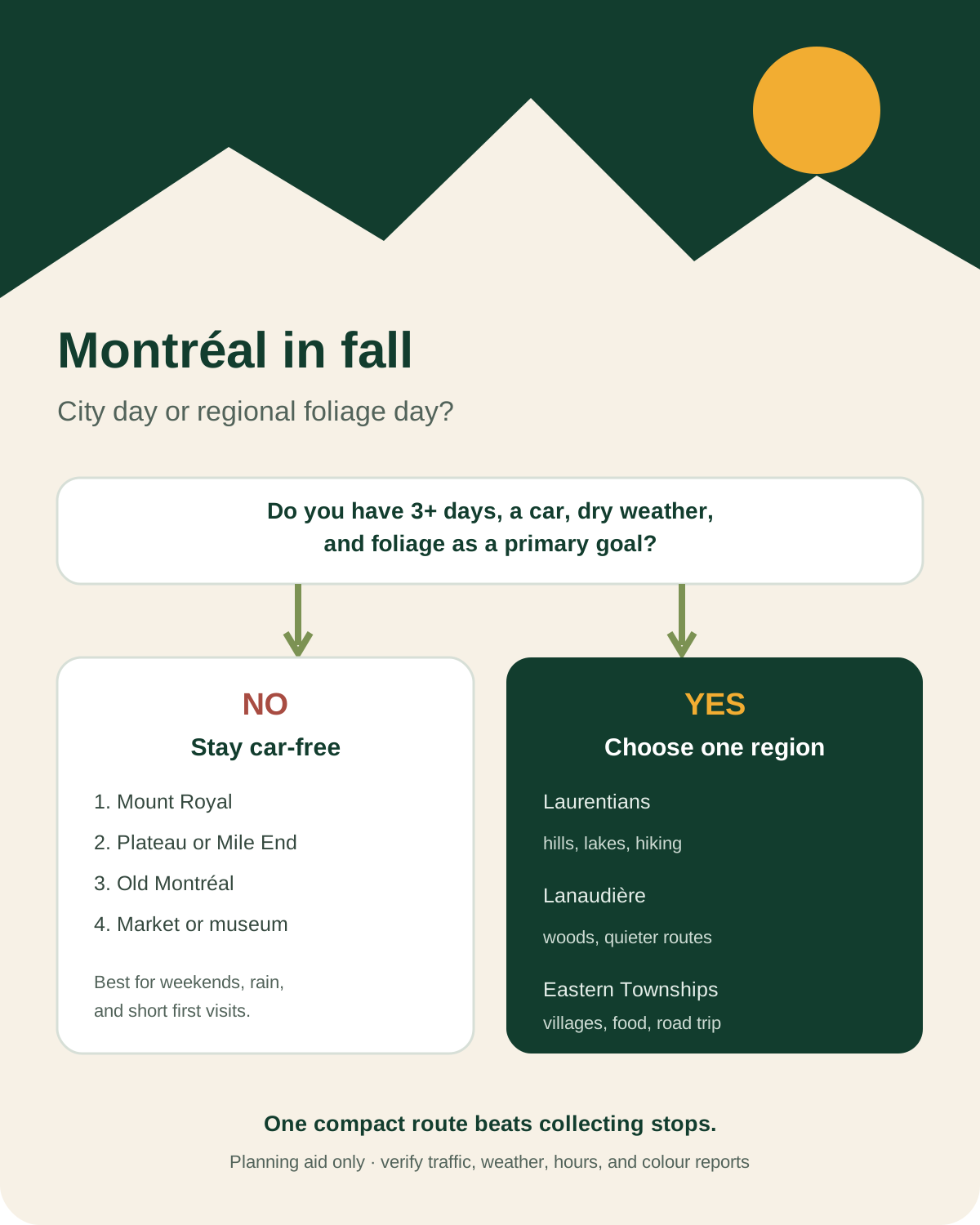
This is a planning aid, not a navigational map. Choose the city loop for a short or car-free stay; add one regional day trip when foliage is the main goal and conditions justify the drive.
A three-day Montréal fall itinerary
Day 1: Mount Royal and neighbourhood Montréal
Start with Mount Royal while energy and visibility are good. Continue toward the Plateau or Mile End for lunch and a slower neighbourhood walk. This day puts the most weather-dependent activity first without requiring a car.
Day 2: Old Montréal, river, and food
Walk Old Montréal before the busiest part of the day. Continue toward the Old Port, then choose a market or museum based on weather. The point is contrast: stone, river, food, and culture instead of twelve nearly identical leaf stops.
Day 3: follow the conditions
If regional colour is strong and the forecast is dry, use this for a day trip. If not, choose the Botanical Garden, Parc Jean-Drapeau, or another city route. Flexibility is not a failure to plan; it is the part of the plan that knows trees are alive.
What to do when it rains
A wet forecast should change the order, not cancel the visit.
- Put Mount Royal or another park in the clearest two-hour window.
- Choose a museum or indoor attraction for sustained rain.
- Use a market as a meal and browsing stop, not as a five-minute checkbox.
- Save Old Montréal for light rain if footwear is suitable; wet stone requires attention.
- Avoid driving far for a viewpoint hidden in low cloud.
Bring a waterproof shell, warm layer, and shoes with grip. An umbrella is useful until the wind files an objection.
Where to stay by trip style
Old Montréal: best for architecture, a romantic first visit, and walking to historic sights. It can feel quieter or more visitor-oriented depending on the block.
Downtown: best for transport connections, museums, and a practical first base.
Plateau or Mile End: best for neighbourhood food, cafés, and a lived-in city rhythm. Allow more transit time to some major sights.
Choose the base that reduces daily friction. A photogenic hotel far from everything is still far from everything.
What to pack
- waterproof outer layer;
- warm mid-layer;
- comfortable shoes with wet-surface grip;
- small daypack;
- hat and light gloves for later dates;
- portable battery for navigation and photography;
- one nicer layer that still works after a park walk.
For a camping extension, use the ultimate camping checklist and how to stay warm while camping. City packing advice does not account for a cold night outside.
Common planning mistakes
Booking one exact “peak” weekend as a guarantee
Historical patterns help choose a window. They do not reserve leaf colour.
Renting a car for the entire city stay
A car can enable a regional day trip, but it can also spend two days accumulating parking costs. Consider renting only for the excursion.
Trying to do all three day-trip regions
Pick one based on colour reports, weather, and the kind of day you want. The goal is a good trip, not completing southeastern Québec.
Treating markets as decoration
Allow enough time to eat, browse, and understand the harvest-season appeal. Otherwise, you have travelled across a city to look briskly at vegetables.
Frequently asked questions
Is Montréal worth visiting in fall?
Yes. It combines accessible city foliage with food, culture, and regional day-trip options. That mix makes it less vulnerable to imperfect colour or weather than a single-purpose foliage destination.
What is the best month for Montréal fall colours?
October is the clearest general planning answer, while late September can work well for combining the city with areas north or at higher elevation. Check current reports because timing changes each year.
Can I see fall colours in Montréal without a car?
Yes. Mount Royal, Parc La Fontaine, Parc Jean-Drapeau, the Botanical Garden area, and tree-lined neighbourhoods are reachable without a car. A vehicle mainly expands regional choices.
How many days do I need?
Two days cover a nature-and-neighbourhood day plus Old Montréal and cultural stops. Three days allow a flexible regional excursion or a deeper city itinerary.
Is Montréal cold in October?
Expect cool, changeable weather rather than one dependable temperature. Consult the current forecast, bring layers and rain protection, and plan by time of day.
The Keepsake Camp verdict
For a first fall visit, spend two days in Montréal and keep a third day flexible. Start with Mount Royal, use food and neighbourhoods as part of the plan rather than consolation prizes, and travel outside the city only when current colour and weather justify it.
Montréal is not merely where you wait for the trees to perform. That is exactly why it works.
Sources reviewed
These references support factual or safety-sensitive claims in this article. Access dates show when our editors last verified the source.
- Tourisme Montréal — Where to see fall colours in and around Montréal
Official source · Accessed Sep 7, 2026
- Tourisme Montréal — Autumn three-day itinerary
Official source · Accessed Sep 7, 2026
- Tourisme Montréal — What to do in fall
Official source · Accessed Sep 7, 2026