destinations / cities
Vancouver in Fall: Weather, Colours, and a Flexible Itinerary
Plan Vancouver in fall around rain, daylight, neighbourhood colour, and indoor backups—with itineraries for clear, mixed, and wet days.
Vancouver is worth visiting in fall if you want a mild city-and-nature trip and can accept rain. September is the easiest month for longer, warmer outdoor days. October brings stronger urban colour but more unsettled weather. November suits food, culture, stormy-coast atmosphere, and lower-elevation walks more than a foliage-first holiday.
Do not book Vancouver expecting eastern Canada’s continuous red forest. Coastal evergreens dominate much of the landscape. The better reason to visit is the mix: ocean, mountains, city parks, neighbourhood trees, excellent food, and enough indoor options that one wet forecast does not cancel the trip. If your dates or colour style are still undecided, compare the regions in our fall in Canada guide.
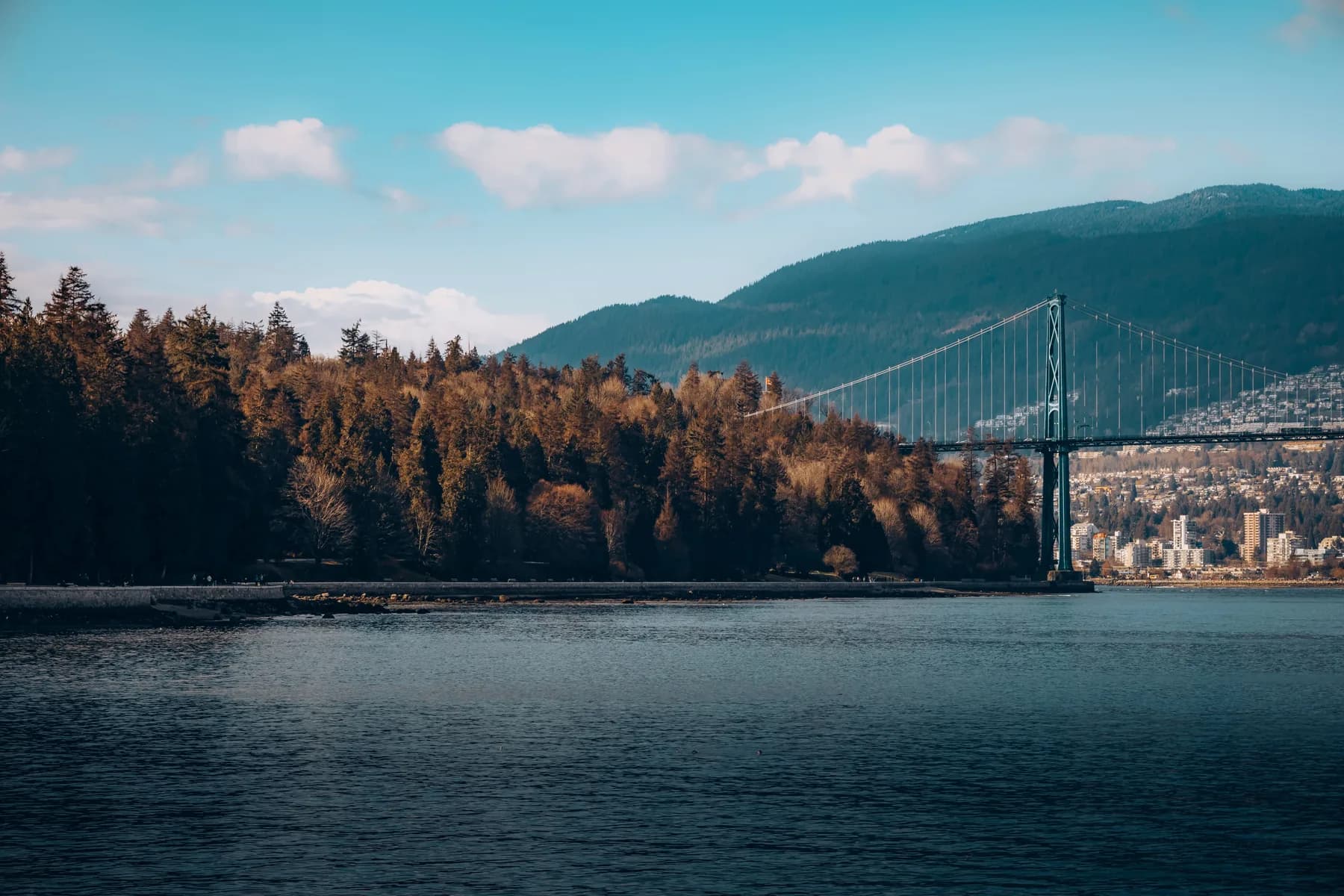
Lions Gate Bridge beside Stanley Park in Vancouver. Photo by Raghav Khera via Pexels.
Vancouver in fall at a glance
| Month | Best for | What to expect | Main risk |
|---|---|---|---|
| September | Outdoor days, cycling, patios, day trips | Milder temperatures and longer light | Colour may be limited early in the month |
| October | Urban foliage, parks, food, mixed itineraries | Cooler and wetter; stronger deciduous colour | A rigid all-outdoor plan can unravel |
| November | Museums, restaurants, moody coast, forest walks | Shorter, wetter days; fewer leaves | Poor fit for a foliage-only trip |
Environment and Climate Change Canada’s 1991–2020 normals for Vancouver Harbour put the daily average at 15.8°C in September, 11.2°C in October, and 7.5°C in November. Normals are planning context, not your forecast. Vancouver weather has no obligation to respect the spreadsheet.
Is Vancouver good for fall colours?
Yes—but set the right expectation. The city’s best colour often appears in planted deciduous trees, gardens, campuses, and neighbourhood streets rather than across every forested slope. Stanley Park’s interior remains a coastal rainforest experience: deep green, textured, and atmospheric, with pockets of seasonal colour.
Choose Vancouver for colour plus place, not colour in isolation.
Best fall-colour stops in the city
Stanley Park works for visitors who want forest, waterfront, and skyline choices from one location. The city lists more than 27 kilometres of forest trails, while the Stanley Park portion of the Seawall is about nine kilometres. Pick one experience; doing both in a hurry turns scenery into cardio administration.
Queen Elizabeth Park combines landscaped gardens, deciduous trees, and elevated city-and-mountain views. It is a compact choice for a mixed-weather day because you can shorten the visit without losing the main idea.
VanDusen Botanical Garden is a better choice for concentrated garden colour and plant variety than for wilderness. Confirm current hours and ticketing before visiting.
UBC and nearby gardens can pair campus colour with museums or another indoor stop. This makes the area useful when the weather is changing by the hour.
Kitsilano and the waterfront deliver the Vancouver version of fall: giant leaves, beaches, mountains when visible, and locals behaving as though drizzle is a minor software notification.
Destination Vancouver also highlights city parks and gardens rather than promising a single universal peak. That is the honest way to plan here.
Which month should you choose?
Choose September for outdoor range
September gives you the best chance of building full outdoor days without making rain the main character. It suits cycling, waterfront walks, North Shore outings, and a Sea-to-Sky day trip.
The compromise is colour. Early September may still feel like summer, particularly at lower elevations. If foliage is essential, later dates improve the odds—but never guarantee the show.
Choose October for the best balance
October is our best all-round choice for an autumn-feeling city trip. Urban trees are more likely to be turning, the air is cooler, and restaurants and cultural stops fit naturally between parks.
The compromise is weather volatility. Build the itinerary in movable blocks rather than assigning every hour before the forecast exists.
Choose November for atmosphere, not peak leaves
November can be satisfying for food, galleries, forest walks, and moody ocean views. It is not the month we would choose for a first foliage trip across Canada. By then, wind and rain may have removed much of the deciduous colour.
Three itineraries based on the weather
This is the page’s useful bit: pick the forecast column on the morning of your day.
| Conditions | Morning | Afternoon | Evening |
|---|---|---|---|
| Clear | Stanley Park trail or Seawall | English Bay to Kitsilano, or Queen Elizabeth Park | Sunset waterfront walk and dinner |
| Mixed | Queen Elizabeth Park | Museum, gallery, or Granville Island | Neighbourhood dinner; add a short colour walk if it clears |
| Wet | Indoor cultural stop | Granville Island or café-and-neighbourhood route | Restaurant, performance, or conservatory-style backup |
The clear-day route
Start early at Stanley Park. Choose the interior trails if you want rainforest texture and shelter; choose the Seawall if visibility is good and waterfront views matter more. The city says the full Stanley Park Seawall walk takes roughly two to three hours, so do not bolt it onto a morning already containing five other attractions.
Continue toward English Bay or cross the city to Queen Elizabeth Park. Save the best visibility-dependent stop for the clearest part of the day, not automatically for sunset.
The mixed-weather route
Use Queen Elizabeth Park as the outdoor anchor because it can be rewarding in a shorter window. Pair it with a museum, gallery, market, or neighbourhood meal. If the clouds lift, add a waterfront walk rather than attempting a distant mountain mission at 3:40 p.m.
The properly wet route
Accept the rain instead of spending the day refreshing three weather apps until they agree with your feelings. Choose one meaningful indoor attraction, one covered food stop, and one short outdoor walk in a park or neighbourhood. Waterproof footwear matters more than an umbrella in sideways rain.
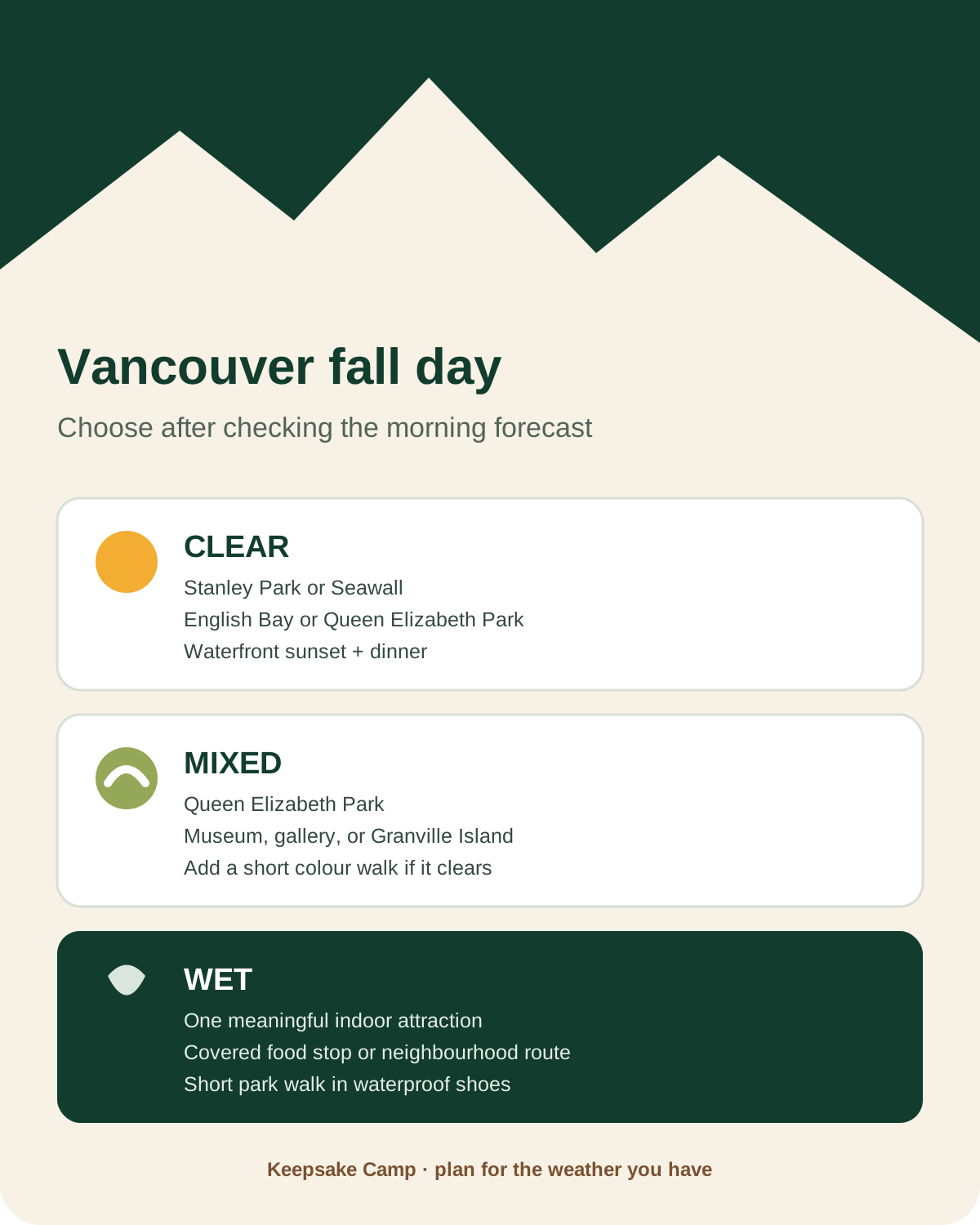
Choose the column that matches the morning forecast. The useful itinerary is the one that survives the weather you actually have.
Do you need a car?
No, not for a Vancouver city trip. Many central parks, neighbourhoods, markets, and cultural stops are reachable by public transit, walking, or cycling. A car becomes more useful for regional day trips, but parking and traffic can erase some of that convenience.
Choose car-free if your trip is two to four days and your priorities are Stanley Park, downtown, neighbourhood food, gardens, and museums.
Rent a car for one day if you have a specific regional route and have checked seasonal access, road conditions, and parking. That hybrid plan often beats paying to store a vehicle while you walk around the city.
What to pack
- waterproof jacket with a hood;
- water-resistant walking shoes;
- warm mid-layer;
- small dry bag or protected pouch for electronics;
- compact gloves for later fall or higher elevations;
- flexible daypack;
- transit-ready payment method and saved offline directions.
If you are camping outside the city, the packing problem changes quickly. Read how to camp in the rain and what to pack for camping before treating a hotel-city forecast as a campsite forecast.
A better two-day plan
Day one: the city’s green-and-gold side
Start with Stanley Park, but choose either forest trail or Seawall based on weather and energy. Move to the West End or waterfront for lunch. Use the afternoon for a second compact park or neighbourhood rather than crossing the entire region.
Day two: one ambitious choice
Choose one:
- a North Shore nature day;
- a Sea-to-Sky outing;
- gardens plus a neighbourhood food route;
- a full indoor culture-and-food day if the weather is poor.
One ambitious choice is a plan. Three is a hostage situation with parking receipts.
Mistakes that make Vancouver fall harder than it is
Expecting eastern-style foliage
Vancouver’s autumn palette sits inside an evergreen coastal landscape. If uninterrupted scarlet forest is non-negotiable, Québec or Ontario is the better trip.
Saving every outdoor stop for one day
Move outdoor windows forward when the forecast is favourable. Your itinerary should respond to the weather, not attempt to discipline it.
Treating a mountain forecast as a city forecast
Elevation changes temperature, precipitation, and trail conditions. Verify the destination itself before a mountain outing.
Packing for temperature but not water
A mild wet day can feel colder than the number suggests. Keep feet and core dry.
Frequently asked questions
Is October a good time to visit Vancouver?
Yes. October offers a useful balance of urban fall colour, food, culture, and manageable temperatures, but rain becomes a larger planning factor. Build a mixed indoor-outdoor itinerary.
When do fall colours peak in Vancouver?
There is no dependable single peak across the city. Species and neighbourhoods change at different times, generally through October and into November. Check current local reports and recent official updates close to travel.
Does it rain every day in Vancouver in fall?
No, but wet weather becomes increasingly likely later in fall. Climate normals describe typical patterns, not a daily guarantee. Plan for rain without assuming the whole trip will be washed out.
Is Stanley Park worth visiting in fall?
Yes, particularly if you value rainforest, waterfront, and walking choices more than pure deciduous colour. Check current city notices because trail or forest-management work can affect access.
Is Vancouver better in September or October?
Choose September for warmer, longer outdoor days. Choose October for a stronger autumn feel and more urban foliage, accepting a greater chance of rain.
The Keepsake Camp verdict
Visit Vancouver in fall for flexibility, not a foliage guarantee. October is the best balance for most visitors; September offers more outdoor range; November works when food, culture, and coastal atmosphere are enough reason to go.
If your trip would feel ruined by rain, choose another season. If a wet forest followed by a very good meal sounds like a day rather than a defeat, Vancouver fits.
Sources reviewed
These references support factual or safety-sensitive claims in this article. Access dates show when our editors last verified the source.
- Environment and Climate Change Canada — Vancouver Harbour 1991–2020 climate normals
Official source · Accessed Sep 7, 2026
- Destination Vancouver — Best places to see fall colours
Official source · Accessed Sep 7, 2026
- City of Vancouver — Stanley Park
Official source · Accessed Sep 7, 2026
- City of Vancouver — Stanley Park trails
Official source · Accessed Sep 7, 2026
- City of Vancouver — Seawall
Official source · Accessed Sep 7, 2026