destinations / national provincial parks
Banff in Fall: Weather, Hiking, Camping, and What Stays Open
Plan Banff in September or October with clear trade-offs for larch hikes, snow, shuttles, campground dates, wildlife, and seasonal closures.
September is the best fall month for most Banff visitors. It offers the strongest overlap of hiking access, golden larches, operating campgrounds, and lake transportation. October is quieter and can be beautiful, but snow, ice, shorter days, shuttle end dates, and campground closures progressively narrow the trip.
Banff in fall is not a cheaper version of summer with yellow trees added. It is a transition season. The right plan checks the current trail report, campground table, shuttle dates, wildlife bulletins, and forecast—in that order—then keeps a lower-elevation backup. If mountain gold is only one option on your shortlist, compare the timing and trade-offs in our fall in Canada guide.
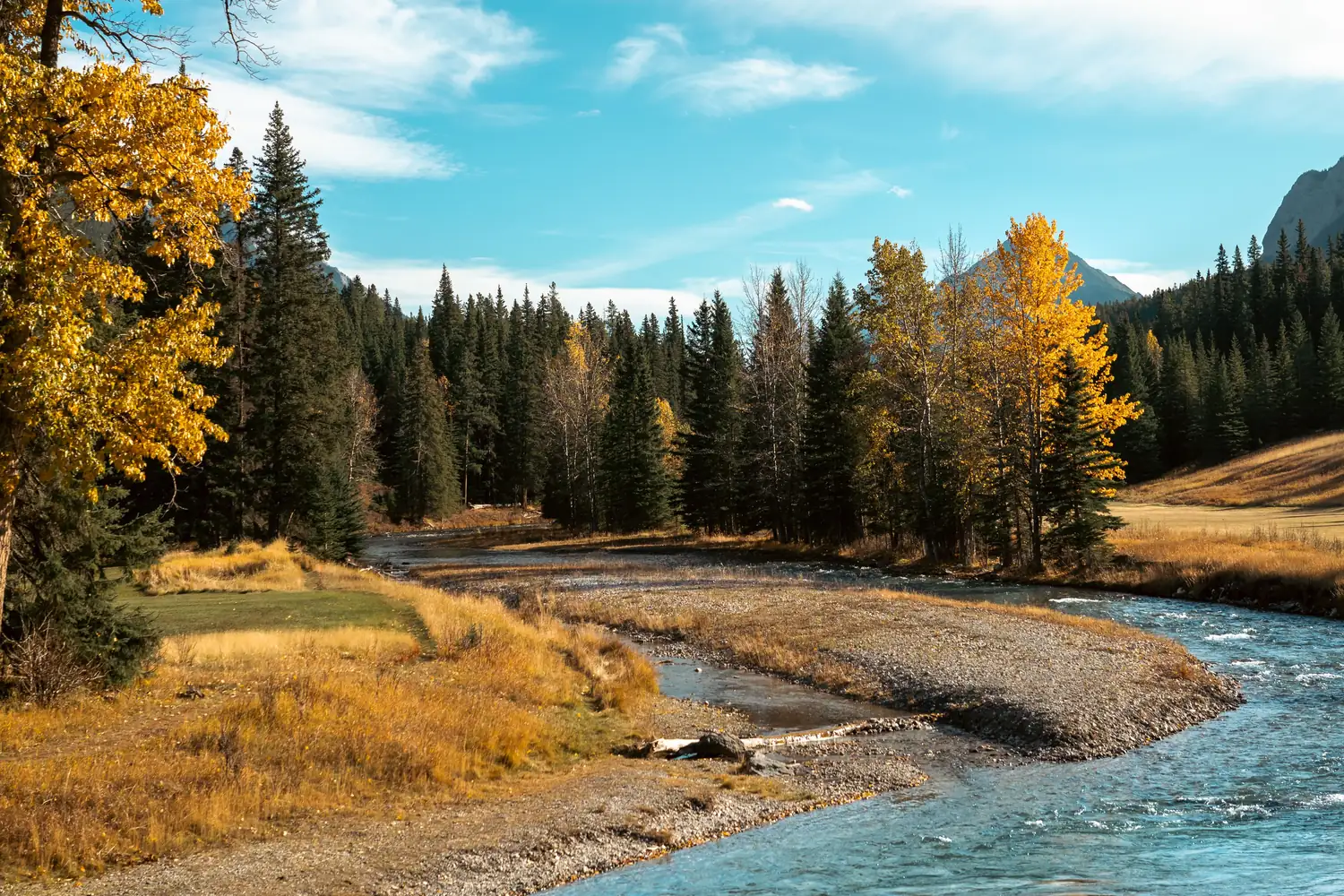
An autumn river landscape in Banff National Park. Photo by Donovan Kelly via Pexels.
September or October? Choose quickly
| Priority | Better choice | Why |
|---|---|---|
| Larch hiking | Mid- to late September | Better overlap with trail access and seasonal transport |
| Front-country camping | September | More campgrounds and services generally operate |
| Fewer crowds | October | Lower demand, with fewer options too |
| Scenic drives and town-based walks | Either | October needs stronger snow and daylight backups |
| First mountain trip | September | More forgiving planning window |
| Winter-like atmosphere | October | Possible snow and ice; not guaranteed |
If your trip depends on Moraine Lake, one specific high trail, or a seasonal campground, choose dates only after checking the official operating information.
What fall actually looks like in Banff
Banff’s signature autumn colour is often gold, not the broad red-orange canopy associated with eastern Canada. Larches turn yellow at higher elevations; aspens and shrubs add colour lower down; evergreens and rock remain the frame.
That difference matters. A visitor searching for “fall in Canada” may be choosing between two different trips:
- Banff: mountain scale, golden larches, volatile conditions, more logistical constraints.
- Québec or Ontario: broader hardwood colour, red and orange, easier low-elevation alternatives.
Choose Banff because you want Banff. The leaves are a seasonal advantage, not camouflage for a mismatched trip.
When is larch season?
Mid- to late September is the usual planning window, but larches do not publish an opening date. Elevation, weather, and the year’s conditions shift timing. Current trail reports and recent park information matter more than a fixed date repeated across old articles.
Larch Valley is famous, which also means access and crowd planning are part of the hike. Moraine Lake Road is closed to personal vehicles year-round. In 2026, Parks Canada lists its Moraine Lake shuttle through October 12, subject to current operations. Future readers must check the live page rather than reusing that date.
The best fall activities by conditions
Clear and dry: make the mountain day count
Choose one major trail appropriate to your ability, daylight, and current report. Larch Valley is the obvious seasonal candidate, but alternatives may fit better when transport is full or the trail is crowded.
Before leaving:
- Check Parks Canada’s trail condition for the named route.
- Check closures, restrictions, and wildlife bulletins.
- Confirm transportation or parking rules.
- Compare turnaround time with sunset and your actual pace.
- Carry insulation, rain protection, water, food, navigation, and traction when conditions require it.
A famous trail does not become suitable because the camera is charged.
Mixed weather: pair one exposed stop with one sheltered plan
Use the clearest window for a lake viewpoint or moderate hike. Keep a lower-elevation walk, scenic drive, visitor centre, hot springs, or town activity as the second half of the day. Verify hours directly; shoulder-season operations change.
Snow or ice: reduce ambition early
Fresh snow can make an easy-looking trail slippery, hide the route, and introduce avalanche terrain at higher elevations. Consult current Parks Canada conditions and avalanche information where relevant. Do not treat “other people went up” as a trail assessment.
If the intended route no longer fits, switch to a town-based day, lower trail, scenic drive, or another maintained option. The mountain will not feel insulted.
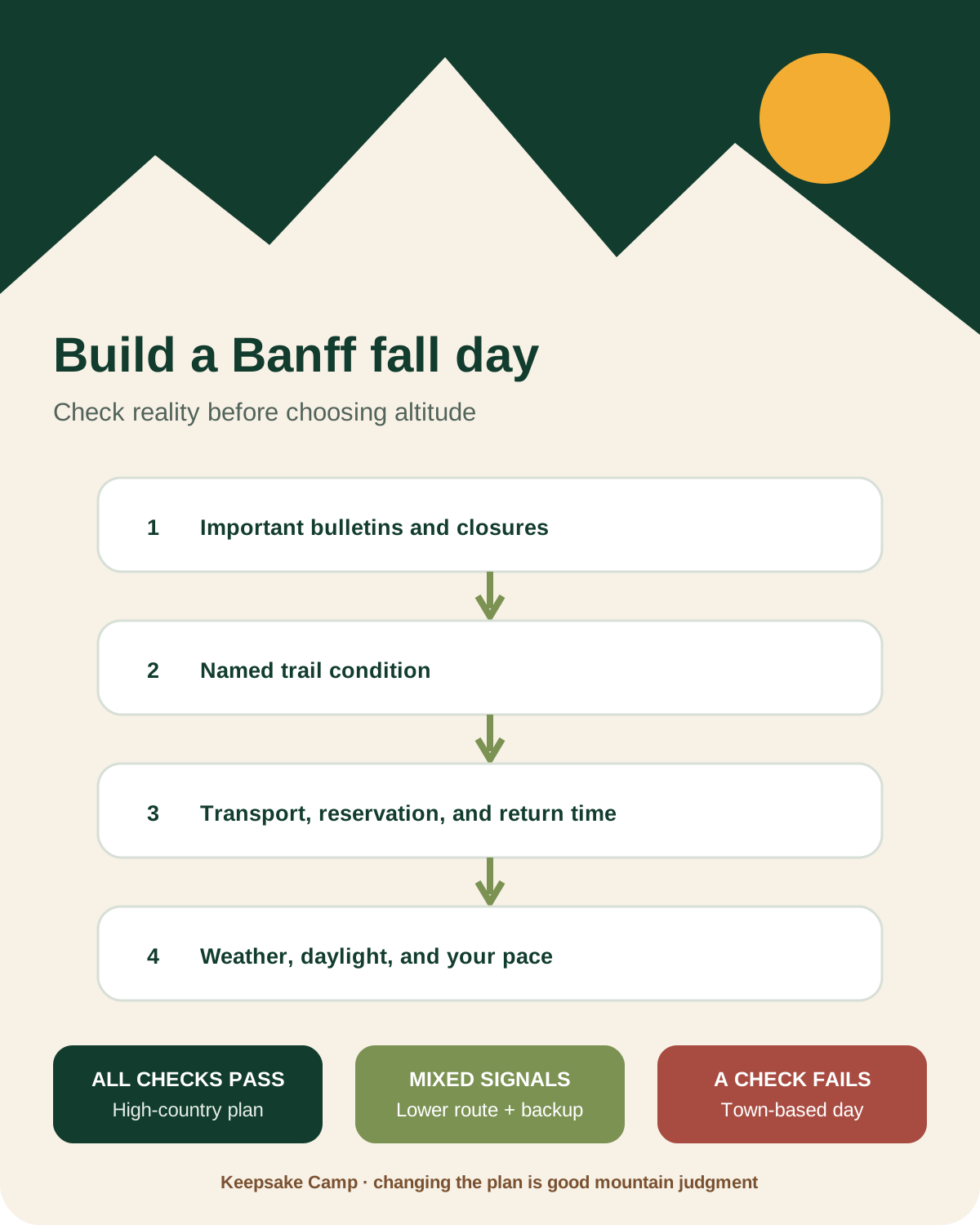
Run the checks in order. A failed trail, transport, or weather check is a reason to change the plan—not to negotiate with the mountain.
What stays open in fall?
There is no honest one-word answer. “Banff is open” does not mean every campground, shuttle, road, tea house, trail, and attraction operates.
The park and town
Banff National Park and the town remain visitable, but individual facilities have their own schedules. Check the official page for each place central to your trip.
Moraine Lake access
Personal vehicles cannot use Moraine Lake Road at any time of year. Access relies on Parks Canada shuttles, public transit where offered, or licensed commercial transportation during their operating seasons. Reservations and end dates matter.
Lake Louise
Lake Louise remains a major destination, but parking is limited and transport rules change seasonally. Parks Canada recommends transit or shuttle planning rather than relying on finding a lakeshore parking space.
Campgrounds
Operating dates differ. Parks Canada’s 2026 table, for example, shows some campgrounds ending operations in early September or early October, while Tunnel Mountain Village II is listed year-round. That is a snapshot, not permission to assume the same dates next year.
Use our Camping in Banff National Park guide to compare campground styles, then verify the live reservation and operating table before booking.
Roads and trails
Seasonal and wildlife closures can apply even when the broader park is open. Moraine Lake Road is permanently closed to personal vehicles; other road sections and trails have date-based restrictions or can close with little notice.
Camping in Banff in fall
Fall camping is rewarding for people who already have a cold-night system and a backup plan. It is a poor place to discover that a sleeping bag’s marketing number and your comfortable sleeping temperature are not close relatives.
Choose a campground by operating reality
Check:
- exact operational dates;
- reservation status;
- hard-sided versus soft-sided restrictions where applicable;
- potable water and washroom availability;
- fire rules and current bans;
- vehicle length or site limitations;
- overnight forecast at the campground elevation.
Use the live Parks Canada campground table to verify operating dates, reservation status, and available services before booking.
Build the sleep system for the forecast
Your sleeping pad matters because the ground draws heat. Bring a bag or quilt with realistic comfort margin, dry sleep clothing, and a shelter you know how to pitch in wind or precipitation. Read how to stay warm while camping before departure.
Know the fire status
Fire permissions can change with conditions. A cold evening does not override a restriction. Check the current status and use a stove where permitted rather than making warmth depend on a campfire. Our Banff fire-ban page is year-specific and must be reverified for the date of your trip.
Wildlife is not a seasonal footnote
Fall overlaps berry season, elk rut, and active wildlife advisories. As of September 7, 2026, the Parks Canada bulletins included bear warnings and an elk-rut advisory first posted on August 28; conditions and locations change.
Use the official bulletin page and follow posted closures. Carry bear spray where recommended, know how to use it, keep food and scented items secured, travel appropriately for the route, and give wildlife space. Our bear safety while camping guide helps build the routine, but current park instructions govern the trip.
A three-day fall itinerary that can bend
Day 1: town, viewpoints, and conditions check
Use the arrival day for a lower-risk walk, the town, and a visitor-centre check. Confirm the next day’s trail, transport, wildlife notices, and weather. This is not wasted time; it is how the ambitious day stops being guesswork.
Day 2: one major mountain objective
Use the clearest day for the most condition-sensitive hike or lake visit. Start with a booked transport plan where required and a preselected alternative.
Day 3: lower elevation or scenic route
Choose a lower trail, scenic drive, lake walk, or town-based experience. If day two was lost to weather, day three can absorb the objective only if conditions genuinely improve.
What to pack for Banff in fall
- waterproof shell and pants appropriate to the plan;
- insulating mid-layer and spare warm layer;
- hat and gloves;
- sturdy footwear;
- traction when current conditions call for it;
- map or offline navigation;
- headlamp;
- water and sufficient food;
- emergency insulation;
- bear spray carried accessibly where recommended, plus knowledge of its use.
This is a planning list, not a route-specific safety list. Terrain, distance, and conditions decide what else you need.
Common mistakes
Planning Banff fall from a summer itinerary
Shorter daylight, cold starts, snow, transport end dates, and campground closures can invalidate the sequence.
Assuming October means empty
Crowds may decline, but popular locations can still be busy—and fewer open services concentrate demand.
Driving toward Moraine Lake
The road is closed to personal vehicles year-round. Reserve or verify an authorized transportation option.
Treating an old trip report as a current trail report
Use first-person reports for perspective, not operational truth. Parks Canada’s current notices make the decision.
Frequently asked questions
Is Banff worth visiting in fall?
Yes, especially in September for hiking, golden larches, and cooler weather. It is less forgiving than summer, so the trip should be built around current conditions and seasonal operations.
Does it snow in Banff in September or October?
It can snow in either month, particularly at elevation. Mountain weather is variable. Check the current forecast and trail report rather than treating a monthly average as a promise.
Can you camp in Banff in October?
Yes at campgrounds whose operating dates include your stay, but many seasonal campgrounds close by early October or earlier. Verify the current Parks Canada table and reservation status.
Can I drive to Moraine Lake in fall?
No. Moraine Lake Road is closed to personal vehicles year-round. Use an authorized shuttle, public transit option, or licensed commercial operator during its operating period.
When do the larches turn yellow?
Mid- to late September is the usual planning window, but exact timing varies. Monitor current regional updates and trail conditions.
The Keepsake Camp verdict
Choose September for the best overlap of larches, trails, transportation, and camping. Choose October only if you welcome a quieter, more winter-adjacent trip and can change plans quickly.
Book the shuttle or campground, but hold the itinerary loosely. In Banff, flexibility is not indecision. It is mountain literacy.
Sources reviewed
These references support factual or safety-sensitive claims in this article. Access dates show when our editors last verified the source.
- Parks Canada — Banff trail conditions
Official source · Accessed Sep 7, 2026
- Parks Canada — Banff seasonal closures and restrictions
Official source · Accessed Sep 7, 2026
- Parks Canada — Banff important bulletins
Official source · Accessed Sep 7, 2026
- Parks Canada — Camping in Banff National Park
Official source · Accessed Sep 7, 2026
- Parks Canada — Visiting Lake Louise and Moraine Lake
Official source · Accessed Sep 7, 2026