destinations / seasonal travel
Fall in Canada: Where to Go, When to Go, and What to Expect
Choose a Canadian fall trip by travel dates, colour style, weather tolerance, and whether you want a city break, road trip, or mountain hike.
The short answer: choose the destination that fits your dates, not the photograph that won an argument with your common sense. For classic red-and-orange forest colour, start with Québec or Ontario from late September into October. For golden larches and sharp mountain scenery, consider the Canadian Rockies in September. For a gentler city trip with parks, food, and a workable rain plan, Montréal or Vancouver gives you more ways to rescue an imperfect-weather day.
There is no single “peak fall in Canada.” The country is too large, elevation changes the calendar, and one windy night can rearrange a week’s worth of foliage. A useful plan therefore needs a target window, a backup landscape, and something worth doing after the leaves have behaved like leaves and fallen.
Choose your fall trip in 30 seconds
| If you want… | Start with… | Best general window | Main trade-off |
|---|---|---|---|
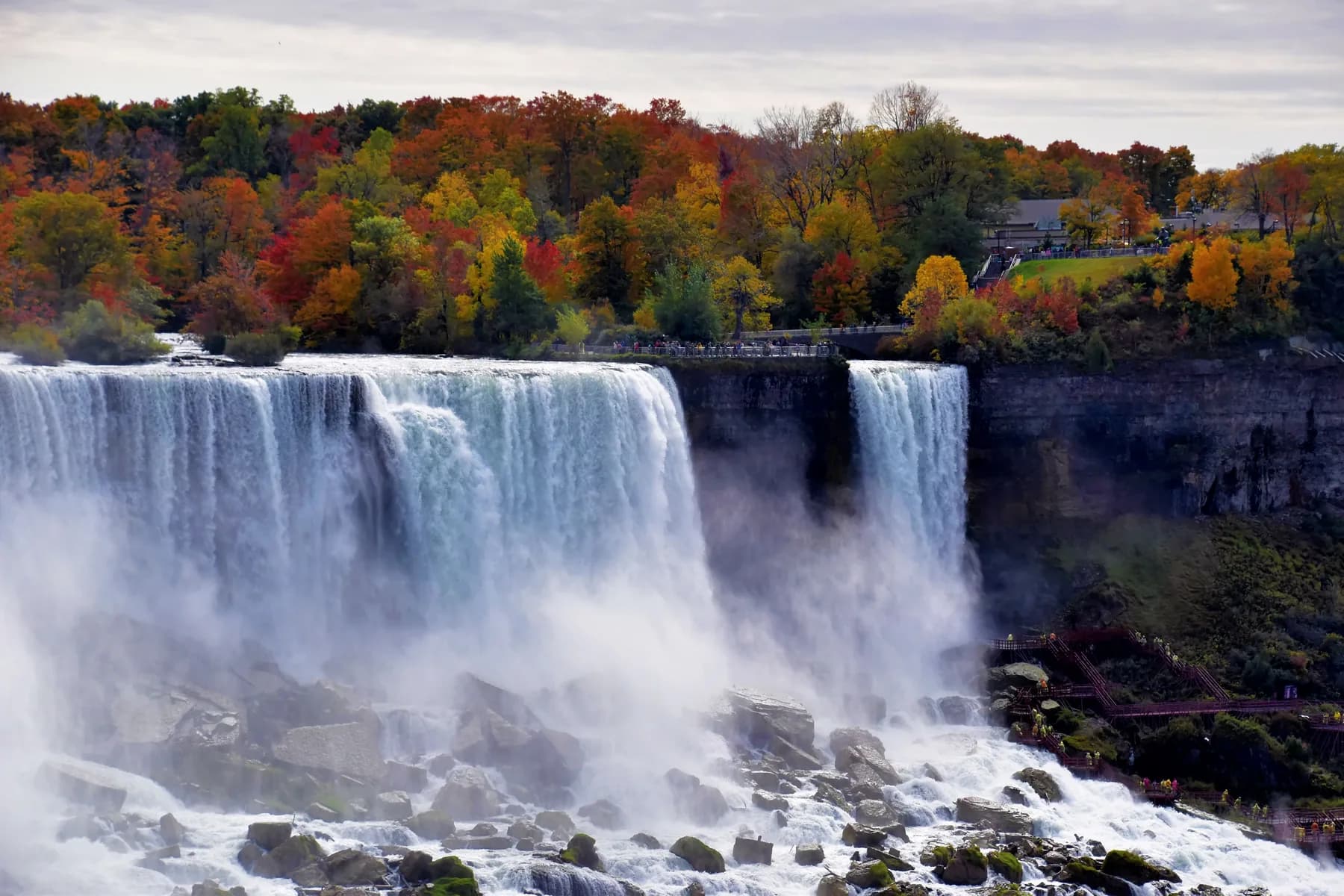
| Dense red, orange, and gold hardwood colour | Québec or Ontario | Late September to mid-October | Popular weekends can be busy |
| Golden larches and mountain hiking | Banff or the Alberta Rockies | Mid- to late September | Snow and trail conditions can change quickly |
| A city break with foliage and excellent food | Montréal | Late September through October | Exact peak varies; build a flexible day trip |
| Mild urban exploring with rain-proof options | Vancouver | September or October | The coast is greener than the postcard-red East |
| A scenic drive with coastal culture | Cape Breton, Nova Scotia | Usually October | Longer distances and fewer urban backups |
| A flexible park-and-road-trip weekend | Algonquin or nearby Ontario park country | Late September into October | Book early and consult the live colour report |
These are planning windows, not colour guarantees. Check the relevant provincial or park report close to departure, then check weather and closures again the day before.
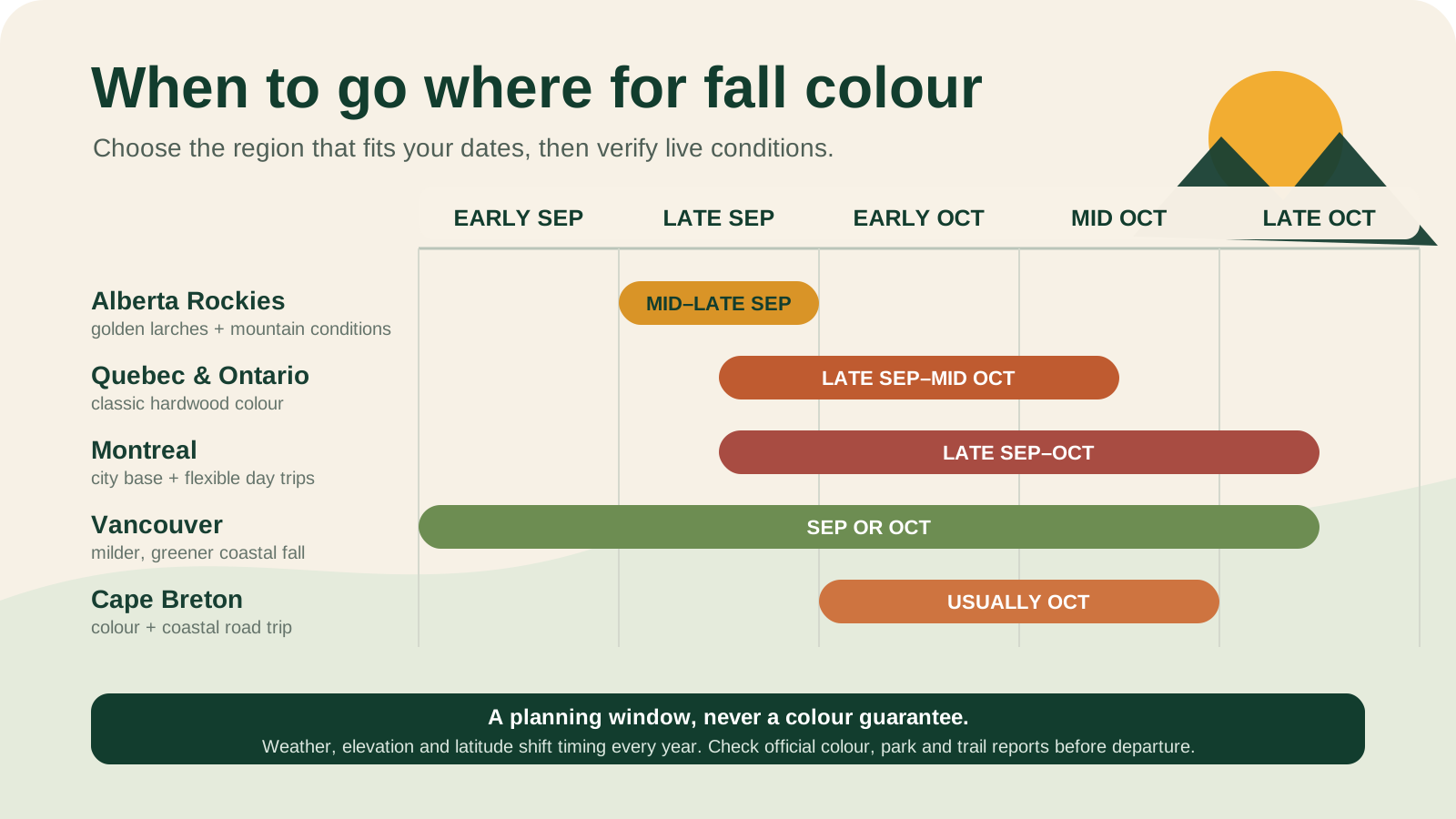
A planning guide, not a peak forecast. The timing shifts every year with latitude, elevation, frost, wind, and storms; confirm conditions with current official reports before travelling.
The honest regional comparison
Québec: the strongest all-rounder
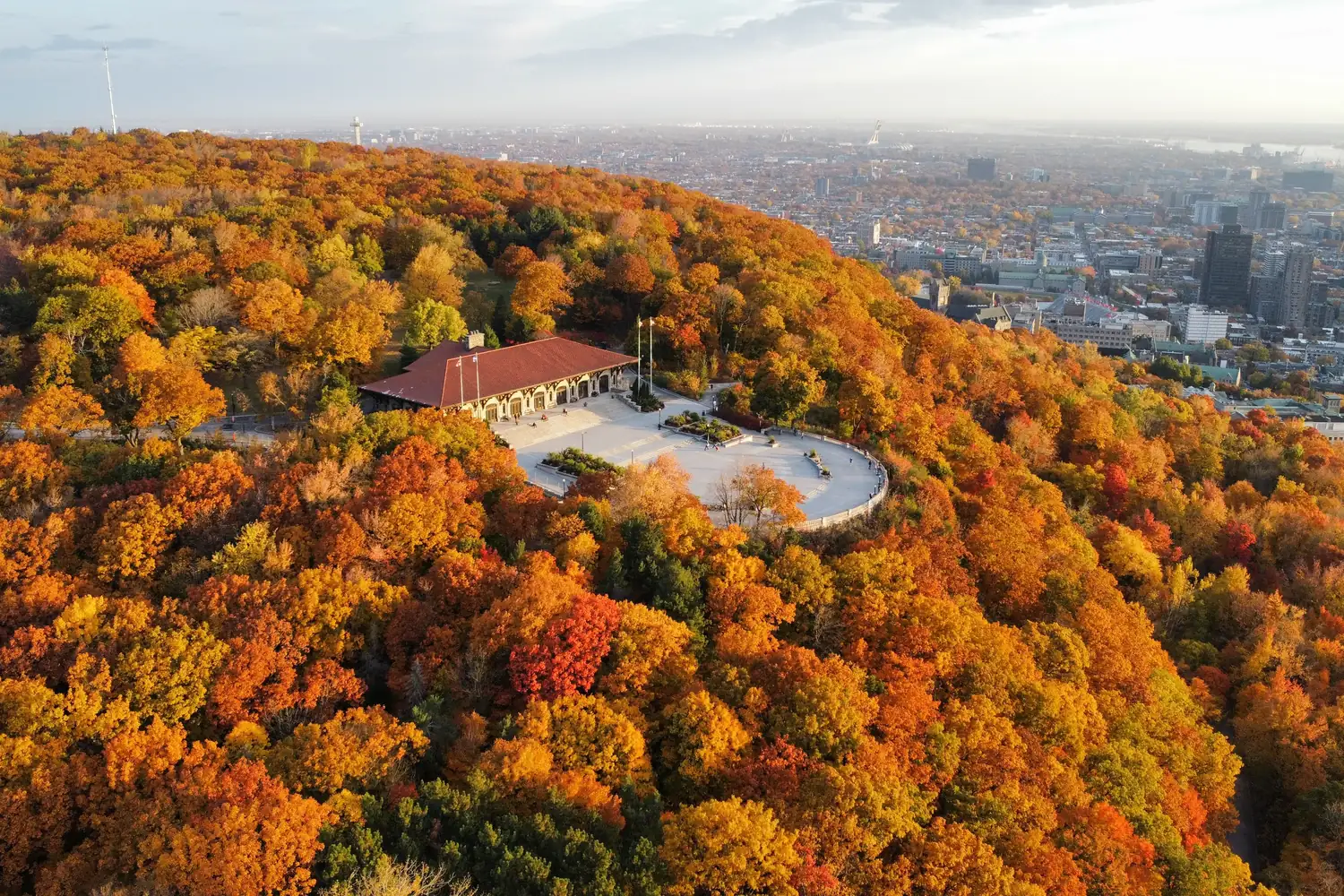
Choose Québec if your ideal fall trip combines hardwood colour, walkable towns, food, and the option to escape into hills. Montréal works as a base because Mount Royal and several city parks provide colour without a car, while the Laurentians, Lanaudière, and Eastern Townships create stronger day-trip scenery.
Best for: first-time fall visitors, couples, photographers, and travellers who want a city even if the colour timing misses by a few days.
Skip it if: your priority is a quiet, empty wilderness weekend and your only dates are a peak-colour Saturday. You and several thousand new friends may have chosen the same lookout.
Use our detailed Montréal in fall guide to choose between a car-free city day and an out-of-town foliage day.
Ontario: best for park choice and live colour tracking
Ontario’s advantage is not one magic viewpoint. It is the number of workable combinations: Algonquin for broad forest landscapes, Muskoka for lakes and drives, Ottawa’s urban-rural mix, and many provincial parks with hiking and camping.
Ontario Parks publishes a fall colour report, which is more useful than locking a trip around a date copied from an old blog post. If camping is part of the plan, compare the colour report with campground operating dates; fall colour and open services are separate questions.
Best for: road trippers, campers, paddlers, and travellers who can adjust their route during the final week.
Skip it if: you want to fly into one compact centre and avoid driving. Montréal is usually easier for that version of the trip.
If Algonquin is on your shortlist, our Algonquin Park camping guide covers the camping decision rather than pretending every site is interchangeable.
Alberta Rockies: gold, scale, and less forgiveness
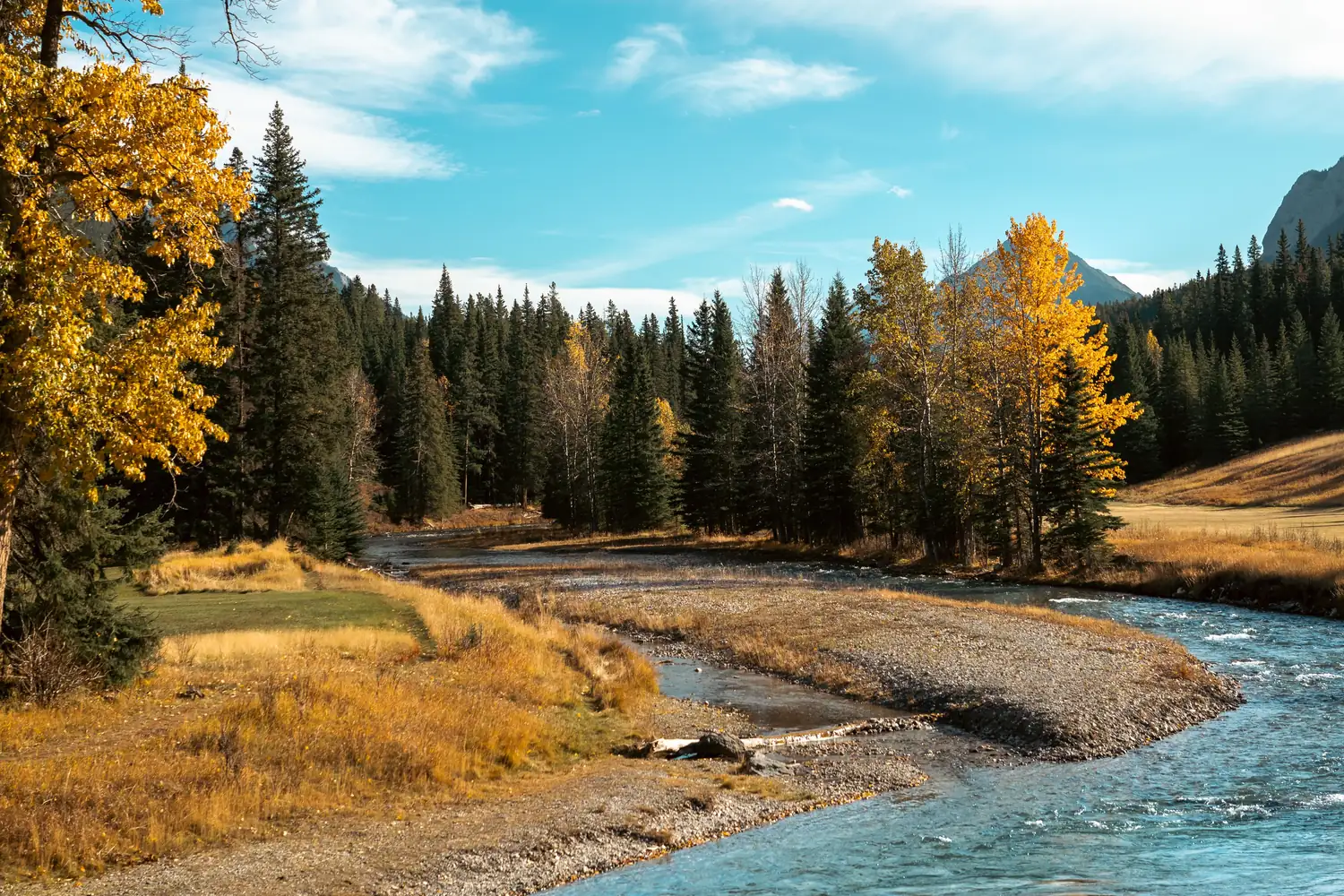
Autumn in Banff is not eastern Canada with taller hills. The signature colour is often the gold of larches and aspens against rock, snow, and evergreen forest. The reward is enormous scenery; the cost is a narrower seasonal window and more serious consequences when weather changes.
Best for: hikers who can monitor conditions, carry layers, and change plans without sulking at a mountain.
Skip it if: you need stable warm weather, guaranteed high-elevation access, or a casual late-October camping trip with full summer services.
Our Banff in fall guide separates what is usually possible in September from what becomes uncertain in October.
British Columbia: a different kind of fall
Coastal British Columbia stays visually green because evergreens remain dominant. That does not make Vancouver a bad fall destination; it makes it a poor choice for anyone expecting every hillside to turn scarlet at once. The appeal is contrast: pockets of maples and ornamental trees, forest trails, ocean, mountains, food, and a city that still works in rain.
Best for: travellers who value atmosphere, urban nature, and flexibility more than maximum foliage saturation.
Skip it if: your entire trip succeeds or fails on uninterrupted red-and-orange forest.
See Vancouver in fall for a weather-based itinerary rather than a list of places that assumes the sky will cooperate.
Atlantic Canada: the road trip choice
Cape Breton and other Atlantic routes combine colour with coast, small communities, and cultural events. They reward travellers who see the drive as part of the trip. They are less convenient for a rushed two-day visit built around one viewpoint.
Best for: scenic-road travellers with at least several days and room in the schedule.
Skip it if: you dislike long drives or need dense indoor alternatives every afternoon.
When is fall in Canada?
Meteorological fall spans September through November, but useful travel conditions do not arrive on a national schedule. Northern latitude, elevation, tree species, drought, frost, wind, and storms all affect timing.
A better way to plan is by trip month:
Early September
Look north or high. Some mountain and northern landscapes begin changing before southern cities. In much of urban southern Canada, early September can still look and feel like late summer.
Choose this period for longer daylight, more summer services, and hiking—not for a guaranteed wall of maple red.
Late September
This is the most versatile period. Mountain larches may be turning, Québec and Ontario reports become genuinely useful, and many seasonal operations are still running. It is also popular, so reserve lodging, campgrounds, and constrained transportation where required.
Early to mid-October
This is often the strongest planning window for southern Québec, Ontario, and parts of Atlantic Canada. “Often” matters. Do not convert it into a promise.
The smarter booking strategy is to choose a base with at least two landscapes at different elevations or latitudes. If one is early or late, the other may still work.
Late October and November
Treat foliage as a possible bonus, not the whole product. Build around markets, food, museums, neighbourhood walks, storm watching, or low-elevation trails. In the mountains, winter conditions and seasonal closures increasingly shape the day.
Build a fall trip that survives imperfect colour
The highest-value plan has three layers:
- Primary outdoor day: the park, drive, or trail that motivated the trip.
- Flexible colour day: a place you can move earlier or later depending on the live report.
- Weather-proof day: food, culture, a scenic city route, or another experience that does not require dry leaves and theatrical sunlight.
This is the difference between planning a trip and buying a lottery ticket with a rental car.
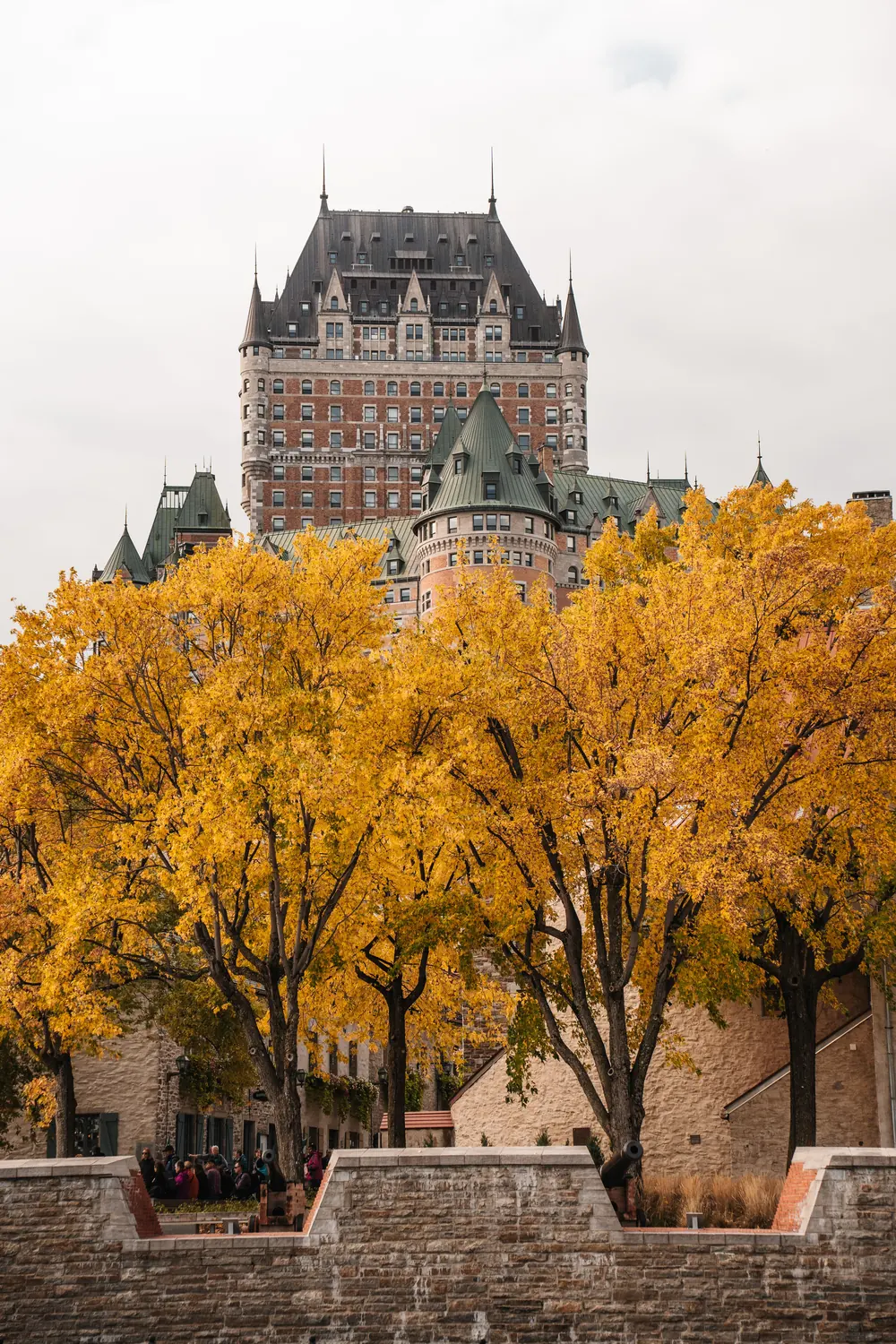
Québec City supplies the architecture-and-colour version of a Canadian fall trip. Photo by Clément Proust via Pexels.
Fall road trip or one-city base?
Choose a road trip when:
- your dates are flexible;
- the scenery between stops matters;
- you can tolerate changing accommodation;
- you want to follow conditions rather than one itinerary.
Choose a single base when:
- the trip is three days or shorter;
- you want restaurants and indoor backups;
- you prefer public transit;
- decision fatigue has already packed a bag.
Montréal is the strongest city-plus-day-trip base in this shortlist. Vancouver is the strongest rain-resilient urban-nature base. Banff works as a concentrated mountain base, but transport and conditions require more advance planning.
What to pack for fall in Canada
Pack for the worst realistic hour, not the average afternoon:
- a waterproof outer layer;
- warm mid-layer;
- footwear that tolerates wet ground;
- hat and light gloves for mountains or later dates;
- water and a small emergency layer on hikes;
- offline map or saved directions where coverage is unreliable;
- a flexible reservation and cancellation plan.
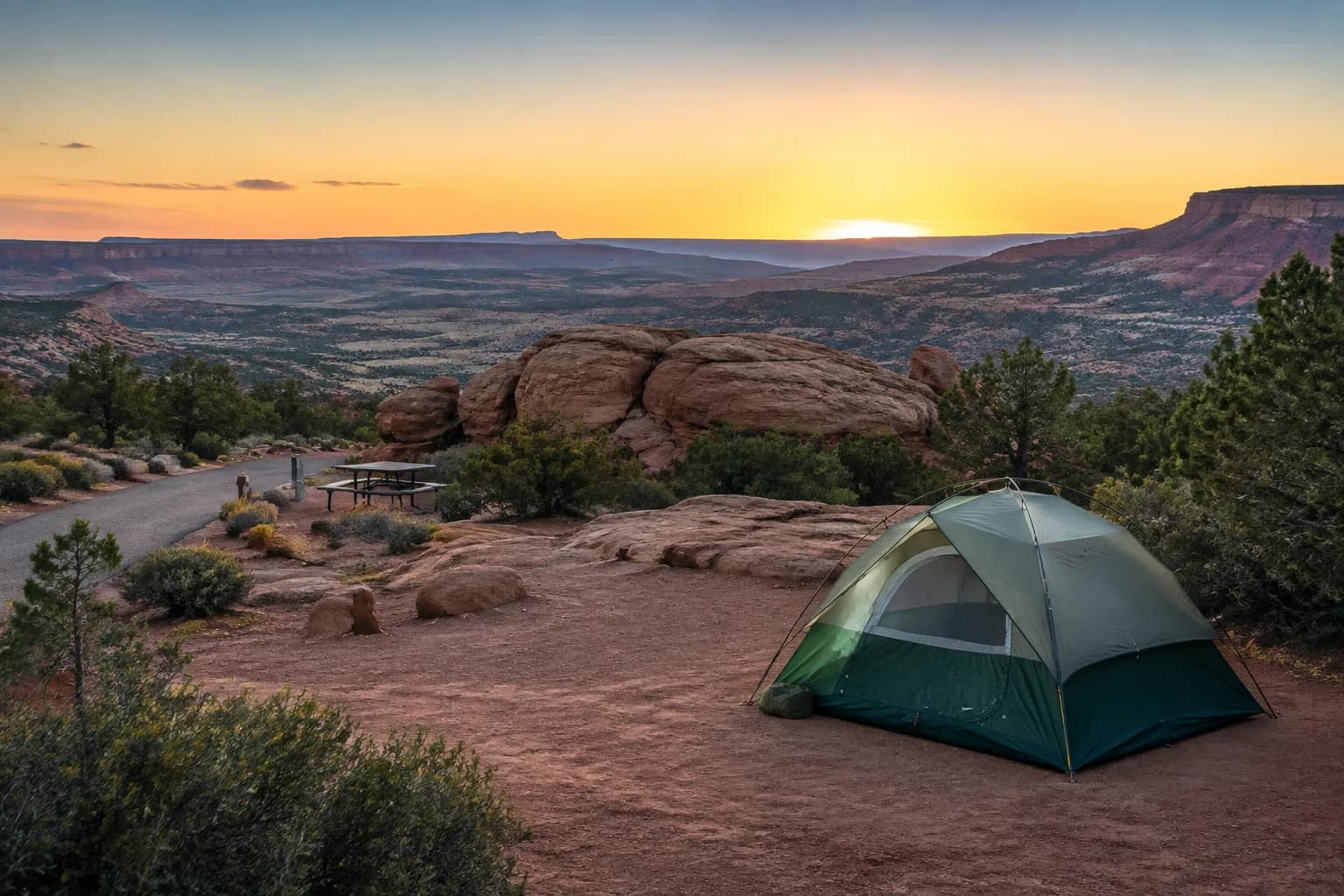
For camping, add sleeping insulation appropriate to the forecast and your setup. Our how to stay warm while camping guide explains why adding a heroic jacket cannot repair an under-insulated sleep system.
A practical booking sequence
- Pick your non-negotiable dates.
- Choose the region whose normal seasonal window overlaps them.
- Book a base with at least one non-foliage reason to visit.
- Reserve constrained items: campground, shuttle, rental car, or popular weekend lodging.
- Seven days before departure, check colour reports, park notices, and the forecast.
- The day before each outdoor plan, recheck closures and road or trail conditions.
- Keep one day movable.
No guide can tell you the exact peak months in advance. A good guide can stop you from betting every day on it.
Frequently asked questions
What is the best month to see fall colours in Canada?
September and October are the main travel months, but the best week depends on region and elevation. Mountain and northern colour can arrive earlier; southern Québec, Ontario, and Atlantic colour often develops later. Use live official colour and park reports near your trip.
Where are the best fall colours in Canada?
Québec and Ontario are strong starting choices for broad red, orange, and gold hardwood colour. The Rockies are better for golden larches, aspens, and mountain contrast. Vancouver offers a greener coastal version with scattered urban colour.
Is Canada worth visiting in November?
Yes, if you want cities, food, culture, lower-season atmosphere, or early winter rather than guaranteed foliage. November is a weak choice for a trip whose only goal is peak leaves.
Can I camp in Canada in the fall?
Often, but campground operating dates, water, showers, fire rules, and reservation systems vary. Verify the individual park and campground rather than assuming an open park means an open campground.
Which Canadian fall destination is best without a car?
Montréal and Vancouver are the strongest options in this guide. Both offer urban parks, food, and public transit. A car expands foliage options, but it is not required for a satisfying fall trip.
The Keepsake Camp verdict
For maximum classic colour, choose Québec or Ontario and keep one day flexible. For mountain drama, choose Banff in September and treat conditions as the trip’s editor. For the least fragile itinerary, choose Montréal or Vancouver, where a missed foliage peak still leaves a real city to explore.
The best fall trip is not the one with the most orange pixels. It is the one that still works when the forecast changes.
Sources reviewed
These references support factual or safety-sensitive claims in this article. Access dates show when our editors last verified the source.
- Destination Canada — Top fall destinations across Canada
Official source · Accessed Sep 7, 2026
- Ontario Parks — Fall colour report
Official source · Accessed Sep 7, 2026
- Parks Canada — Banff trail conditions
Official source · Accessed Sep 7, 2026
- Tourisme Montréal — Where to see fall colours
Official source · Accessed Sep 7, 2026
- Destination Vancouver — Best places to see fall colours
Official source · Accessed Sep 7, 2026