family / activities
32 Fun Camping Activities for Kids, Sorted by What the Moment Needs
Choose 32 camping activities by energy level, available space, weather and daylight, with ready-to-run rules, safety stops and a printable trip picker.
At camp, nobody asks for "an enriching nature activity." They need to run, settle down, survive a delay, or make darkness feel interesting instead of suspicious.
Choose the section that matches the moment. Every activity below includes a real start, finish and stop condition, because "go explore" is not a set of instructions.
Pick the right kind of activity
| What is happening now? | Start here | Avoid |
|---|---|---|
| Restless kids, daylight, dry open area | Activities 1–8 | Running through campsites or across roads |
| Tired group, small space, calmer weather | Activities 9–16 | Competition that adds frustration |
| Waiting for food, check-in or one adult | Activities 17–24 | Anything needing the distracted adult as referee |
| Dark, but conditions remain safe | Activities 25–32 | Chasing, hiding, blindfolds and unfamiliar paths |
| Rain without thunder | Use the indoor alternatives noted below | Fuel-burning equipment in a tent or enclosed shelter |
| Thunder, high wind, flooding, dangerous heat or smoke | Pause the activity and follow official guidance | Trying to save the schedule |
When they need to burn off energy
Use a designated field or a dry, durable open area that an adult checks first. Set visible boundaries away from traffic, water, vegetation, fire rings, tents and guylines.
1. Marker obstacle course
Best for: 4+ · Time: 10–20 minutes · Bring: six soft markers, cups or bandanas
Place markers on the ground in daylight. Players walk a curve, hop between two markers, circle another and finish with a balance pose. Let each child redesign one section. No crawling under picnic tables, jumping over coolers or weaving between trees.
Stop when: the surface becomes slick, the course drifts outside the boundary or anyone starts racing beyond control.
2. Photo scavenger hunt
Best for: 4+ with a partner · Time: 15 minutes · Bring: optional camera
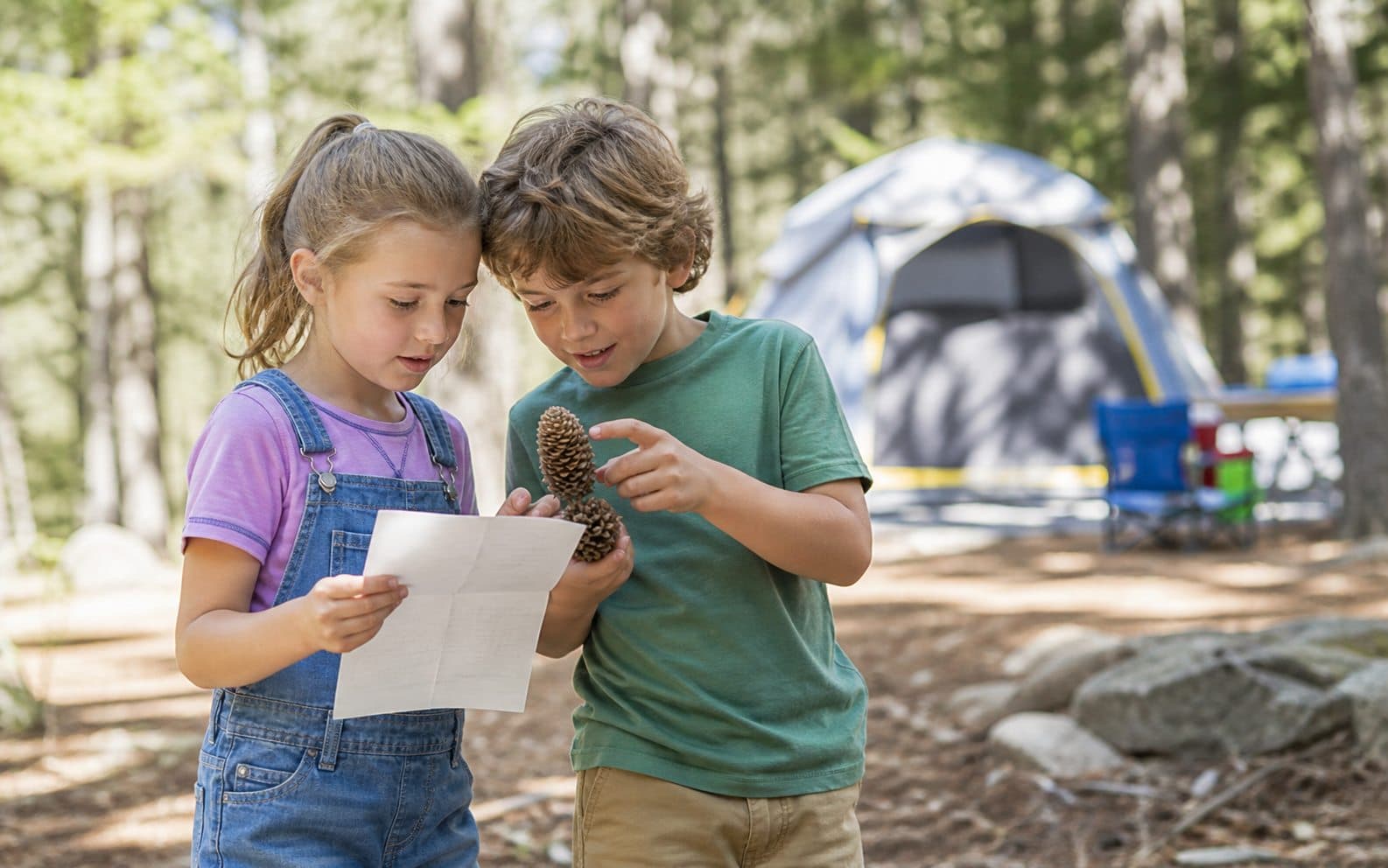
Find or photograph five things without picking them up: something rough, something moving in the wind, three shades of green, an animal sign and a shape that looks like a face. Stay on the established route and observe wildlife from a distance.
Rain alternative: do the same hunt from inside the tent or vehicle windows without leaving safety.
3. Shadow chase
Best for: 5+ · Time: 10 minutes · Bring: nothing
In a sunny open area, one player walks or jogs while another tries to step on the moving shadow—never the person. Switch after one minute. Use a no-contact rule and a small boundary.
Cloud alternative: copy the leader's movement instead.
4. Sock target toss
Best for: 3+ · Time: 10 minutes · Bring: rolled clean socks and a bucket
Set the bucket away from the fire and cooking area. Each player takes three underhand tosses, then moves one step farther away. Retrieve only after everyone has thrown.
Small-space alternative: roll the socks along the floor toward the target.
5. Animal-movement circuit
Best for: 3+ · Time: 5–10 minutes · Bring: nothing
An adult calls four movements inside the boundary: tiny mouse steps, tall heron steps, slow bear walk and frozen-statue owl. Children move for 20 seconds, freeze, then change. The animals are inspiration, not something to approach or imitate near real wildlife.
6. Follow-the-leader trail walk
Best for: 3+ with an adult · Time: 15–30 minutes · Bring: route map if needed
Choose a short established trail suited to the group. The leader picks harmless actions—ten quiet steps, point to a colour, pause at a sign—while the adult retains navigation and turnaround decisions.
Stop when: weather changes, the group reaches the planned turnaround time or the pace stops working for the slowest person.
7. Frisbee target course
Best for: 5+ · Time: 15 minutes · Bring: one soft flying disc and three markers
Use a designated field. Put three ground markers at different distances and award one point for landing closest, not for the hardest throw. Everyone stands behind the thrower and retrieves together.
Wind alternative: use the markers for a walking balance course.
8. Move-and-freeze countdown
Best for: 3+ · Time: 5 minutes · Bring: nothing
Inside a checked boundary, call a movement for ten seconds, then count down to a freeze. Repeat with slower movements until the final round is silent tiptoeing. It burns energy and lands the group somewhere calmer than it started.
When they need to wind down
9. Cloud theatre
Best for: 3+ · Time: 10 minutes · Bring: blanket or chairs
Each person chooses one cloud shape and adds one sentence to a shared scene. End after everyone has contributed twice. Move indoors at thunder; cloud watching is not a lightning plan.
10. Colour-card search
Best for: 3–8 · Time: 10 minutes · Bring: crayons or colour cards
Choose five colours and point to or photograph a natural match for each. Do not collect the object. For a player with limited colour vision, switch the prompts to shape, texture or movement.
11. Texture sketch
Best for: 4+ · Time: 15 minutes · Bring: paper and crayons
Sketch three textures you can see from an established path or campsite: bark, rippled water, clouds, gravel. Draw the pattern rather than rubbing, peeling or moving natural material.
12. One-page nature journal
Best for: 6+ · Time: 10–20 minutes · Bring: notebook and pencil
Divide a page into I noticed / I wondered / I want to check. Add one drawing or sentence to each box. Questions do not need an immediate answer.
13. Campsite postcard
Best for: 5+ · Time: 15 minutes · Bring: card or paper
Draw the campsite on one side. On the other, write the funniest harmless moment and one detail you want to remember. Put it in the trip bag instead of leaving it outdoors.
14. Reading nest
Best for: any reader or listener · Time: 15–30 minutes · Bring: book and dry bedding
Choose one dry, ventilated place away from food and flames. Read independently or let one person read aloud. Stop before headlamps or pillows become projectiles.
15. Sound map
Best for: 4+ · Time: 5 minutes · Bring: optional paper
Sit in one safe place. Put a dot in the centre of a page for yourself, then mark sounds to the left, right, near and far. Compare maps without deciding whose hearing was "best."
16. Design a dream campsite
Best for: 4+ · Time: 15 minutes · Bring: paper
Draw a campsite with a sleeping zone, cooking zone, safe walking route and one ridiculous luxury. A waterslide beside the tent is welcome on paper and nowhere else.
When you are stuck waiting
17. Twenty Questions
One player chooses a campsite object or animal. The group gets 20 yes-or-no questions. Give younger players a category first; finish the round when the object is guessed or question 20 is answered.
18. I Spy with two clues
Give a colour plus a location or shape: "I spy something yellow above us." Keep clues inside the waiting area so nobody wanders away to prove an answer.
19. Six-sentence story chain
Each player adds one sentence. Stop at six, then give the last player the ending. A fixed length prevents the story from still searching for a plot when dinner is ready.
20. Three-card challenge
Deal three cards to each player. On a turn, play a card matching the previous colour or number; draw one if you cannot. First empty hand wins. For young children, match by colour only.
21. Seated camping charades
Mime a tent zipper, paddling, binoculars, a frog or packing a sleeping bag while seated or standing in one safe spot. No running, blindfolds or animal chasing.
22. Rock-paper-scissors ladder
Everyone begins seated. Pair up for one round; winners play winners and the rest cheer or start a friendly side ladder. Stop after three rounds so elimination never becomes the main activity.
23. Category alphabet
Choose animals, foods or outdoor objects. Go around the group from A onward, allow help and skip letters that stall the game. The objective is a shared alphabet, not catching someone out on X.
24. Camping bingo
Use our four print-ready camping bingo cards. Mark events only when they happen naturally, adapt inaccessible prompts before starting and never approach wildlife or stage a hazard for a square.
When it is dark
Inspect the play area in daylight. After dark, use seated games or a small walking area with an adult, clear boundaries and lights available. Darkness is not the time for tag or hide-and-seek.
25. Tent-wall shadow puppets
Use an LED flashlight, never a flame or fuel lantern. One person makes a shape while the others guess. Keep the beam away from faces and stop if the light is needed for walking.
26. Reflector walk
In daylight, an adult places five reflective cards within a small established campsite boundary. After dark, the group walks together with headlamps to find them. Count cards without hiding people or leaving the known area, then pack every card out.
27. Flashlight code
Sit facing a pale tent wall or paper target. One player flashes a simple pattern—short, short, long—and the group copies it in claps. Do not aim lights at people, roads, wildlife or other campsites.
28. Three-target stargazing
Choose one bright object, one constellation and one bonus target before dark. Observe from a safe place inspected in daylight; keep a light accessible. Our camping stargazing plan adds Moon timing and a printable 60-minute session.
29. Campfire story with a refrain
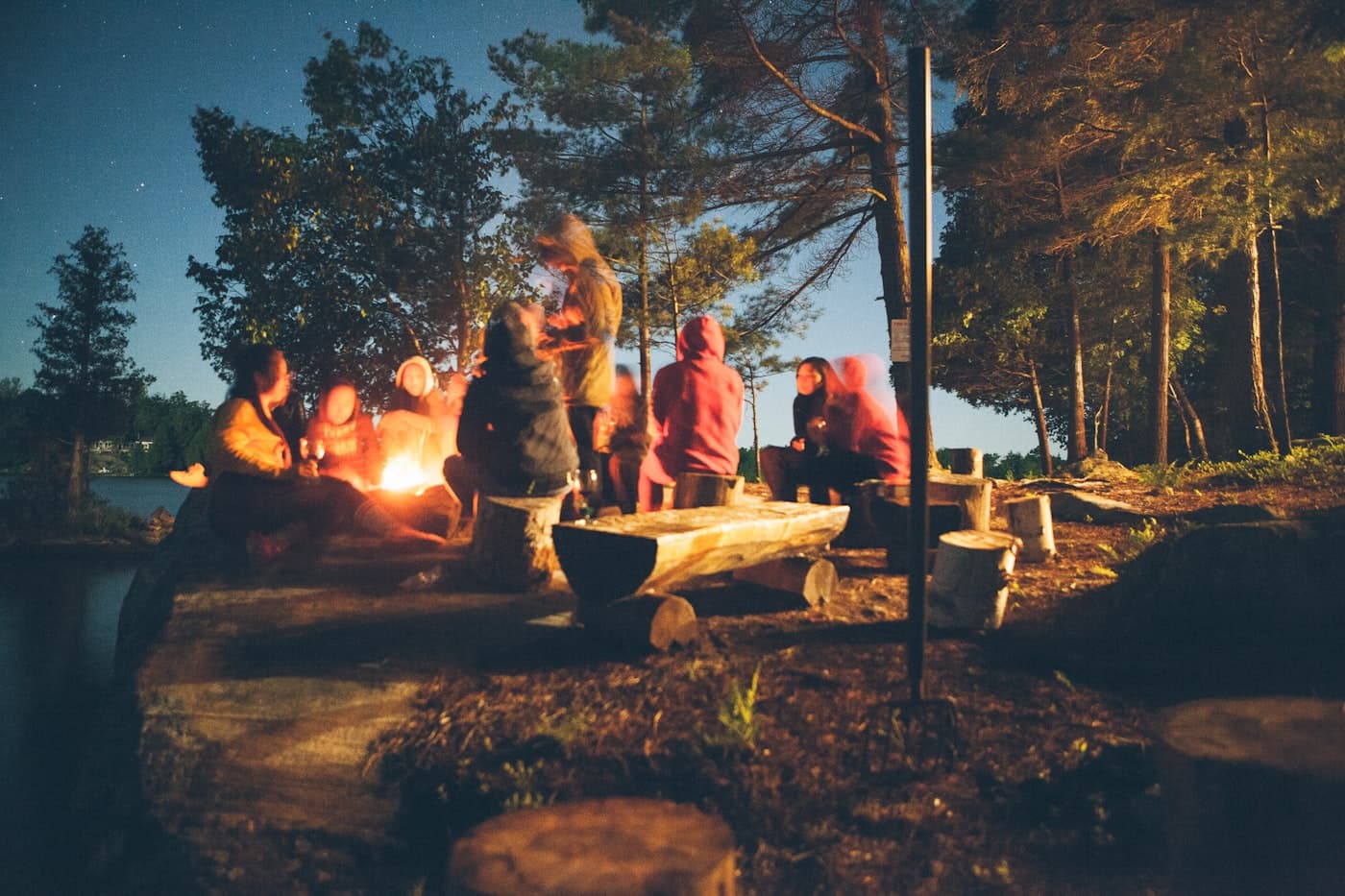
If fires are permitted, an adult supervises and everyone remains seated a safe distance away. Choose a repeated line the group can say together. The gentle campfire stories for kids are ready to tell without inventing a plot on the spot.
30. Build-a-verse camp song
Choose one simple tune the group knows. Each person adds a campsite object to the next verse. Keep voices considerate of quiet hours and neighbouring campers.
31. Marshmallow colour challenge
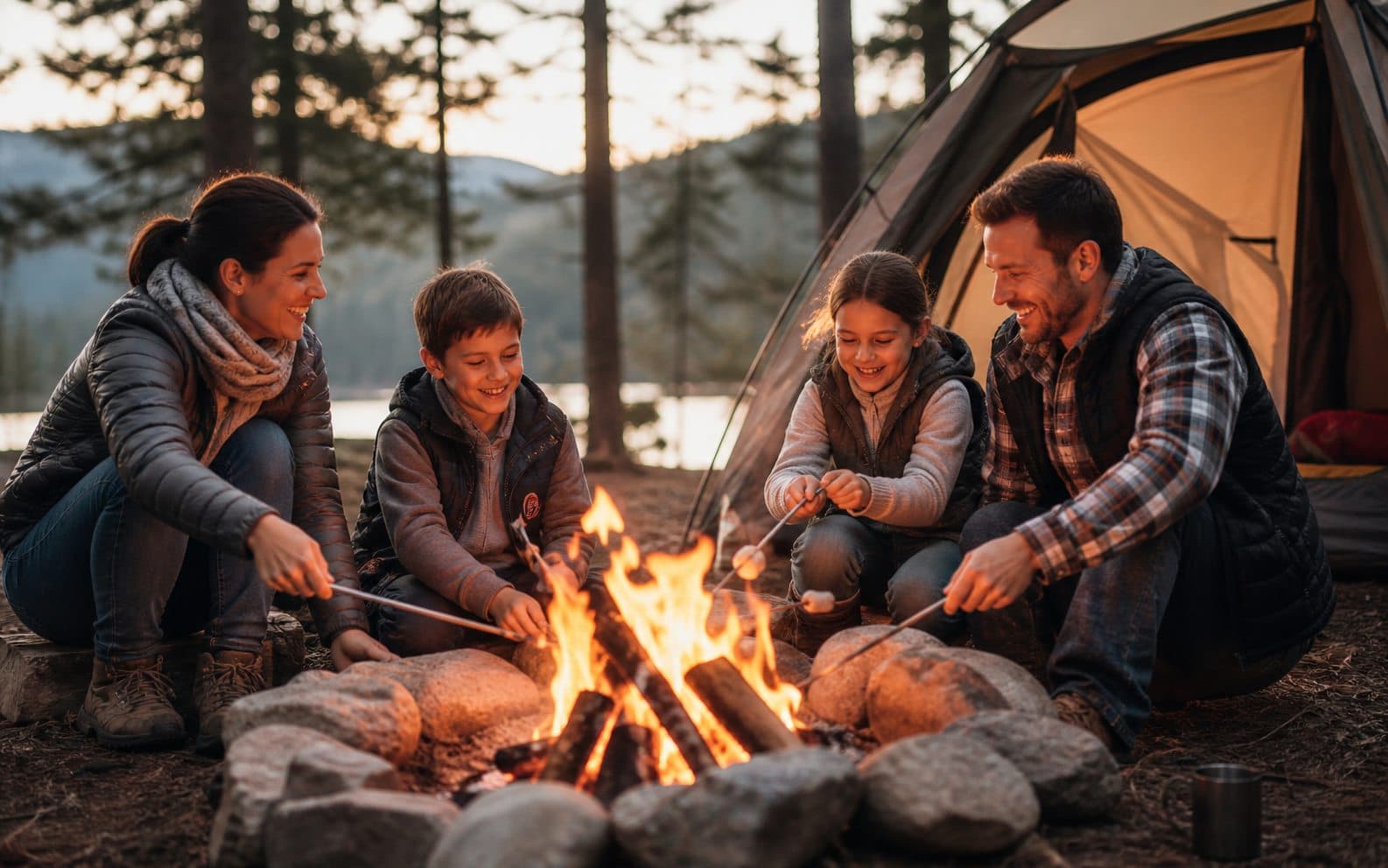
Only when a fire is permitted and an adult actively supervises: each child age four or older chooses pale, golden or toasted, then slowly rotates a marshmallow on an appropriate roasting tool from a safe seated position. Do not serve marshmallows to children under four; Health Canada identifies them as a choking hazard for young children. Check allergies, keep sleeves and hair controlled, and cool food before eating. No reaching into the fire or retrieving dropped food.
32. Night sound bingo
From one safe seated place, listen for wind, an insect, leaves, distant water or a tent zipper. The group earns one shared point for each sound. Do not leave the campsite to locate it.
Fire, wildlife and Leave No Trace boundaries
The National Park Service advises leaving rocks, plants and natural objects where they are, concentrating activity on durable surfaces and keeping noise considerate of other visitors. That rules out rock towers, painted wild rocks, trenches, collecting challenges and games that spill into neighbouring sites.
Where a fire is allowed, use the designated ring, keep water nearby, never leave children alone with it and extinguish it completely. A fire ban turns activities 29 and 31 into no-fire choices; it does not create a negotiation.
Printable activity picker
Choose one primary activity and one backup for each likely moment. Print this section or copy it into the trip notes.
| Moment | Primary | Weather/space backup | Packed item |
|---|---|---|---|
| Arrival energy | ____________________ | ____________________ | ____________________ |
| Quiet hour | ____________________ | ____________________ | ____________________ |
| Meal/setup delay | ____________________ | ____________________ | ____________________ |
| After dark | ____________________ | ____________________ | ____________________ |
| Rain without thunder | ____________________ | ____________________ | ____________________ |
Before play:
- Adult checked weather, alerts, campground rules and quiet hours.
- Boundary is away from roads, water, fire, cooking, tents and guylines.
- Activity matches the youngest participant and any access needs.
- Natural objects stay where they are; every brought item comes home.
- Everyone knows the stop signal and indoor/vehicle weather plan.
The small activity kit
- Deck of cards and two dice
- Paper, pencils and crayons
- Six reusable soft markers or bandanas
- Rolled clean socks and a collapsible bucket
- Soft flying disc
- Books chosen by the children
- LED flashlight or headlamp per person, with spare batteries
- Printed bingo cards and this activity picker
Skip single-use glow sticks unless the trip genuinely requires them; reusable reflectors and lights create less small plastic to lose in the dark.
For a wet forecast, use our rainy-day camping activities for kids. For more involved daytime play, see camping games for kids. If the group wants to make something without collecting or altering natural objects, use these Leave No Trace camping crafts for kids.
Sources and scope
- National Park Service: Leave No Trace
- National Weather Service: outdoor lightning safety
- National Park Service: campfire safety
- Health Canada: safe foods for young children
Rules differ by destination. Current land-manager instructions, closures and emergency guidance replace this general activity guide.
FAQ
What can kids do while camping without special equipment?+
Try a photo-free observation hunt, shadow chase, follow-the-leader trail walk, move-and-freeze countdown, cloud theatre, sound map, Twenty Questions, I Spy, a six-sentence story or night-sound bingo. Use established areas and adapt the choice to weather and access needs.
What camping activities are safe after dark?+
Prefer seated or small-area activities: LED shadow puppets, flashlight code, stargazing from a spot inspected in daylight, stories, songs or night-sound bingo. Avoid tag, hide-and-seek, blindfolds and unfamiliar paths after dark.
What should families do if thunder starts while camping?+
Stop outdoor play and move to a substantial building or hard-topped enclosed vehicle. A tent, tarp and open picnic shelter are not safe lightning shelters. Wait at least 30 minutes after the last thunder before resuming outdoor activities.
How do you make camping activities Leave No Trace?+
Use durable established areas, observe rather than collect, leave rocks and plants in place, keep noise considerate, do not alter drainage or build structures, and pack out every marker, card and piece of litter.
What small activity kit covers a weekend?+
Pack cards, dice, paper, crayons, reusable soft markers, rolled socks, a bucket, a soft flying disc, books, LED lights and printed bingo cards. Choose reusable items that are easy to count and pack out.
Sources reviewed
Fact-checked Sep 4, 2026
These references support factual or safety-sensitive claims in this article. Access dates show when our editors last verified the source.
- National Park Service — Leave No Trace
Official source · Accessed Sep 4, 2026
- National Weather Service — Lightning Safety Outdoors
Official source · Accessed Sep 4, 2026
- National Park Service — Campfire Safety
Official source · Accessed Sep 4, 2026
- Health Canada — Safe Foods for Young Children
Official source · Accessed Sep 4, 2026