family / activities
Camping Crafts for Kids: Bring Supplies, Leave Nature
Choose a camping craft by age, time, weather and mess—using a small packed kit without collecting rocks, leaves, pinecones or feeding wildlife.
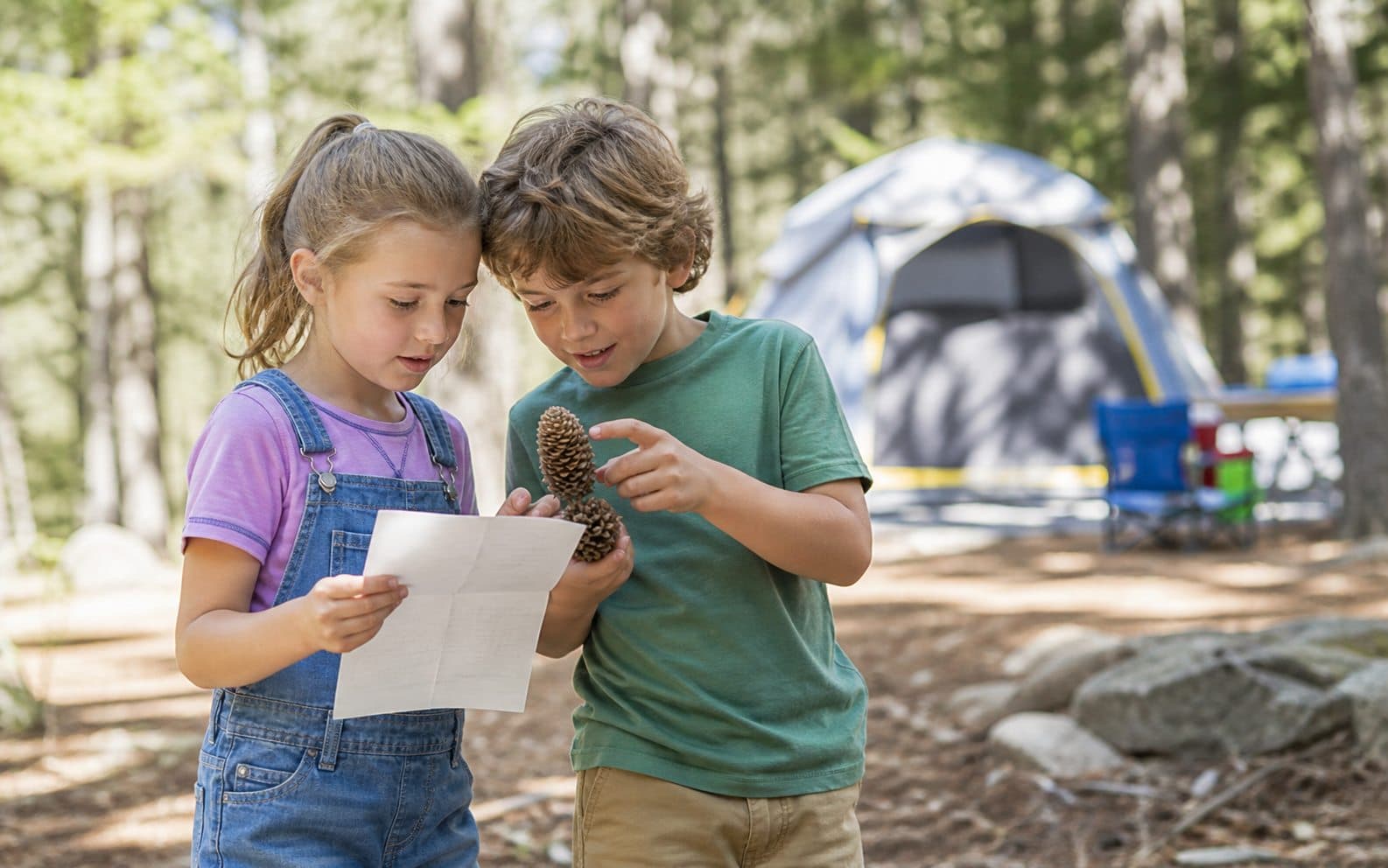
The best camping crafts use nature as the subject, not the supply cabinet. Bring paper, crayons, tape and child-labelled materials; observe colors and textures without taking rocks, leaves, pinecones, bark or flowers.
Choose a project that fits the actual child, available time, weather and adult tolerance for glitter-level consequences. There is no glitter in this guide. You’re welcome.
Keepsake Camp craft picker
Pick a craft without collecting nature
Bring the consumable materials. Let the campsite provide the view, textures and colors—not a bag of souvenirs.
Craft list updated. 4 projects shown for age 6, 30 minutes and low mess.
Texture rubbing in place
Age 3+ · 15 min · low mess
Bring: Paper and wrapper-free crayons
Hold paper against a permitted surface, rub sideways, label the texture, then leave everything in place.
Campsite postcard
Age 3+ · 15 min · low mess
Bring: Cardstock, crayons and stickers
Draw one scene, add one sound and share one thing you want to remember.
Nature color palette
Age 4+ · 20 min · low mess
Bring: Paper and colored pencils
Find colors without collecting them, match each on paper and note where it appeared.
Constellation card
Age 6+ · 20 min · low mess
Bring: Dark card, white pencil and star stickers
Copy a constellation from a reliable sky guide, then mark the direction and time to look for it.
Use child-labelled art materials, read the product instructions and supervise directly. Do not use food, birdseed or found natural objects as craft supplies. Covered means weather-protected, not lightning-safe: if thunder is heard, move to a substantial building or hard-topped vehicle.
The rule that changes this list
The National Park Service asks visitors to leave natural items where they find them. Dead leaves and sticks still provide habitat and return nutrients to the ecosystem; “already on the ground” does not automatically mean available for a craft.
That is why this guide no longer recommends pinecone bird feeders, painted campground rocks or contact-paper collections.
- Pinecone feeders: food and seed can attract wildlife and conflict with campground rules.
- Painted rocks: removing or leaving rocks may violate rules, and abandoned decorations can become litter.
- Leaf and flower suncatchers: the project requires collecting items that should often remain in place.
Use a photograph, sketch, rubbing or color match instead. The child still gets the observation; the campsite keeps the object.
A small craft kit that supports every project
Pack supplies in one washable pouch:
- plain paper, cardstock and two paper plates;
- crayons or colored pencils;
- child-safe washable markers;
- paper tape or child-appropriate glue;
- stickers;
- child-safe scissors where appropriate;
- one clipboard or stiff piece of cardboard;
- a reliable sky guide for constellation work.
The CPSC Art and Craft Safety Guide recommends reading labels, selecting materials intended for children, avoiding products with cautionary labels for younger children, supervising directly and washing hands afterward. “Non-toxic” does not mean “safe however it is used.”
Seven crafts that do not require collecting
1. Texture rubbing in place
Hold paper against a permitted surface and rub the side of a wrapper-free crayon across it. Bark can remain attached to the tree; a picnic table, sign backing or textured platform can work where touching is allowed.
Label the texture and location. Do not rub fragile plants, cultural resources or surfaces where contact is prohibited.
2. Campsite postcard
Draw one scene on the front. On the back, add three details: something heard, one useful discovery and one thing worth remembering for the next trip.
This works under cover and packs flat. It also produces a genuine keepsake rather than a pinecone slowly releasing seeds into the back seat.
3. Nature color palette
Divide a page into six boxes. Find a natural color for each box, match it with pencil or crayon and write where it appeared: moss on a rock, sunset through cloud, water near shore.
The mission rewards close looking without needing perfect identification or collection.
4. Cardboard binoculars
Tape two clean cardboard tubes together and decorate them with child-labelled markers. Do not add a neck cord. Use them as an observation frame, not magnifying optics or eye protection.
Children hold the tubes in their hands; the project does not need a cord.
5. Weather wheel
Draw sun, cloud, rain, wind and temperature-feel categories around a paper plate. Add a paper pointer with an adult-installed fastener, then update it when conditions change.
The useful lesson is not forecasting. It is noticing that the plan should change when the weather does.
6. Constellation card
Use a reliable sky guide to copy one constellation onto dark card with a white pencil or stickers. Add the direction and approximate viewing time for the trip location and date.
This pairs with stargazing at camp without turning the evening into an unsupervised night walk.
7. Memory map
After walking the campsite with an adult, draw the route among the sleeping area, washroom, water point and family meeting place. Compare it with the campground map and correct anything important.
This is a craft with a job: it helps older children build orientation while making it clear that a drawing does not replace adult supervision.
Choose by the moment
| Situation | Best starting craft | Why |
|---|---|---|
| Age 3–4 | Texture rubbing or postcard | Short steps and low setup |
| Rain under substantial cover | Postcard, weather wheel or constellation card | No natural materials or exposed ground needed |
| Mixed ages | Nature color palette | Younger children match colors; older children label context |
| Low adult setup tolerance | Postcard or memory map | Paper and drawing tools only |
| Child wants a “real project” | Weather wheel or cardboard binoculars | Assembly creates a clear finished object |
| Leave No Trace focus | Color palette or texture rubbing in place | Observation replaces collection |
Age labels are editorial starting points, not developmental or safety guarantees. The tool, material labels and child’s abilities decide the supervision required.
Clean up like the project happened at home
Count markers, tape backing and stickers before leaving. Keep food and drinks away from the craft area, give children small amounts of material and wash hands after use, consistent with CPSC guidance.
Do not leave painted objects, paper or “surprises” for future campers. A campground is already decorated.
For a second observation activity, build a look-don’t-collect nature scavenger hunt. For movement instead of crafts, use the camping game picker for kids.
FAQ
What camping craft supplies should I pack for kids?+
Pack paper, cardstock, crayons or colored pencils, child-safe washable markers, tape or appropriate glue, stickers and child-safe scissors where suitable. Read labels and supervise according to the child and tool.
Can children collect leaves, rocks or pinecones for camping crafts?+
Do not assume so. The National Park Service recommends leaving natural items where they are, and local rules may prohibit collecting or removing them. Use drawings, photographs, color matching or rubbings in place instead.
Why does this guide exclude pinecone bird feeders?+
Food and seed can attract wildlife and may conflict with campground food-storage or wildlife-feeding rules. The craft also depends on collecting a natural object, so this guide uses observation-based alternatives.
What camping crafts work in the rain?+
Under a substantial weather-safe covered location, campsite postcards, weather wheels, constellation cards and memory maps need no collected materials. Thunder requires an appropriate enclosed building or hard-topped vehicle, not an open picnic shelter.
Sources reviewed
Fact-checked Aug 31, 2026
These references support factual or safety-sensitive claims in this article. Access dates show when our editors last verified the source.
- National Park Service — Leave What You Find
Official source · Accessed Aug 31, 2026
- U.S. Consumer Product Safety Commission — Art and Craft Safety Guide
Official source · Accessed Aug 31, 2026
- U.S. Consumer Product Safety Commission — Art Materials
Official source · Accessed Aug 31, 2026