destinations / national provincial parks
Where to Camp in Southern Utah: Choose the Right Base
Choose a Southern Utah camping base by route, season, setup and reservation risk, with seven practical options and a backup plan.
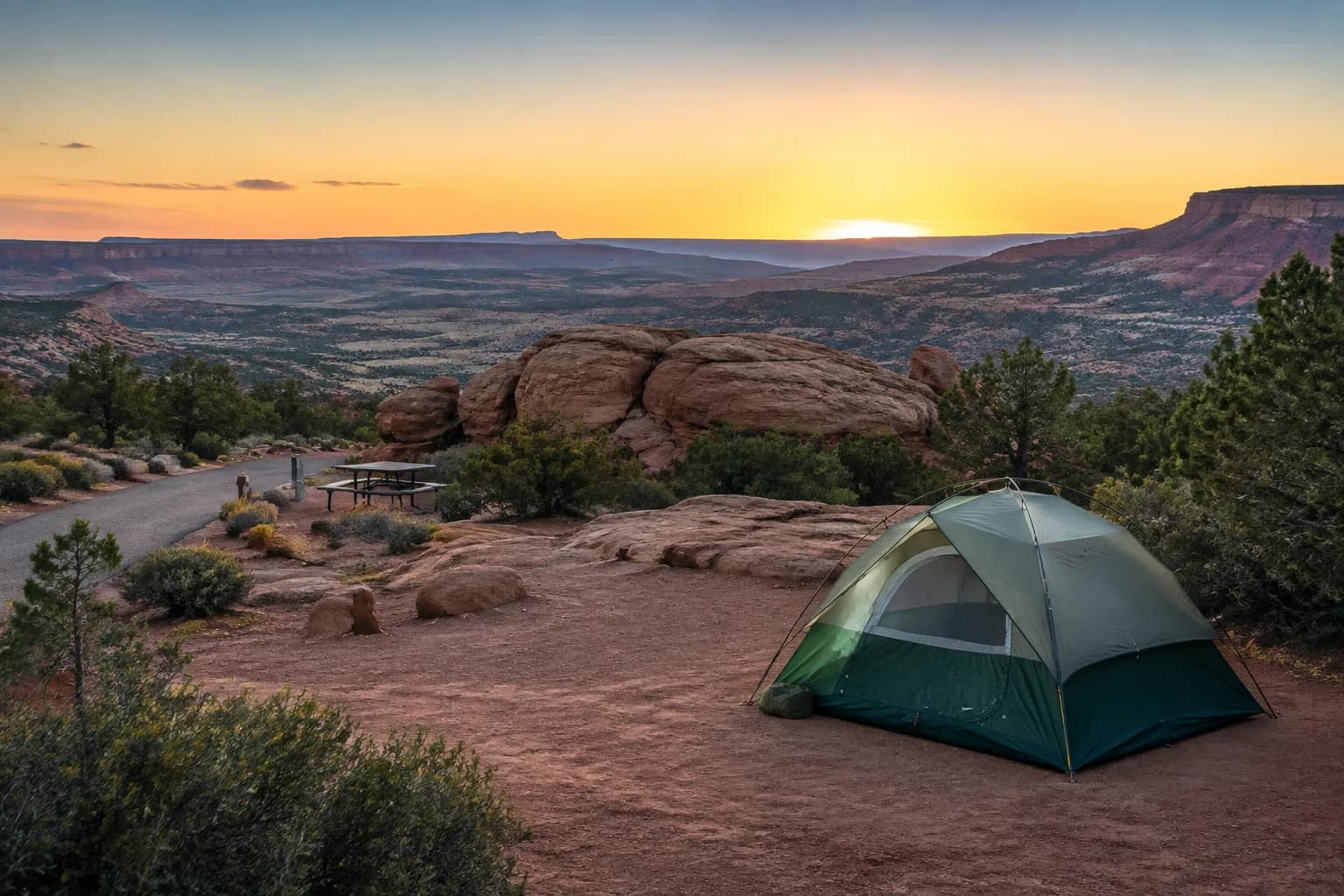
Southern Utah is not one camping destination. It is a chain of desert valleys, forested plateaus and canyon-country roads where a campsite that is perfect for Zion can be a terrible base for Capitol Reef. Pick the wrong one and your “scenic morning drive” becomes two hours of watching the scenery through a windshield.
The short answer: camp near the place you want to enter first each morning, then choose the elevation and facilities that fit the season. For a first Zion trip, stay near Zion. For a Highway 12 trip, split the journey between Bryce or Kodachrome and Capitol Reef. For a flexible desert base with easier amenities, consider a state park rather than treating dispersed camping as a free hotel room with better stars.
This guide does not rank seven landscapes as if beauty had a scoreboard. It helps you choose the base that wastes the least time and creates the fewest unpleasant surprises.
Pick your Southern Utah camping base in 60 seconds
| Your trip | Strongest starting base | Why it fits | Main compromise |
|---|---|---|---|
| First Zion visit | Zion / Springdale corridor | Best access to the main canyon and shuttle system | High demand, desert heat and limited shade |
| St. George weekend or cool-season escape | Snow Canyon | Year-round campground and easy city access | Not a practical base for the full Mighty 5 |
| Bryce sunrise, family trip or summer elevation | Bryce Canyon | Campgrounds near the amphitheater and shuttle | Cold nights can surprise summer-minded campers |
| Bryce plus quieter red-rock trails | Kodachrome Basin | Useful base south of Bryce with tent and RV camping | Adds driving if Zion is the main event |
| Highway 12 and slot-canyon country | Escalante area | Best geographic fit for Grand Staircase-Escalante | Roads, weather, water and permits demand homework |
| Capitol Reef and central Highway 12 | Fruita / Torrey | Direct park access and a logical route break | Fruita has no utility hookups |
| Capitol Reef-to-Moab extension | Goblin Valley / San Rafael Swell | Strong bridge between central and eastern Utah | Sparse services and exposed desert conditions |
Our default for a seven-day first trip: do not use one campground for everything. Use two or three bases. A sensible west-to-east structure is Zion, then Bryce/Kodachrome, then Capitol Reef. Add the Moab side only if your calendar can absorb another transfer day.
The route matters more than the “best” campground
There are three useful camping corridors to understand:
- The I-15 corridor: St. George, Snow Canyon and Zion. Choose this for a shorter trip from Las Vegas or a Zion-first itinerary.
- The US-89 and Scenic Byway 12 corridor: Bryce Canyon, Kodachrome Basin, Grand Staircase-Escalante and Capitol Reef. This is the strongest multi-base route for varied landscapes without crossing the entire state.
- The I-70 and US-191 extension: Goblin Valley, Arches, Canyonlands and the Moab area. It can join a longer Mighty 5 loop, but it is not a casual side trip from Zion.
If you have three nights, choose one corridor. With five to seven nights, choose two or three bases along one direction of travel. The classic mistake is reserving a cheap central campsite, then paying for it in fuel, early alarms and children asking whether you are “almost there” before breakfast.
1. Zion and the Springdale corridor: best for a first Zion trip
Choose this area when Zion Canyon is the reason for the trip. The National Park Service says Zion camping is popular year-round and that reservations are required for park campgrounds; it also warns that the South Entrance area is desert with very little shade and summer daytime temperatures often above 95°F (35°C).
The location advantage is decisive. A site near the South Entrance makes the visitor center and shuttle easier to reach. An outside-the-park campground can still work, but calculate the morning drive, parking plan and shuttle connection before booking.
Choose it if: your priority hikes are in Zion Canyon, you want to reduce daily driving, or this is your first Southern Utah camping trip.
Skip it if: you mainly want Bryce, Escalante or Capitol Reef. Zion is not a convenient universal base just because it is the most famous name on the route.
For current campground status, reservation windows, heat and shuttle logistics, use our dedicated Zion camping guide and recheck the linked NPS pages before departure.
2. Snow Canyon: best for St. George access and shoulder seasons
Snow Canyon is the practical choice when you want red-rock camping near St. George rather than a national-park marathon. Utah State Parks lists a 38-unit campground open year-round and identifies spring and fall as peak seasons. Reservations are recommended during those periods.
This base works especially well for a short winter, spring or fall trip with easy access to groceries and city services. It is also a calmer first desert-camping test than building an entire vacation around scarce national-park inventory.
Choose it if: you want one established campground, nearby services and trails without changing camp every night.
Skip it if: Bryce or Capitol Reef is the main objective. The map looks friendlier when zoomed out than the drive feels at 6 a.m.
3. Bryce Canyon: best for amphitheater access and summer elevation
Bryce Canyon has two park campgrounds: North, which is open year-round, and Sunset, which closes in winter. The NPS campground page publishes the current operating periods and reservation rules; its 2026 information lists reservation-based camping and warns that roadside camping and sleeping at pullouts are not allowed inside the park.
Bryce sits much higher than the lower desert around Zion and St. George. That can make it a more comfortable summer base, but it also means colder nights and winter conditions. Pack for the campground elevation, not the temperature shown for the city where you bought gas.
Choose it if: sunrise or early trail access at Bryce is a priority, you prefer a developed park campground, or you want a cooler base during a hot itinerary.
Skip it if: your plan is mostly Zion Canyon. Use Bryce as its own stop rather than a long commute.
4. Kodachrome Basin: best for a quieter Bryce-area base
Kodachrome Basin State Park offers tent and RV camping among sandstone formations south of Bryce. It is a useful answer when you want to explore the Bryce and Cottonwood Canyon side of the region but do not need to sleep inside the national park.
The value here is strategic, not secret. You gain another reservable base and access to its own trails; you accept extra driving for Bryce and must still verify road conditions before using unpaved routes.
Choose it if: your trip combines Bryce with Kodachrome or nearby public lands, and a state-park campground fits your desired facilities.
Skip it if: you only have one dawn at Bryce and want the shortest possible start.
5. Escalante and Grand Staircase: best for Highway 12 exploration
Escalante is where a generic campground list stops being enough. The landscape is enormous, road surfaces vary, flash-flood weather matters and cellular service is not a planning method.
The monument includes developed campgrounds, but availability and operating details vary by site. The BLM requires a free permit for every overnight stay within Grand Staircase-Escalante, including dispersed camping, and some high-use areas have separate permit systems.
Choose it if: slot canyons, Scenic Byway 12 and less-developed public lands are the trip, and you are prepared to verify the specific road and permit.
Skip it if: you need hookups, guaranteed arrival-night inventory or a campsite reachable by every passenger car after every storm.
6. Fruita and Torrey: best for Capitol Reef
Fruita Campground is the straightforward in-park base for Capitol Reef. The NPS lists 71 sites, reservations up to six months ahead and no utility hookups. Torrey and the surrounding area provide alternatives when Fruita is full or when you want services outside the park.
This is also the cleanest eastern endpoint for a Highway 12 trip. Rather than rushing from Zion through Bryce, Escalante and Capitol Reef in one heroic day, camp here and let the route be part of the trip.
Choose it if: Capitol Reef is more than a drive-through stop, or you need a logical second or third base after Bryce/Escalante.
Skip it if: you need campsite hookups or intend to spend most days in Moab.
Road conditions can change quickly after storms. The NPS maintains a Capitol Reef conditions page; check it before driving into remote districts.
7. Goblin Valley and the San Rafael Swell: best for the eastbound extension
Goblin Valley State Park is between Capitol Reef and the Moab side of the state, making it a useful bridge on a longer loop. The state park offers camping and access to the San Rafael Swell. Nearby BLM sites range from developed campgrounds to vehicle-dependent dispersed options.
This is not the base to choose solely because every famous park campground is full. Water, shade and services can be limited, and rough roads may require clearance and self-recovery preparation. Choose it because the landscape and route fit.
Choose it if: your itinerary continues east, dark skies matter, or the Swell is part of the plan.
Skip it if: you are trying to day-trip Zion or Bryce from one reservation.
Developed campground or dispersed site?
| Choose a developed campground when… | Consider dispersed camping only when… |
|---|---|
| You need a reliable legal site on arrival | You have verified the exact land manager and current closure map |
| Toilets, potable water or a managed fire ring matter | You can carry all water and pack out waste as required |
| Your vehicle has limited clearance | The access road matches your vehicle and driving experience |
| You are new to desert camping | You have a legal Plan B before sunset |
| Children, pets or mobility needs make facilities valuable | Everyone understands the sanitation, food-storage and fire plan |
BLM Utah generally allows dispersed camping where it is not posted closed, but it also directs visitors to previously disturbed sites, designated routes and local restrictions. Popular areas can restrict camping to marked sites. Verify the managing office, not simply the colour of the land on a third-party map.
Our opinion: for a first Southern Utah trip, reserve developed campgrounds for the high-priority nights. Experiment with dispersed camping later, when it improves the route rather than rescuing a plan that never had a reservation.
Choose the season by elevation, not by state
“Southern Utah weather” is too broad to pack from. Snow Canyon and Zion’s lower desert can be hot while Bryce nights are cold. A single route can climb thousands of feet and change seasons between lunch and tent setup.
- Spring: strong demand, variable high-elevation conditions and possible cold nights. Reserve early and keep a lower-elevation fallback.
- Summer: favour higher bases such as Bryce when heat is the limiting factor. In low desert, build the day around shade, water and early activity.
- Fall: often the easiest multi-stop season, but popular campgrounds still fill and nights cool quickly at elevation.
- Winter: Snow Canyon and lower desert bases may be practical; Bryce and mountain roads require current winter checks.
- Monsoon period: flash floods can make canyons and unpaved roads unsafe even when the campground itself looks dry.
This article cannot replace a forecast. Check the park, BLM or state-park alert for each base shortly before driving, and use the National Weather Service flood-safety guidance when thunderstorms or flash flooding are possible.
Build a reservation plan that survives one “sold out” screen
For every important night, record four layers:
| Layer | Your choice |
|---|---|
| A — preferred campground | |
| B — second established campground in the same corridor | |
| C — gateway-town or private campground with a verified drive | |
| D — different trip date or route |
Do not label random roadside ground as Layer C. If it has not been verified as an open, legal campsite under the correct land manager, it is not a backup.
The Keepsake Southern Utah route builder
Keepsake Camp route check
Choose a corridor before a campsite
Build a first route from your anchor, season and setup. The result is a planning shortlist, not live availability.
Start here
Zion or the Springdale corridor
I-15 / Zion; plan no more than 2 bases.
Plan B
Established fallback
Snow Canyon or an established St. George-area campground
Before booking
Reserve popular weekends and pack for colder nights as the route gains elevation. Check tent-pad dimensions, shade, wind exposure and whether the site is walk-in.
Copy this into your trip note. It forces the decisions that generic “best campsites” lists leave until arrival.
Step 1: Name the anchor
- The place we most want to enter early: __________
- Number of full days there: __________
- Maximum morning drive we will actually tolerate: __________
Step 2: Define the setup
- Tent / small trailer / large RV: __________
- Required hookups or facilities: __________
- Lowest comfortable overnight temperature for our gear: __________
- Rough-road capability we can honestly defend: __________
Step 3: Match the corridor
- I-15 / Zion and St. George
- US-89 / Highway 12 / Capitol Reef
- I-70 / US-191 / eastern extension
Step 4: Build the failure plan
- First reservation: __________
- Legal established backup: __________
- Water source and capacity: __________
- Current fire restriction checked at: __________
- Road/closure source saved offline: __________
- Turnaround time if the site is inaccessible: __________
Use the worksheet to turn a campground shortlist into a route that fits your dates, vehicle and tolerance for uncertainty.
What we would choose
- Three nights: one base near Zion or Bryce. Do not collect parks like refrigerator magnets.
- Five nights: Zion plus Bryce/Kodachrome.
- Seven nights: Zion, Bryce/Kodachrome and Fruita/Torrey.
- Ten or more nights: add Escalante deliberately; add Goblin Valley or Moab only when the eastbound distance fits.
- First dispersed trip: one verified dispersed night beside an otherwise reserved itinerary, not seven consecutive evenings of searching for a legal pullout.
For packing, pair the route with the weekend camping checklist. If any base lacks reliable potable water, use the camping water-treatment guide and carry a storage system sized before departure.
FAQ
What is the best place to camp in Southern Utah?+
For most first-time visitors, the best place is the campground closest to the trip’s main park. Choose the Zion corridor for Zion Canyon, Bryce for the amphitheater, Escalante for Highway 12 public lands and Fruita/Torrey for Capitol Reef. There is no single base that serves the entire region efficiently.
Can you camp for free in Southern Utah?+
Dispersed camping is allowed on many BLM-managed lands where it is not closed or restricted, but rules vary by area. Use previously disturbed sites, remain on designated routes and verify permits, stay limits, fire rules and local restrictions with the responsible field office. Free does not mean unrestricted.
Do I need reservations for Southern Utah campgrounds?+
Many high-demand national- and state-park campgrounds use reservations, while some BLM developed campgrounds are first-come, first-served. The system differs by campground and season. Confirm the live official page for every planned night rather than applying one park’s rule to the whole route.
Is Southern Utah too hot for summer camping?+
Low-elevation desert camps can be dangerously hot, while higher places such as Bryce Canyon are cooler and may have cold nights. Summer camping can work when you choose elevation deliberately, carry adequate water and organize activity around current conditions.
Is dispersed camping allowed near Zion and Bryce?+
Public lands exist outside both parks, but camping restrictions depend on the exact BLM or Forest Service unit. Roadside camping is not allowed inside Bryce Canyon, and Zion has its own campground and wilderness-permit rules. Identify the land manager and verify the current map before occupying a site.
How many days do I need for a Southern Utah camping trip?+
Three nights suit one main area. Five to seven nights allow two or three bases along the Zion–Bryce–Capitol Reef corridor. A full route including the Moab area is more realistic with ten or more nights, depending on driving tolerance and planned activities.
Sources reviewed
Fact-checked Sep 8, 2026
These references support factual or safety-sensitive claims in this article. Access dates show when our editors last verified the source.
- BLM Utah — Recreation and camping
Official source · Accessed Sep 8, 2026
- BLM Utah — Dispersed camping fact sheet
Official source · Accessed Sep 8, 2026
- National Park Service — Zion camping
Official source · Accessed Sep 8, 2026
- National Park Service — Bryce Canyon campgrounds
Official source · Accessed Sep 8, 2026
- National Park Service — Capitol Reef campground regulations
Official source · Accessed Sep 8, 2026
- BLM — Grand Staircase-Escalante plan your visit
Official source · Accessed Sep 8, 2026
- Utah State Parks — Snow Canyon FAQs
Official source · Accessed Sep 8, 2026
- Utah State Parks — Tent and RV camping
Official source · Accessed Sep 8, 2026